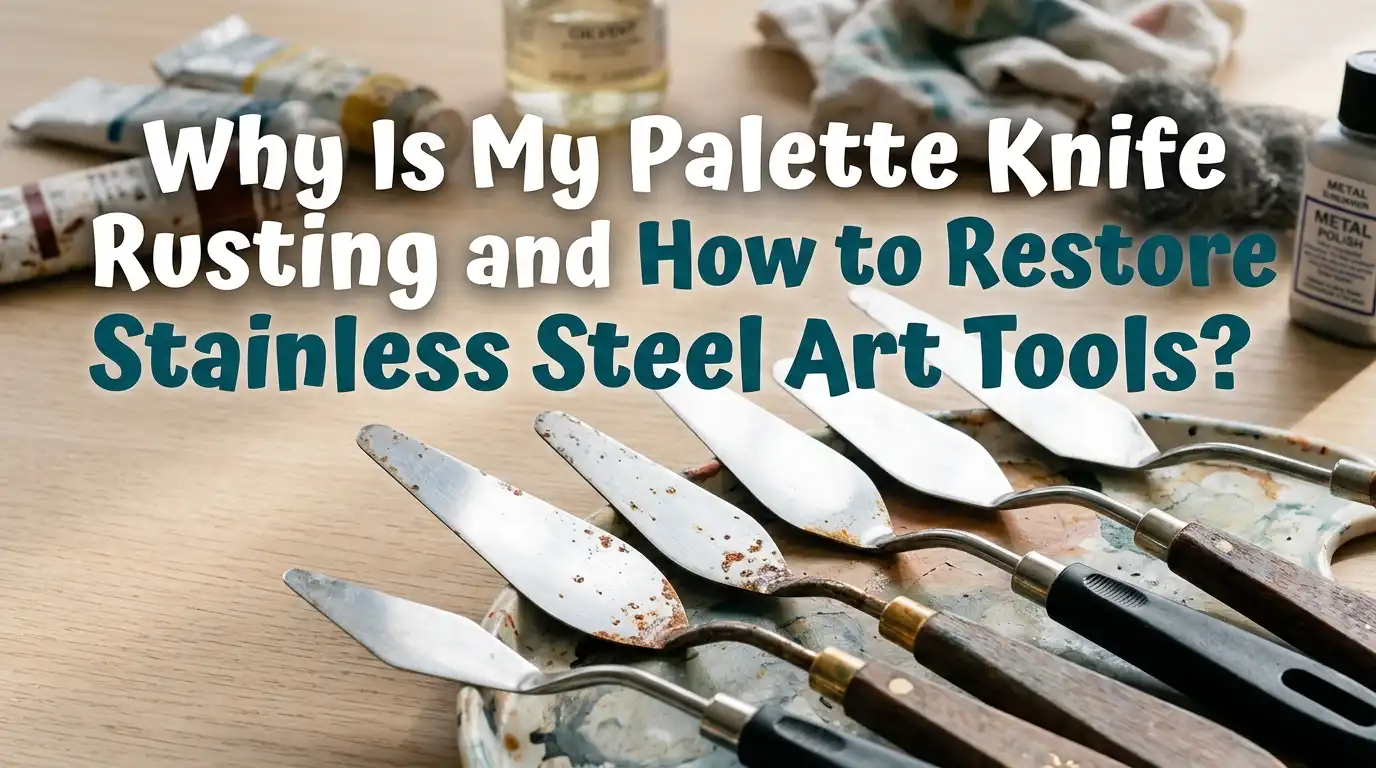
Why Is My Palette Knife Rusting and How to Restore Stainless Steel Art Tools?
You picked up your favorite palette knife this morning and noticed something awful. Tiny brown spots have appeared on the blade. Maybe the metal feels rough where it once felt smooth.
You bought a stainless steel tool, so why is it rusting at all? You are not alone in this frustration. Many painters discover that even high quality art tools can develop rust spots after months of studio use.
The good news is that rust on your palette knife is almost always reversible. With a few household items and the right techniques, you can bring your tool back to life. This guide walks you through every cause, every fix, and every prevention trick you need.
Key Takeaways
- Stainless steel is rust resistant, not rust proof. The chromium layer on your blade can break down when exposed to moisture, salt, acidic paint mediums, or contact with other rusting metals.
- Most rust is surface level and easy to remove. White vinegar, baking soda paste, lemon juice, or a soft scouring product can lift early stage rust within minutes without harming the blade.
- Drying is the single most powerful prevention habit. Wiping your knife with a dry cloth right after cleaning prevents nine out of ten rust problems before they start.
- A thin coat of oil acts as armor. A small amount of mineral oil, camellia oil, or even a light machine oil seals the surface and blocks moisture from reaching the steel.
- Storage matters as much as cleaning. Damp studios, leather rolls, and metal toolboxes can all trap humidity and quietly damage your blades over time.
- Severely pitted knives can still be saved. Light sanding with fine grit paper, followed by polishing and oiling, restores even badly corroded tools.
What Stainless Steel Really Means for Art Tools
Many artists assume stainless steel cannot rust at all. That is a common myth. Stainless steel simply contains chromium, usually around 10 to 18 percent. This chromium reacts with oxygen and forms a thin invisible shield on the surface called the passive layer. This layer protects the iron underneath from moisture.
When that shield gets scratched, dissolved by acids, or covered by other materials, rust can form just like on regular steel.
Cheaper palette knives often use lower grade stainless with less chromium. These tools rust faster than higher grade kitchen knives or surgical tools. So the type of stainless steel in your knife matters a lot. Knowing this fact alone changes how you treat your tools forever.
Common Reasons Your Palette Knife Is Rusting
Several factors cause rust on art tools. The most common one is leftover moisture after cleaning. Water sitting in the crease between the blade and handle is a perfect rust starter. Acidic paint solvents, citrus cleaners, or vinegar based wipes can also strip the protective layer.
Another sneaky cause is cross contamination. If your stainless knife touches a rusty steel tool in the same drawer, rust particles can transfer onto its surface. This is called contact corrosion. Humidity in the studio plays a huge role too.
Basements, garages, and rooms near the kitchen or bathroom often hold enough moisture in the air to attack metal slowly. Salt from your skin during long painting sessions adds another layer of attack. Even your sweat can leave behind chlorides that eat through the chromium shield.
How to Spot Rust Early Before It Spreads
Catching rust early saves your knife. Look at your blade under good light at least once a week. Surface rust appears as small orange or brown speckles. It wipes off with light pressure and leaves the metal mostly intact. This stage is your easy fix window.
Pitting rust is more serious. It looks like tiny black or dark brown pinholes in the steel. The metal feels rough or grainy. At this point you need stronger methods to restore the tool. Deep corrosion appears as flaking layers and discolored patches across most of the blade.
The knife may even feel weaker or more flexible than before. Run your finger gently along the edge. If you feel bumps or grit, rust has started forming. Smell also helps. A slightly metallic or chemical odor can signal active corrosion happening right now.
Method 1: White Vinegar Soak for Light Rust
White vinegar is the most popular rust remover for a reason. It contains acetic acid, which dissolves iron oxide without harming the steel underneath. Pour enough vinegar into a shallow dish to cover the blade. Let your knife soak for 30 minutes to 2 hours depending on rust level.
After soaking, scrub gently with a soft toothbrush or a piece of crumpled aluminum foil. Rinse thoroughly with clean water. Dry the knife immediately and completely. Apply a light coat of oil to seal the surface.
Pros: Cheap, safe, easy to find, works on light to medium rust, will not damage handles made of plastic or wood if exposed briefly.
Cons: Can dull the blade slightly if soaked too long, leaves a strong smell, may etch the surface if left overnight, less effective on deep pitting.
Method 2: Baking Soda Paste for Targeted Rust Spots
Baking soda is gentle, mildly abrasive, and slightly alkaline. It works wonders on small isolated rust spots without scratching the steel. Mix three parts baking soda with one part water until you get a thick paste similar to toothpaste.
Spread the paste over the rusty areas. Leave it for 15 to 30 minutes to break down the oxide. Then scrub with a soft cloth or old toothbrush in small circles. Rinse, dry fully, and oil the blade. This method works best as your weekly maintenance technique.
Pros: Very gentle on stainless steel, totally food safe, no fumes, will not harm wooden or rubber handles, easy to control on small spots.
Cons: Slow on heavy rust, requires some scrubbing effort, paste can dry out if left too long, needs repeating for stubborn patches.
Method 3: Lemon Juice and Salt Combo
This kitchen classic uses citric acid plus mild abrasion. The acid in lemon dissolves rust while the salt scrapes the loosened bits away. Sprinkle table salt over the rusty areas of the blade. Then squeeze fresh lemon juice on top until the salt looks wet.
Let the mixture sit for two hours. The acid needs time to penetrate. Scrub with the lemon rind itself, which acts as a natural sponge. Rinse with warm water and dry with a clean towel. Finish with a thin layer of oil to protect the freshly cleaned steel.
Pros: All natural, smells pleasant, safe for kitchen and studio crossover use, gentle on the surface finish, cheap and easy.
Cons: Salt can cause new corrosion if not rinsed off completely, slower than vinegar, less effective on dark pitting, juice loses strength if it dries out before working.
Method 4: Soft Scouring Powder for Stubborn Rust
Mild scouring powders made for kitchens, like ones containing oxalic acid, work on tougher stains. These products lift rust quickly without scratching the steel surface when used correctly. Wet the blade first, sprinkle a small amount of powder, and rub with a damp soft cloth.
Move in straight lines along the length of the blade rather than circles. Circular motions can leave swirl marks. Rinse the powder off completely after one minute. Never let the powder dry on the blade. Dry, oil, and store as usual.
Pros: Fast results on heavy surface rust, removes stains and discoloration, brings back a bright finish, widely available in supermarkets.
Cons: Slightly abrasive over time, can dull mirror finishes if used too often, may irritate skin so gloves help, not suitable for delicate decorative engravings.
Method 5: Fine Sandpaper for Deep Pitting
When rust has eaten into the metal, you need to remove a thin layer of steel itself. This sounds scary but works very well. Start with 600 grit wet sandpaper. Wet the paper and the blade, then sand gently along the blade’s length.
Move up to 1000 grit, then 2000 grit for a smooth finish. Each step removes scratches from the previous one. Wipe clean between grits. Once the surface looks even, polish with a metal polish and a soft cloth. Apply oil to protect your refreshed blade.
Pros: Fixes deep pitting that nothing else can, restores almost any rusty tool, gives a satisfying mirror finish, lasts a long time once oiled.
Cons: Removes a tiny amount of metal each time, takes patience and time, requires multiple grits of paper, can change the feel of the blade slightly.
How to Properly Dry and Oil Your Palette Knife
This step prevents future rust more than any cleaning method. After every painting session, wipe your knife with a soft cotton cloth or paper towel. Pay special attention to the joint where the blade meets the handle. Water hides there and starts rust within hours.
Once dry, apply a few drops of oil to a clean cloth. Wipe the entire blade with the oily cloth in one smooth motion. Mineral oil, camellia oil, or even a tiny bit of olive oil works well.
Less is more here. You only need a thin invisible film. Too much oil attracts dust and can mix into your next painting. Some artists keep an oil rag in a sealed jar near their easel for daily use. This habit alone can extend the life of your tools by years.
Best Storage Practices to Prevent Future Rust
Where you keep your tools matters as much as how you clean them. Avoid storing palette knives in damp basements, garages, or near windows where condensation forms. Humidity above 50 percent speeds up corrosion dramatically.
Use a wooden box or fabric roll lined with a soft dry cloth. Throw in a few silica gel packets to absorb moisture. These are the small white packets that come with new shoes or electronics. Replace them every few months.
Keep stainless tools separate from regular steel tools to avoid contact rust transfer. Standing your knives blade up in a jar with a dry cloth at the bottom also works well. Never store them wet or wrapped in plastic, which traps any leftover moisture against the metal.
Daily Habits That Keep Your Tools Rust Free
Small habits add up to big protection. Always clean your palette knife right after use, never the next morning. Dried paint traps moisture and chemicals against the blade. Use mild soap and warm water rather than harsh solvents whenever possible.
Keep a dedicated drying towel near your sink that you only use for art tools. This prevents kitchen oils, food acids, or detergent residue from reaching your blades. Wash your hands before handling clean tools. Skin oils and salts can speed up corrosion.
Once a month, do a deeper clean and re oil your full kit. Inspect every tool for early rust spots during this monthly check. Store handles and blades the same way each time so air can circulate freely.
When to Replace Instead of Restore
Sometimes a knife is too far gone to save. If the blade has lost more than half its thickness due to deep pitting, it cannot hold paint properly anymore. Cracks in the steel are another warning sign. These can extend during use and cause the blade to snap unexpectedly.
A loose handle that no longer holds the blade securely is also a replacement signal. Trying to repair this with glue often introduces more moisture into the joint.
If your knife costs less than a few dollars to replace, the time spent restoring it may not be worth it. Save your restoration efforts for higher quality tools or knives with sentimental value. Recycle the old blade through a metal recycling program rather than throwing it in regular trash.
Frequently Asked Questions
Can I use WD 40 to clean my palette knife?
Yes, WD 40 removes light rust well and leaves a protective film. Spray a small amount on a cloth and wipe the blade. Wash thoroughly with mild soap before painting again, since the residue can mix with your paint.
Why does my new palette knife rust faster than my old one?
Newer cheap knives often use lower grade stainless steel with less chromium. The protective passive layer is thinner and breaks down quickly. Higher quality knives last decades with basic care.
Is it safe to put my palette knife in the dishwasher?
No. Dishwasher detergents are highly alkaline and strip the protective oxide layer from stainless steel. The hot wet environment also speeds up corrosion. Always hand wash and dry your art tools.
How long does it take for rust to damage a palette knife permanently?
Surface rust can become pitting within two to four weeks if ignored. Once pitting starts, the steel itself is damaged. Catching rust within the first week almost always means a complete recovery.
Can I prevent rust by buying titanium palette knives instead?
Yes, titanium tools resist rust completely. They cost more but last a lifetime with minimal care. Many artists keep one titanium knife for work in humid environments or outdoor painting sessions.
What oil is best for protecting my palette knives?
Food grade mineral oil and camellia oil are top choices. Both are odorless, stable, and will not turn rancid. They also will not contaminate oil paints or acrylics if traces remain on the blade.

Hi, I’m Zoe Ward, the creator and voice behind Fine Brush Vault. I’m passionate about art, painting, and exploring the world of colors. I spend my time testing and reviewing art supplies to help fellow creators find the best tools for their craft. Through honest reviews and detailed guides, my goal is to make your creative journey easier and more inspiring.