How to Clean Heavy Impasto Oil Paint Off a Wooden Palette Quickly?
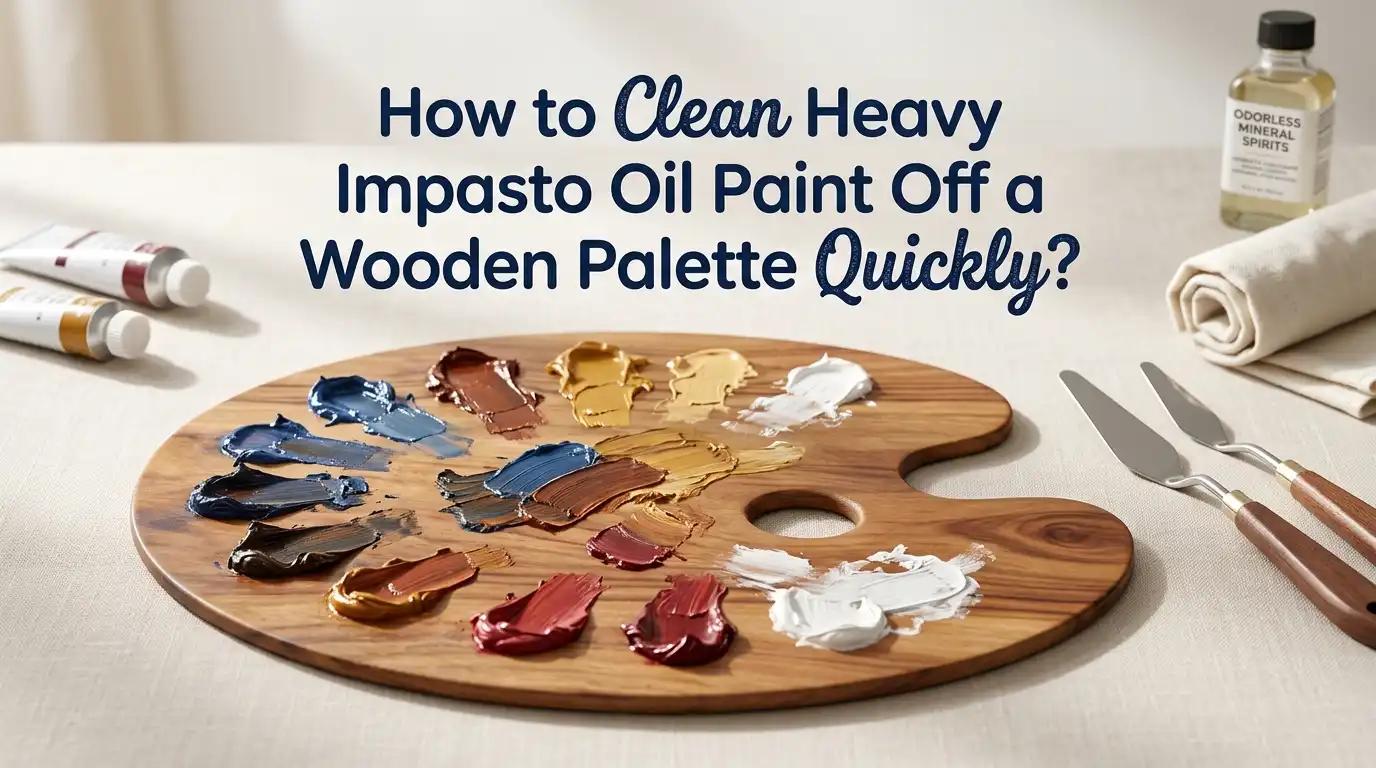
Heavy impasto oil paint looks gorgeous on canvas. It looks far less charming when it dries into stubborn ridges on your favorite wooden palette.
Thick paint hardens fast, traps pigment in the wood grain, and turns a smooth mixing surface into a lumpy mess within days.
If you have ever stared at a crusty palette and wondered whether to scrape it, soak it, or just toss it, this guide is for you.
Key Takeaways
- Scrape first, solvent second. A sharp blade or palette knife removes most thick paint in seconds. Solvents only handle the thin film left behind.
- Wet paint is easier than dry paint. Clean your palette right after painting whenever possible. Fresh impasto wipes off in minutes, while dry impasto can take an hour.
- Use the gentlest method that works first. Try mechanical scraping before chemicals, and odorless mineral spirits before harsh solvents like acetone.
- Protect the wood. Wooden palettes need a thin coat of linseed oil after every deep clean to stay smooth and stain resistant.
- Stains are normal. A perfectly clean wood palette is a myth. Pigment soaks into the grain and that is fine. Focus on a smooth surface, not a spotless one.
- Ventilate and glove up. Solvents and oily rags need fresh air, sealed disposal, and skin protection. Never skip safety.
Why Impasto Paint Is Harder to Remove Than Regular Oil Paint
Impasto paint sits on the surface in thick peaks and ridges. Regular oil paint is thinner and dries in a uniform film. The difference matters. Thick paint holds more linseed oil inside, which slows drying on the outside but creates a tough rubbery skin you cannot just wipe away.
On a wooden palette, this skin grips the grain like glue. The deeper layers stay soft for days, while the top forms a shell. If you only scrub the top, you smear the soft paint underneath into the wood. The trick is to work in stages, lifting the bulk first and then handling the residue.
Knowing this changes your approach. You stop fighting the paint and start working with its layers. That single shift saves time and protects the wood beneath.
Gather the Right Tools Before You Start
A fast cleanup depends on having everything ready before the paint dries further. Reaching for tools mid clean wastes minutes and lets paint harden more.
You will want a metal palette knife with a flexible blade, a single edge razor blade or scraper holder, lint free rags or paper towels, a small jar of odorless mineral spirits, a bottle of pure linseed oil, a pair of nitrile gloves, and a sealed metal container for oily rags. Some painters also keep baby wipes nearby for quick spot cleaning.
Keep these tools in one tray near your easel. When the painting session ends, you can clean the palette in under five minutes. Preparation is half the battle with impasto. Without the right gear, even fresh paint becomes a chore.
Method 1: The Quick Scrape While Paint Is Still Wet
This is the fastest method by far and the one professional oil painters use daily. Right after you finish painting, take your palette knife and push the leftover paint into a small pile at the edge of the palette. Lift the pile off with the knife and discard it into a sealed bin.
Next, take a dry rag and wipe the palette surface in long strokes. Most of the oily film comes off without any solvent. For stubborn ridges, drag the flat side of the palette knife across the wood at a shallow angle.
Pros: Takes two to three minutes. Uses no solvent. Safe for the wood. Saves usable paint for later sessions.
Cons: Only works while paint is still soft, usually within a day. Leaves a faint pigment stain on bare wood. Will not handle paint that has skinned over.
Method 2: Razor Blade Scraping for Skinned or Partially Dry Paint
When paint has formed a tough skin but is still soft underneath, a single edge razor blade is your best friend. Hold the blade at about a thirty degree angle to the surface. Push, do not drag, the blade across the paint.
The skin lifts off in curls or sheets. Underneath, you will find softer paint that you can wipe with a rag. Work in small sections so the curls do not smear back onto cleaned areas.
Pros: Removes thick dried impasto in minutes. No chemicals needed. Works on most wood palettes.
Cons: Can gouge soft wood if you press too hard. Risk of cutting your fingers without a holder. Dulls quickly on dried paint, so keep spare blades nearby. Always scrape away from your body.
Method 3: Softening Dry Paint With Linseed Oil
If your impasto has fully dried into hard ridges, harsh scraping can damage the wood. A gentler trick is to pour a thin layer of pure linseed oil over the dried paint and let it sit for one to two hours.
The oil soaks into the dried paint and softens it from within. After waiting, scrape the surface with a palette knife. The paint should now lift in soft chunks rather than brittle flakes. Wipe clean with a dry rag.
Pros: No solvent fumes. Conditions the wood while cleaning. Very safe for delicate palettes.
Cons: Slow, takes one to three hours. Uses a fair amount of oil. May not fully soften paint older than a week. Best for paint that is dry to the touch but not rock hard yet.
Method 4: Odorless Mineral Spirits for the Final Film
After scraping, a thin oily film often remains on the wood. Odorless mineral spirits, sometimes called OMS or Gamsol, dissolves this film fast. Dampen a rag with the solvent and rub the surface in circular motions.
The rag will pick up pigment and oil together. Switch to a clean part of the rag often. Two or three passes usually clear the surface completely. Always work in a ventilated room and wear gloves.
Pros: Cuts through oily residue quickly. Less toxic than turpentine or acetone. Leaves the wood ready for a fresh oil coat.
Cons: Still a petroleum solvent, so ventilation matters. Can lift varnish from sealed palettes if used heavily. Not ideal for daily use, since repeated solvent exposure dries out raw wood.
Method 5: Acetone or Denatured Alcohol for Stubborn Hardened Paint
For paint that has cured for weeks or months, mineral spirits may not cut it. Acetone or denatured alcohol can break down the polymer film of fully cured oil paint. Apply a small amount to a rag, press it onto the dried paint for thirty seconds, then scrape with a razor.
The paint should swell and lift off the wood. Repeat in small sections. Never soak the whole palette in acetone, since it can warp thin wood and strip protective finishes.
Pros: Handles paint that other methods cannot touch. Works in seconds once applied.
Cons: Strong fumes need serious ventilation. Damages varnish and some wood finishes. Flammable, so keep away from heat. Use this as a last resort, not a routine method.
Method 6: The Oven Cleaner Trick (Use With Caution)
Some painters swear by spraying oven cleaner on a heavily caked wooden palette. The lye in the cleaner breaks down dried oil paint within fifteen to twenty minutes. After the dwell time, scrape the softened paint off and rinse the palette with water.
This method works, but it is harsh. Lye raises wood grain, removes any oil seasoning, and can darken the wood. You will need to sand and re oil the palette afterward to restore the surface.
Pros: Removes years of caked paint quickly. Cheap and easy to find.
Cons: Strips the wood of its oil coating. Caustic, so gloves and eye protection are essential. Can permanently damage thin or veneered palettes. Best reserved for rescue jobs, not regular cleaning.
How to Handle Pigment Stains in the Wood Grain
Even after a perfect clean, you may notice colored shadows in the wood. These are pigment particles trapped in the grain, and they are almost impossible to remove fully. Good news, they do not affect your painting at all.
If the stains bother you visually, lightly sand the surface with fine grit sandpaper, around 220 to 320 grit. Sand in the direction of the grain. Wipe away the dust with a tack cloth, then rub in a thin coat of linseed oil to reseal the wood.
Stains are a sign of a working palette, not a dirty one. Many painters consider them a record of past colors. Keep this in mind before you sand too aggressively, since you can only thin the wood so many times.
Reseasoning Your Wooden Palette After Cleaning
A deep clean strips the protective oil from the wood. Without that layer, paint sinks deeper into the grain next time and becomes harder to remove. Reseasoning takes only a few minutes and protects your palette for months.
Pour a small amount of pure linseed oil onto the clean dry palette. Rub it in with a lint free cloth, working in circles until the wood looks evenly damp. Let it sit for ten minutes, then wipe off any excess. Allow the palette to dry overnight before use.
Repeat this once or twice a year, or any time the wood looks dry and pale. A well seasoned palette has a warm amber glow and feels slightly slick to the touch. That smooth surface is exactly what makes mixing paint a pleasure.
Daily Habits That Prevent Heavy Buildup
The fastest cleanup is the one you never have to do. A few simple habits keep impasto from building up in the first place. Scrape your palette at the end of every session, even if you only push the paint into a single mound.
Keep a damp rag tucked under your palette while you paint. Wipe spills the moment they happen. If you mix more paint than you need, store leftovers under plastic wrap in the freezer to slow drying. Some painters cover the entire palette with cling film between sessions.
These small steps cut your cleanup time by more than half. A two minute habit beats a thirty minute scrape job. Treat your palette like a chef treats a cutting board, with quick care after every use.
Safety Tips for Solvents and Oily Rags
Cleanup safety is easy to overlook, but oil painting waste is a real fire and health hazard. Linseed oil soaked rags can spontaneously combust if left crumpled in a warm pile. This is not a myth, it has caused studio fires.
Always store used rags flat to dry in a single layer outdoors, or in a sealed metal container with a tight lid. Never throw them in regular trash while still damp. Wear nitrile gloves when handling solvents, and open a window or run a fan during cleanup.
Keep solvents in clearly labeled glass jars with screw lids, away from heat and sunlight. If you feel dizzy or get a headache, stop and step outside. Your palette will still be there in five minutes, but your lungs need to last a lifetime.
Frequently Asked Questions
How often should I clean my wooden palette?
Scrape it after every painting session, even briefly. Do a full deep clean only when the surface becomes uneven or sticky, usually every two to four weeks for active painters. Daily scraping prevents most heavy buildup.
Can I use water to clean oil paint off a wooden palette?
No, water and oil paint do not mix. Water will not dissolve the paint and may warp the wood. Stick to scraping, oils, or approved solvents for oil paint cleanup.
Will solvents damage my wooden palette over time?
Yes, repeated heavy solvent use strips the oil seasoning and can dry out the wood. Use solvents sparingly and reseason the palette with linseed oil after each deep clean to keep it smooth.
Is it okay to leave dried paint on my palette permanently?
Light staining is fine and even helpful, since it seals the grain. Thick dried lumps are not, because they create uneven mixing surfaces and trap fresh paint. Scrape off raised paint regularly.
What if my palette has years of caked impasto on it?
Try the linseed oil soak method first, then move to a razor scrape. For extreme cases, oven cleaner or acetone can rescue the surface, followed by sanding and reseasoning. Be prepared for some permanent staining.
Can I use a heat gun to soften dried oil paint?
Heat can soften paint, but it also releases fumes and can scorch the wood. Most painters find linseed oil soaking safer and just as effective. Skip the heat gun unless you have proper ventilation and experience.
Should I sand my palette after cleaning?
Only if the surface feels rough or has deep gouges. Light sanding with fine grit paper smooths the wood, but too much sanding thins the palette over time. Always reseason with oil after sanding.

Hi, I’m Zoe Ward, the creator and voice behind Fine Brush Vault. I’m passionate about art, painting, and exploring the world of colors. I spend my time testing and reviewing art supplies to help fellow creators find the best tools for their craft. Through honest reviews and detailed guides, my goal is to make your creative journey easier and more inspiring.