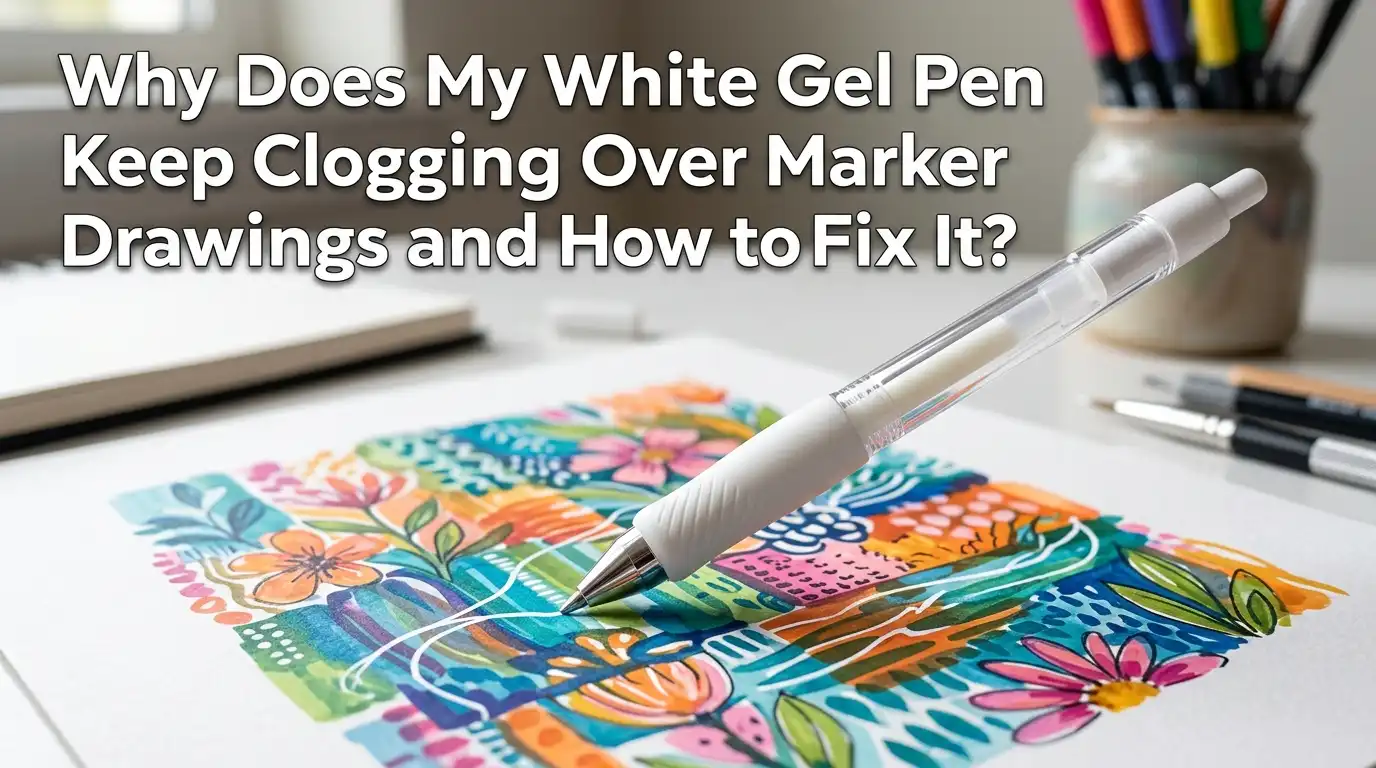
Why Does My White Gel Pen Keep Clogging Over Marker Drawings and How to Fix It?
You just spent an hour coloring a beautiful piece with alcohol markers. The shading looks perfect. The blending is smooth.
Now you grab your white gel pen to add those stunning highlights. You press down, drag the tip across the paper, and… nothing. Or worse, the pen leaves a scratchy, uneven line and then stops altogether.
Sound familiar? This is one of the most common frustrations for artists, colorists, and journal creators who work with markers. White gel pens have a reputation for clogging at the worst possible moment, especially over marker ink.
In a Nutshell
- Marker ink residue is the main culprit. Alcohol markers leave a waxy or dye based layer on the paper. When your gel pen rolls over this layer, the residue transfers to the ball tip and blocks ink flow almost instantly.
- White gel ink dries faster than colored gel ink. The pigment particles in white ink are larger and denser. They dry quickly at the tip, forming a hard crust that prevents the ink from coming out. This happens even faster on a coated surface like marker ink.
- Timing matters a lot. If you apply your white gel pen before the marker ink is fully dry, the two inks mix and create a sticky paste around the pen tip. This paste hardens and clogs the nib within seconds.
- Pressure plays a big role. Pressing too hard forces the ball deeper into the housing. This traps ink behind the ball rather than letting it flow past it. Light pressure gives better results.
- Storage affects performance. A gel pen stored without its cap, or left in a hot room, will dry out at the tip. This makes clogging almost certain the next time you use it on any surface, especially over markers.
- Alternatives exist and work well. Acrylic paint pens and white India ink offer different properties that resist clogging better than standard gel pens on marker surfaces.
Why White Gel Ink Behaves Differently Than Other Inks
White gel ink contains titanium dioxide pigment particles suspended in a water based gel. These particles are larger than the dyes found in regular ballpoint or colored gel inks. The gel base keeps the pigment evenly mixed, but it also makes the ink thicker and more prone to drying at the tip.
Regular ink flows by capillary action. Gel ink relies on the rolling ball mechanism to push ink out. When anything interferes with the ball’s rotation, the ink stops. White ink faces this problem more often because its heavier pigment settles slightly over time and creates a denser paste near the tip.
This is why a white gel pen that writes perfectly on plain paper can suddenly fail on a marker drawing. The surface conditions change, and the ink cannot keep up.
How Marker Ink Creates a Clogging Surface
Alcohol markers contain dye dissolved in an alcohol solvent. When the solvent evaporates, it leaves behind a thin layer of dye and binding agents on the paper. This layer is smoother and less absorbent than raw paper.
Your gel pen tip needs friction from the paper surface to spin the ball and release ink. On a marker coated area, the surface becomes slick. The ball skids instead of rolling. Meanwhile, residue from the marker layer sticks to the ball and mixes with the white gel ink around it.
This combination of reduced friction and sticky residue creates a perfect clogging situation. The problem gets worse on heavily layered areas where you used multiple marker passes.
The Importance of Drying Time Before Adding Highlights
One of the simplest fixes is also the most overlooked. You must let your marker ink dry completely before touching it with a white gel pen. Alcohol markers may feel dry to the touch within a few minutes, but the deeper layers of ink can stay slightly active for longer.
Artists recommend waiting at least 10 to 15 minutes after your last marker application. If you used heavy layers or blending, wait even longer. Some colorists let their work sit for 30 minutes or more before adding white details.
Testing on a scrap piece of the same paper is a smart habit. Color a test patch with your markers, wait your usual time, then try the gel pen. If it clogs on the test patch, your main piece needs more drying time.
Pros: Costs nothing, prevents most clogging issues, protects your finished artwork.
Cons: Requires patience, adds time to your creative process.
How to Unclog a White Gel Pen Quickly
When your pen clogs mid project, you need a fast fix. Here are the steps that work for most artists:
Step 1: Grab a piece of clean scrap paper. Scribble in tight circles with firm but controlled pressure. The motion helps restart the ball rotation and push through the blockage.
Step 2: If scribbling does not work, gently wipe the tip with a damp paper towel or cloth. This removes surface residue from the ball.
Step 3: Hold the pen tip down and tap the barrel firmly against your palm for 10 to 15 seconds. Gravity and momentum help move ink toward the clogged area.
Step 4: Try writing again on the scrap paper. Most clogs clear within one or two rounds of this process.
Pros: Quick and effective for minor clogs, no special tools needed.
Cons: Does not fix severe or deep clogs, repeated scribbling wastes ink.
The Rubbing Alcohol Soak Method
For stubborn clogs that simple scribbling cannot fix, rubbing alcohol is your best friend. Alcohol dissolves dried gel ink and removes marker residue from the pen tip without damaging the ball mechanism.
Step 1: Pour a small amount of rubbing alcohol (isopropyl alcohol, 70% or higher) into a shallow container. You only need enough to cover the pen tip.
Step 2: Dip just the tip of your gel pen into the alcohol. Let it soak for 5 to 15 minutes. Do not submerge the entire pen barrel.
Step 3: Remove the pen and gently blot the tip on a clean paper towel. Test the pen on scrap paper.
Step 4: If ink flows but looks watery at first, keep writing. The alcohol will evaporate quickly and the normal white ink will follow.
Pros: Highly effective for dried and stubborn clogs, affordable and easy to find.
Cons: Can temporarily thin the ink, too much soaking may flood the tip.
Using Warm Water and Steam to Restore Flow
Heat gently loosens thickened gel ink inside the pen tip. This method works well when your pen has been sitting unused for days or weeks and the ink has thickened near the nib.
Step 1: Boil water and pour it into a cup. Hold the pen tip near the steam rising from the cup for 5 to 10 seconds. Do not touch the pen to the boiling water.
Step 2: Alternatively, dip the pen tip in warm (not hot) water for about 60 seconds. The warmth softens the dried ink plug.
Step 3: Wipe the tip, then scribble on scrap paper to test flow. You may see a few watery strokes before the white ink returns to full opacity.
You can also rub the pen between your palms for 30 seconds. The body heat generated this way is enough to thin the ink slightly and improve flow.
Pros: Gentle on the pen mechanism, easy to do at home.
Cons: Results are temporary if the root cause is not addressed, hot water can warp plastic parts.
The Needle Trick for Deep Clogs
Sometimes the clog sits deep inside the tip where wiping and soaking cannot reach. A fine needle or pin can break up the blockage, but this requires a careful hand.
Step 1: Take a thin sewing needle or straight pin. Carefully insert it into the very center of the pen tip where the ball sits.
Step 2: Gently move the needle in small circular motions. You are trying to dislodge dried ink from around the ball, not push it deeper.
Step 3: Remove the needle, wipe the tip clean, and test on scrap paper. The ink should begin flowing within a few strokes.
This is a last resort method. Too much force can push the ball out of alignment or damage the tip permanently. Use it only when other methods fail.
Pros: Can fix clogs that nothing else resolves.
Cons: Risk of permanent damage if done roughly, requires steady hands.
Proper Pen Technique Over Marker Drawings
The way you hold and move your pen over marker ink affects clogging more than most people realize. Heavy pressure is the enemy. When you press hard, the ball gets pushed into the housing and creates a seal that traps ink.
Use light, consistent pressure. Let the pen glide across the surface. Short strokes work better than long, sweeping lines because they give the ball more chances to rotate and release ink.
Angle also matters. Hold the pen at roughly 45 to 60 degrees from the paper. A steep angle forces the ball to dig into the surface, while too shallow an angle causes skipping. Find the sweet spot where the pen moves smoothly.
Between strokes, quickly scribble on a clean piece of paper. This clears any marker residue that the tip picked up and keeps the ink flowing freely.
Why Acrylic Paint Pens Can Be a Better Choice
If clogging remains a constant struggle, acrylic paint markers offer a reliable alternative. Pens like the Uni Posca use acrylic based paint instead of gel ink. The paint flows through a valve controlled felt tip rather than a ball mechanism.
Acrylic pens do not clog the same way because there is no ball to get stuck. The paint is also thicker and more opaque, so it covers marker ink in a single pass. Many artists prefer acrylic pens for larger highlight areas and gel pens for fine details.
The trade off is control. Acrylic pen tips are usually broader, which makes thin, precise lines harder to achieve. For fine detail work, a gel pen still has the edge. For bold highlights and larger accents, acrylic pens save a lot of frustration.
Pros: Resist clogging, excellent opacity, long lasting.
Cons: Less precision for fine lines, tips can dry out if left uncapped, paint can chip on some surfaces.
Storage Habits That Prevent Future Clogs
Prevention is easier than any fix. Always replace the cap immediately after use. Even 30 seconds of air exposure can start the drying process at the tip of a white gel pen.
Store your pens horizontally or with the tip facing down. This keeps the ink near the nib and reduces the chance of air pockets forming inside the barrel. Avoid storing pens in direct sunlight or near heat sources like radiators and window sills.
If you own several white gel pens, rotate through them. A pen that sits unused for weeks is far more likely to clog than one used every few days. Regular use keeps the ink fresh and the ball mechanism active.
During longer breaks between art sessions, give each pen a quick test scribble on scrap paper before putting it away. This ensures the tip is clean and the ball is coated in fresh ink before storage.
Choosing the Right Paper for Better Results
Paper quality affects how your gel pen performs over marker ink. Thicker, smoother paper gives better results because it absorbs marker ink more evenly and leaves a less problematic surface for the gel pen.
Paper weight of 160 gsm or higher handles both alcohol markers and gel pens well. Thin or rough paper absorbs marker ink unevenly, leaving some areas more saturated than others. These saturated spots are exactly where gel pens tend to clog.
Marker specific paper and mixed media paper often have coatings that help both mediums work together. Bristol board is another excellent option. The smoother the paper surface after marker application, the less resistance your gel pen ball faces.
Pros: Reduces clogging significantly, improves overall artwork quality.
Cons: Higher quality paper costs more, may require trying several brands to find your preference.
Building a Reliable White Highlight Workflow
The best approach combines several strategies into a simple routine. Here is a workflow that many experienced colorists follow:
First, finish all marker work and set the piece aside. Let it dry for at least 15 minutes. Use this time to plan where your highlights will go.
Second, test your white gel pen on scrap paper. Scribble until the ink flows bright and consistent. Wipe the tip once with a clean cloth.
Third, apply highlights with light, short strokes. After every few strokes, do a quick scribble on your scrap paper to clear the tip. This prevents residue from building up.
Fourth, if the pen starts skipping, stop immediately. Clean the tip with a damp cloth, test on scrap paper, and only return to your artwork once the flow is smooth again.
Fifth, cap the pen between pauses. Even a one minute break is enough for air to start drying the tip.
This routine adds just a few extra minutes but dramatically reduces clogging and produces cleaner, brighter highlights.
Frequently Asked Questions
Why does my white gel pen work on plain paper but not over markers?
Marker ink leaves a smooth, slightly waxy layer on the paper surface. This layer reduces friction, prevents the gel pen ball from spinning properly, and transfers residue onto the tip. Plain paper has texture that helps the ball grip and rotate, which is why the same pen works fine there but struggles over colored areas.
How long should I wait after using markers before applying a white gel pen?
Wait at least 10 to 15 minutes after your final marker layer. If you applied heavy, blended layers, waiting 20 to 30 minutes is safer. Test on a scrap piece first. If the gel pen flows cleanly on a test patch, your main artwork is ready for highlights.
Can I use a hair dryer to speed up marker drying before using my gel pen?
Yes, a hair dryer on a low heat setting can speed up alcohol marker drying. Hold it about 6 to 8 inches from the paper and move it evenly across the surface. Avoid high heat, as it can warp the paper and affect marker colors. Let the paper cool to room temperature before applying your gel pen.
Is a white acrylic paint pen better than a white gel pen for highlights?
It depends on what you need. Acrylic paint pens resist clogging and offer bold opacity, making them ideal for larger highlights. Gel pens provide finer lines and more precise detail. Many artists keep both in their toolkit and choose based on the specific task.
How do I store white gel pens to prevent clogging?
Always keep the cap on when the pen is not in use. Store pens horizontally or tip down in a cool, dry location away from heat and sunlight. Use each pen at least once a week if possible. Before putting a pen away, scribble briefly on scrap paper to ensure the tip is clean and coated in fresh ink.
Can I fix a white gel pen that has been dried out for months?
You can try soaking the tip in rubbing alcohol for 15 minutes, then testing on scrap paper. If the ink has dried too far up the barrel, the pen may not recover. Warm water soaking combined with gentle scribbling gives you the best chance, but pens left uncapped for very long periods are often beyond saving.

Hi, I’m Zoe Ward, the creator and voice behind Fine Brush Vault. I’m passionate about art, painting, and exploring the world of colors. I spend my time testing and reviewing art supplies to help fellow creators find the best tools for their craft. Through honest reviews and detailed guides, my goal is to make your creative journey easier and more inspiring.