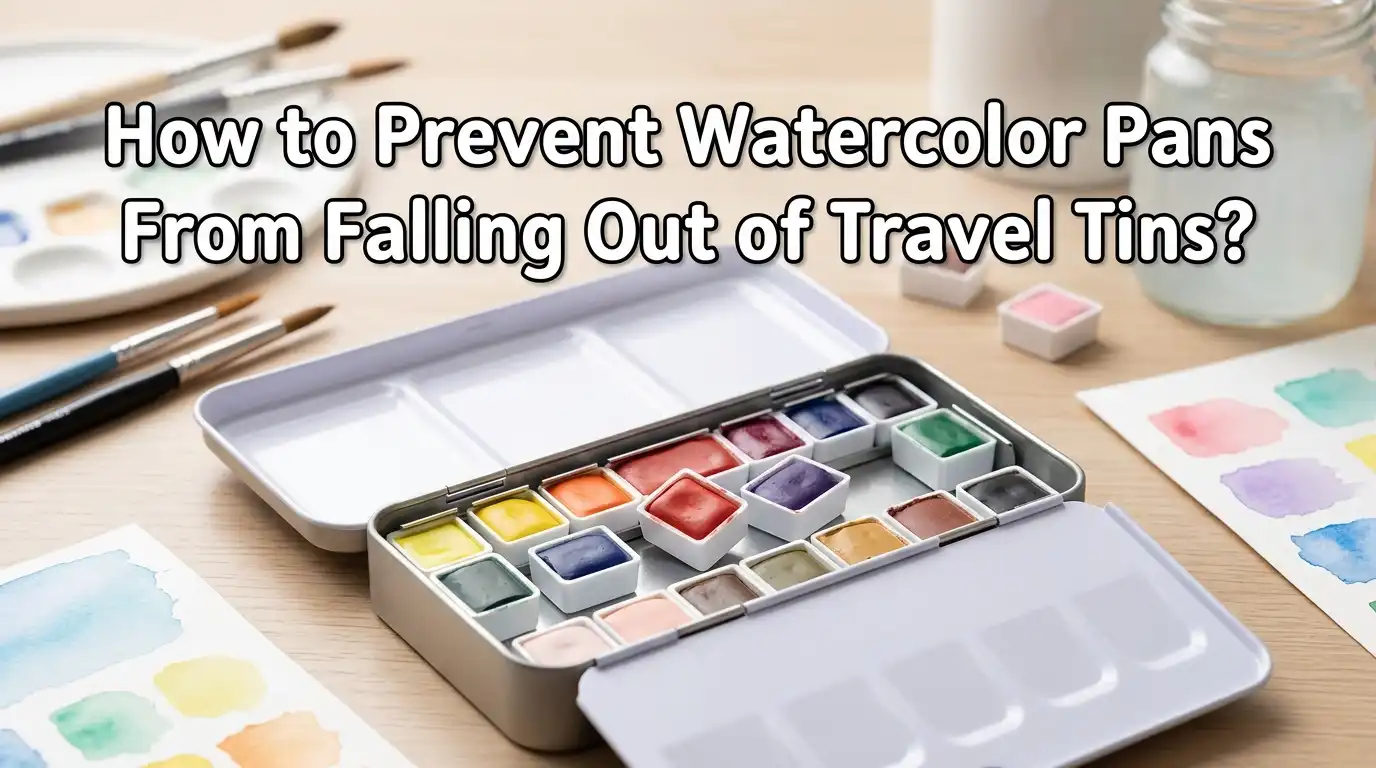
How to Prevent Watercolor Pans From Falling Out of Travel Tins?
You open your travel tin, ready to paint a quick sketch outdoors, and plop, half your pans tumble onto the grass. Sound familiar? Loose watercolor pans are one of the most common headaches for plein air painters, urban sketchers, and hobbyists who love portable art kits.
The good news is that this problem has many simple solutions. You do not need expensive gear or fancy tools.
With a few household items and a little setup time, your pans can stay locked in place no matter how much your bag bounces around. This guide walks you through every reliable method, with clear steps and honest pros and cons for each one.
In a Nutshell
- Magnets are the gold standard. Neodymium magnets or magnetic tape glued to the bottom of each pan create a strong grip inside metal tins. They also let you swap colors freely.
- Blu Tack and museum putty offer a cheap, no commitment fix. They hold pans well, peel off cleanly, and cost almost nothing.
- Hot glue and double sided tape work for painters who want a permanent setup. They stay put for years but make rearranging colors harder.
- Sanding the tin floor improves grip for every method. A roughed up surface gives glue, putty, and even paint blocks more to bite into.
- Bending metal tabs and shimming with cardboard fixes wobbly factory palettes without any adhesive. These tricks suit folks who prefer a tidy, reversible solution.
- Pan choice matters too. Heavier enameled half pans sit more securely than thin plastic ones, and full pans behave differently from half pans inside the same tin.
Why Watercolor Pans Keep Falling Out of Travel Tins
Most travel tins are made for a standard half pan size, but pan dimensions vary slightly between brands. A Schmincke half pan may sit looser than a Winsor & Newton one. That tiny gap is enough for pans to slide around when the tin moves.
Another reason is the smooth metal floor inside the tin. Factory tins have a glossy enamel coating that gives pans nothing to grip. Add a bit of dried paint dust and the surface becomes even slicker.
Finally, temperature changes and humidity affect how paint sticks inside its own pan. When dry watercolor shrinks, it pulls away from the pan walls, and the whole block can pop loose. Knowing the cause helps you choose the right fix.
Method 1: Use Neodymium Magnets for a Strong Hold
Neodymium magnets are tiny rare earth magnets that pack serious strength. For half pans, 8mm diameter magnets that are 1 to 2mm thick fit perfectly. You stick one inside each pan or glue one to the bottom, and the pan locks onto your steel tin like glue.
To set them up, clean the bottom of each empty pan with rubbing alcohol. Place a drop of strong glue, like E6000 or super glue, on the magnet, then press it firmly to the pan base. Let it cure for at least an hour before adding paint.
Pros: Extremely strong hold, lets you rearrange colors anytime, lasts for years, and works with both half and full pans.
Cons: Costs more upfront than other methods, only works in tins made of steel (not aluminum), and the magnets can interfere if you use a magnetic phone case nearby.
Method 2: Apply Magnetic Tape to Pan Bottoms
Magnetic tape is the budget friendly cousin of neodymium magnets. It comes in rolls with a sticky back, and you cut small squares to fit each pan. One small piece per pan is usually enough.
Peel the backing, press the tape onto the bottom of a clean dry pan, and stick the pan into your steel tin. The hold is gentle but firm enough to survive a normal commute or hike.
Pros: Cheap, easy to find at craft and hardware stores, no glue needed, and removable if you change your mind.
Cons: Weaker than neodymium magnets, the adhesive can dry out after a year or two, and it adds a millimeter of height which might matter in a shallow tin. If your pans feel tall already, test the lid closure before committing.
Method 3: Stick Pans Down With Blu Tack or Museum Putty
Blu Tack, poster putty, and museum putty are reusable adhesives that grip without leaving residue. Roll a pea sized ball, flatten it onto the bottom of the pan, and press the pan into the tin. The putty squashes to fill any gap and holds the pan in place.
This method shines for painters who swap pans often or who want a temporary solution before deciding on something permanent. It also works in aluminum tins where magnets fail.
Pros: Inexpensive, works in any tin material, easy to remove, and reusable for years.
Cons: Can soften in hot weather and let pans shift, leaves a slight oily mark on some surfaces, and may need replacing every few months. Avoid using it on porous wood palettes because the oils can stain.
Method 4: Use Double Sided Foam Tape
Double sided foam tape is sold at any hardware store and gives a firm, semi permanent grip. Cut a small square, peel both sides, and sandwich it between the pan and the tin floor.
The foam layer also absorbs vibration, which means your pans stay quiet when you walk. This is a popular fix for sketchers who carry their kit in busy backpacks all day.
Pros: Strong hold, easy to find, cushions the pans during travel, and works in any tin.
Cons: Hard to remove cleanly if you change your layout, can leave sticky residue, and the foam adds noticeable height. If your tin lid barely closes now, skip this method and try magnetic tape instead.
Method 5: Glue Pans Down With Hot Glue
A hot glue gun gives you a strong but flexible bond. Add a small dot of glue to the bottom corner of the pan, press it into the tin, and let it cool for a minute. The glue stays slightly rubbery, so you can pry pans up later if needed.
This method is favored by painters who have settled on their permanent palette and never plan to change colors. It also works on tin lids if you want pans on both halves.
Pros: Very strong, cheap, fast to apply, and works on any material.
Cons: Hard to swap colors later, can look messy if you use too much, and the glue may peel up after months of paint splashes. Apply only a small dot per pan, not a full bead.
Method 6: Sand the Inside of Your Tin
Sometimes the fix is the floor itself, not the pan. Light sanding with 220 grit sandpaper roughs up the smooth enamel inside your tin and gives every adhesive method better grip. It also helps dry paint stick if you pour your own pans.
Wipe the tin clean with a damp cloth after sanding to remove dust. Then apply your chosen method, whether magnets, putty, or tape, on top of the prepared surface.
Pros: Free, takes less than five minutes, and improves every other method. It also reduces pan slide on its own for snug fitting tins.
Cons: Removes the protective enamel which can lead to rust over time if water sits inside. Dry your tin thoroughly after every painting session to prevent corrosion.
Method 7: Bend the Metal Tabs Inside Factory Palettes
Many travel palettes come with tiny metal tabs designed to grip half pans. Over time these tabs loosen or bend outward, which lets pans wiggle free. The fix is simple: pop the pans out, then use a pair of needle nose pliers or even your fingernail to push the tabs slightly inward.
Test fit a pan after each small bend. You want a snug click, not a death grip that scratches the pan walls. Work gently because metal tabs can snap if forced too far.
Pros: Free, reversible, no glue or magnets required, and keeps the original look of your palette.
Cons: Only works on palettes with built in tabs, not flat bottom tins. The tabs can fatigue and break after several adjustments. Bend slowly and check the fit often.
Method 8: Add a Cardboard or Foam Shim
If your pans rattle because the tin is slightly too deep or too wide, a shim does the trick. Cut a thin strip of cardboard, craft foam, or thick paper to fit along one edge of the tin. Place it between the row of pans and the tin wall.
The shim wedges everything tight without any glue. You can also slide a piece under the row to lift the pans flush with the tin lip. This stops them from sliding down when the tin tilts.
Pros: Free, fully reversible, takes seconds to swap, and adjusts to any pan size.
Cons: Cardboard absorbs water and warps over time. Foam lasts longer but may compress. Replace shims every few months for the cleanest fit.
Method 9: Refill Pans With Tube Paint and Let It Dry Properly
Sometimes the paint block itself falls out of the pan, not the pan out of the tin. This happens when tube paint dries too fast or shrinks away from the pan walls. The fix is a slow, layered refill.
Fill the pan only one third full with tube paint, then let it dry for 24 hours. Add another thin layer and dry again. Repeat until full. Slow drying prevents cracks and keeps the paint stuck to the pan.
Pros: Solves the root cause, makes paint last longer, and gives you smoother lifts when wet.
Cons: Takes several days, requires patience, and uses more paint per pan. If you need a quick fix, add a drop of glycerin to soften the paint and help it bond.
Method 10: Switch to Heavier Enameled Pans
Plastic half pans are light and cheap but they slide easily. Enameled metal pans, like those from FOME or Whiskey Painters, are heavier and sit more firmly inside a tin. Their weight alone reduces shifting, and their flat bottoms work better with magnets and tape.
If you find yourself constantly fighting plastic pans, swapping to metal ones can solve the problem without any adhesive at all. Just transfer your dried paint blocks across with a quick water soak.
Pros: Naturally stable, durable, recyclable, and works with magnets perfectly.
Cons: Costs more than plastic pans, slightly heavier in your bag, and harder to find in some countries. Check sizing carefully because not all metal pans match standard half pan dimensions.
Method 11: Use a Rubber Band or Elastic Strap Around the Closed Tin
For extra peace of mind, wrap a wide rubber band or fabric elastic around your closed tin. This keeps the lid pressed shut and stops any pans from popping out even if the magnets or putty fail.
Choose a band wide enough to grip without snapping. Hair ties, ponytail elastics, and silicone cooking bands all work well. Slide it on after closing the tin and remove it when you paint.
Pros: Cheap, simple, adds backup security, and protects your tin from accidental opening in a bag.
Cons: Adds a small step to your routine, rubber bands can dry out and snap, and elastic marks may appear on painted tin lids. Use a fabric covered hair tie for a gentler grip.
Method 12: Build a Custom Insert for Loose Tins
If your tin is much bigger than your pan layout, a custom insert holds everything tight. Cut a piece of craft foam or thin balsa wood to fit the tin floor, then carve pan sized holes with a craft knife.
Drop the insert in, slot your pans into the holes, and they will not budge. You can paint the insert white to act as a mixing surface or leave it plain.
Pros: Perfect fit, looks neat, doubles as a mixing area, and protects pans from scratching the tin.
Cons: Takes time to make, requires basic crafting skills, and you need to recut if you change pan sizes. Start with foam before trying wood since foam is forgiving for beginners.
Frequently Asked Questions
Can I use regular fridge magnets instead of neodymium ones?
Fridge magnets are too weak to hold a paint filled pan during travel. They might work for a static display but will fail the moment your bag tilts. Stick with neodymium magnets or magnetic tape for reliable grip.
Will magnets damage my watercolor paint?
No, magnets do not affect dry watercolor paint at all. The pigments are stable and not magnetic. The only risk is from the glue used to attach magnets, so let the glue cure fully before adding paint.
How do I remove dried hot glue from a tin?
Warm the glue gently with a hair dryer for thirty seconds, then peel it off with your fingernail or a plastic card. Wipe away any residue with rubbing alcohol on a soft cloth.
Why do my pans still slide even with magnets?
Your tin may be aluminum, brass, or another non magnetic metal. Test it with a fridge magnet first. If nothing sticks, switch to Blu Tack, double sided tape, or hot glue instead.
Is it safe to sand the inside of my travel tin?
Yes, but dry the tin completely after every painting session to prevent rust. A light coat of clear nail polish on the sanded area also seals the metal while keeping the rough texture.
How often should I replace Blu Tack under my pans?
Replace it every three to six months, or sooner if pans start shifting. Old putty hardens and loses grip, especially in hot or humid weather.

Hi, I’m Zoe Ward, the creator and voice behind Fine Brush Vault. I’m passionate about art, painting, and exploring the world of colors. I spend my time testing and reviewing art supplies to help fellow creators find the best tools for their craft. Through honest reviews and detailed guides, my goal is to make your creative journey easier and more inspiring.