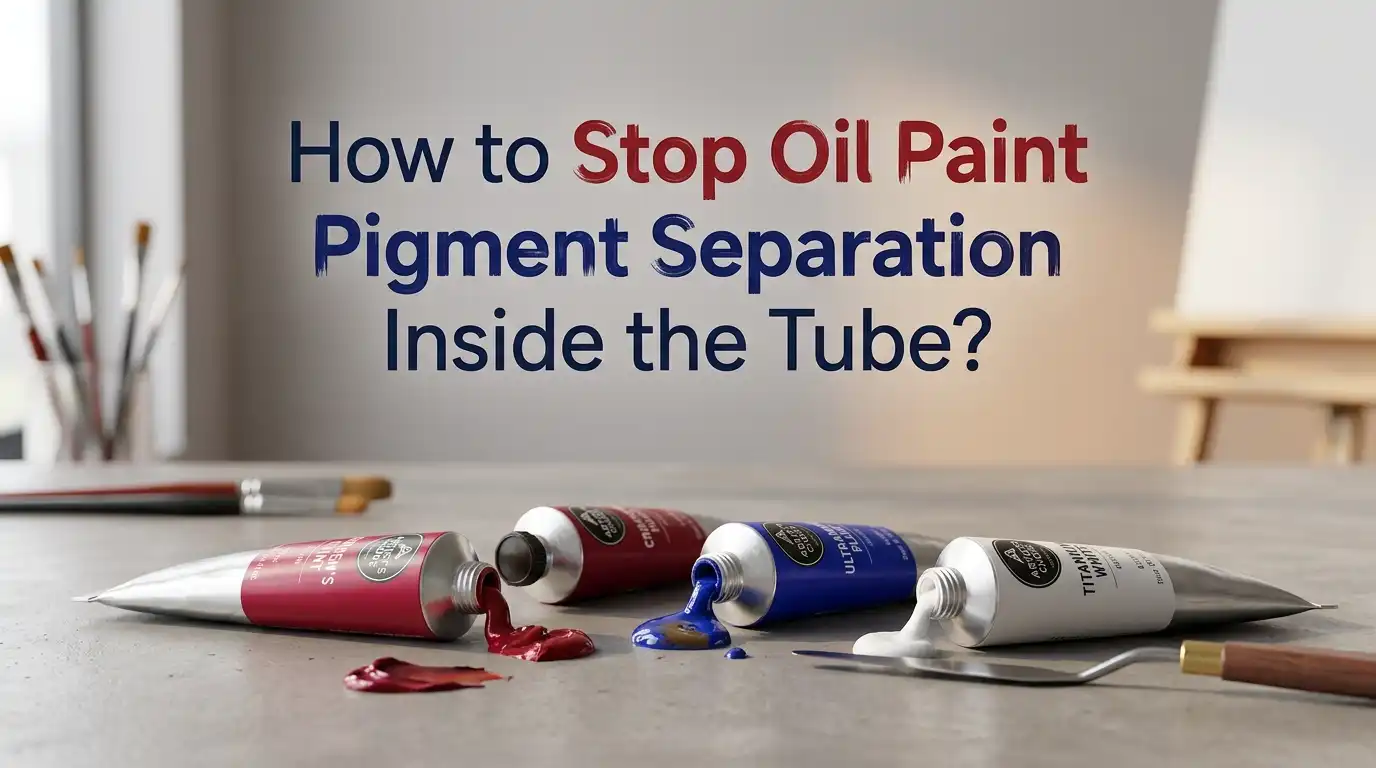
How to Stop Oil Paint Pigment Separation Inside the Tube?
You open a fresh tube of oil paint, squeeze gently, and a thin stream of amber oil runs out instead of rich color. Your heart sinks. You paid good money for that tube. You wonder if the paint is ruined. You ask yourself if you stored it wrong.
Here is the truth. Oil paint separation is completely normal. It happens to professional grade paints and student grade paints alike. It does not mean your paint went bad.
It simply means the pigment and the oil binder have parted ways inside the tube. The good news is that you can fix this problem and stop it from happening again.
Key Takeaways
- Oil paint separation is a natural process, not a defect. Pigments are heavier than oil. Gravity pulls them down while the lighter oil rises. This happens with almost every brand and every grade of paint over time.
- Cap down storage is the single most effective prevention method. When you store tubes with the cap facing down, the heavier pigment settles toward the opening. You squeeze out paint, not oil.
- Kneading the tube before use works wonders. A gentle massage of the sealed tube for 30 to 60 seconds recombines much of the separated oil and pigment without any mess.
- Temperature control matters more than you think. Heat speeds up separation dramatically. Keep your paint tubes in a cool, stable environment between 50 and 68 degrees Fahrenheit for best results.
- The paper towel trick saves paintings and palettes. If excess oil still comes out, squeeze the paint onto a folded paper towel first. The oil wicks away while the pigment stays ready to use on your palette.
- Not all separation is equal. Heavy pigments like titanium white, cadmiums, and cobalts separate faster than lighter pigments. Knowing which colors are prone to separation helps you plan your storage strategy.
Why Oil Paint Separates Inside the Tube
Oil paint has two main parts. One is the pigment. Pigment gives the paint its color. The other is the oil binder. The binder holds the pigment together and makes it spreadable.
The problem starts with simple physics. Pigment particles are heavier than oil. Gravity pulls the heavier pigment down. The lighter oil floats upward. This process happens in every tube that sits still for a few days or weeks.
Some pigments cause faster separation than others. Titanium dioxide, cadmiums, and cobalts are dense mineral pigments. They sink quickly. Lapis lazuli and genuine vermillion are also heavy and settle fast. Lighter synthetic pigments like phthalo blue may separate more slowly, but they still separate.
Oil absorption also plays a role. Every pigment absorbs oil at a different rate. Titanium white takes about 30 grams of oil for every 100 grams of pigment. Pyrrole red absorbs up to 70 grams. When manufacturers add extra oil to create a smoother consistency, that excess oil will eventually rise to the top of the tube.
Temperature is another big factor. Heat makes oil thinner and runnier. If your studio gets hot in summer, the oil inside your tubes flows more freely. This speeds up separation. Cold temperatures slow the process down.
Pros: You stop blaming yourself. You learn that separation is chemistry, not user error. You can plan your storage based on which pigments separate fastest.
Cons: There is no permanent fix. No matter what you do, oil and pigment will eventually separate again. You must accept this as part of oil painting.
The Role of Fillers and Additives in Separation
Not all tubes of paint are made the same way. Student grade paints contain more fillers and extenders than artist grade paints. These fillers change how the paint behaves inside the tube.
Barium sulfate is one of the most common fillers. It is heavy and cheap. Manufacturers add it to bulk up the paint and make the tube feel fuller. Barium sulfate settles quickly and drags pigment down with it. This makes separation happen faster in student grade paints.
Artist grade paints use fewer fillers. They contain more pure pigment. This means less material that can sink to the bottom. However, even the best artist grade paints still separate because the pigment itself is heavier than oil.
Some manufacturers add stabilizers to slow down separation. Aluminum stearate is the most common one. Even a tiny amount, as little as two percent by weight, helps keep pigment particles suspended in the oil. Beeswax and hydrogenated castor oil serve the same purpose in some premium brands.
- Pros of student grade paints: They cost less. They are good for underpaintings and practice. You can use them without fear of wasting expensive materials.
- Cons of student grade paints: They have more fillers. Separation happens faster and more dramatically. Tinting strength is weaker. You need more paint to achieve the same effect.
- Pros of artist grade paints: Higher pigment load means better coverage. Fewer fillers mean more predictable behavior. Some brands add stabilizers that slow separation.
- Cons of artist grade paints: They cost more. Some premium brands that avoid stabilizers may actually separate faster than you expect.
How to Store Oil Paint Tubes the Right Way
Storage is your first line of defense against separation. The way you place your tubes today determines what comes out of them tomorrow.
Store tubes cap down. This is the golden rule of oil paint storage. When the cap faces downward, gravity pulls the heavier pigment toward the opening. The lighter oil rises toward the crimped end. When you open the tube and squeeze, you get pigment and oil mixed together instead of pure oil.
Some heavy pigments need extra attention. Colors like titanium white, cadmium yellow, and cobalt blue separate aggressively. For these tubes, rotate the position every few weeks. Lay them flat for a week, then stand them cap down for a week. This constant movement keeps the pigment distributed.
Keep your paint in a cool place. Normal room temperature between 50 and 68 degrees Fahrenheit works best. Avoid storing tubes near radiators, sunny windows, or heating vents. Heat thins the oil and speeds up separation dramatically.
Choose a storage system that makes cap down storage easy. Many artists use small bulldog clips clamped to the crimped end of the tube. They hang these clips on a pegboard. Others use drawer organizers or tool boxes with compartments that hold tubes upright on their caps.
Pros: It works with simple physics. No special tools needed. Pigment settles where you want it, near the opening. You squeeze out properly mixed paint.
Cons: Tubes must stand upright. This takes more vertical space than laying them flat. Some tube shapes are unstable when standing on their caps. You may need to build or buy a rack.
Kneading the Tube Before Every Use
Kneading is the easiest fix in your toolkit. It takes one minute and costs nothing. Before you open any tube that has sat unused for more than a day, give it a gentle massage.
Hold the sealed tube between your palms. Roll it back and forth. Squeeze it gently along the entire length. Work from the crimped end toward the cap. The goal is to physically push the separated oil back into the pigment.
Do this for 30 to 60 seconds. You will feel the contents of the tube change from lumpy to smooth. The oil that had pooled near the cap will mix back into the pigment. When you open the tube, the paint should come out as a consistent paste.
This technique works best on partially used tubes. A full tube has less empty space inside. The pigment and oil have nowhere to go. Kneading forces them back together. A nearly empty tube has more air inside. Kneading still helps, but you may not achieve a perfect mix.
Pros: It is free and fast. It requires no tools. It works with any brand of paint. You can do it right before painting.
Cons: It does not work perfectly on nearly empty tubes. Some very stiff paints resist kneading. It requires you to remember to do it before opening the tube. If you forget, you get a puddle of oil.
The Paper Towel Trick for Excess Oil
Sometimes kneading is not enough. You open the tube and a puddle of oil still comes out. Do not panic. The paper towel trick will save your painting session.
Fold a clean paper towel into a small square. Squeeze the separated paint directly onto the paper towel. The oil soaks into the paper while the pigment stays on top. After a few seconds, scoop the pigment off the paper towel and onto your palette.
The pigment will feel slightly stiffer than normal. This is because some oil wicked away into the paper. You can add a tiny amount of linseed oil or your preferred medium to restore the original consistency. Mix it in with your palette knife.
Some artists keep the separated oil on their palette and use it as a painting medium. The oil that separates is the same binder oil used to make the paint. Dipping your brush into it during the session puts it to good use. This works well for upper painting layers where a fatter medium is acceptable.
Pros: It works instantly. No waiting required. You rescue the pigment and get straight to painting. The technique works for any color.
Cons: It wastes a small amount of oil. The remaining pigment may feel dry and stiff. You must add medium back in to restore workability. It does not fix the separation inside the tube for next time.
How to Fix a Tube That Keeps Leaking Oil
Some tubes seem cursed. No matter how you store them, oil leaks out around the cap. Yellow gummy residue builds up on the threads. The cap cracks or splits. These problems have simple solutions.
First, clean the threads every time you finish painting. Wipe the neck of the tube with a paper towel. Remove any paint that squeezed onto the threads. A clean cap seals tight. A dirty cap leaks.
Second, do not overtighten the cap. Many artists crank the cap down hard, thinking this prevents leaks. The opposite is true. Overtightening cracks plastic caps. A cracked cap cannot seal. Tighten the cap until it is snug, then stop.
If a cap has already cracked, wrap a small piece of plastic wrap over the tube opening. Screw the cracked cap on loosely over the wrap. The plastic creates a new seal. Replace the cap with a silicone plug or a spare cap from an empty tube when you can.
For tubes with stuck caps, dip the cap end in hot water for 30 seconds. The heat softens the dried oil around the threads. Use a cloth or a rubber jar gripper to twist the cap off. Pliers work in emergencies but can damage the cap.
Pros: Regular cleaning stops leaks before they start. Plastic wrap buys you time with a cracked cap. Hot water releases stuck caps safely.
Cons: Thread cleaning adds a small chore to the end of every painting session. Cracked caps need replacement eventually. Some tubes may be too damaged to save.
How to Remix Paint Inside the Tube
Kneading works for minor separation. For serious separation, you need a more direct approach. This method gets your hands messy but fully recombines the paint.
Squeeze all the contents of the tube onto a glass palette. You will see a puddle of oil separate from a lump of pigment. Use a palette knife to fold the oil back into the pigment. Work patiently. Fold and press, fold and press, until the mixture is smooth and uniform.
Once the paint is fully mixed, you have two choices. You can use it right away on your current painting. Or you can put it back into the tube using a small spatula or palette knife.
Refilling a tube takes patience. Push the mixed paint through the opening with a thin tool. Tap the tube gently on your table to settle the paint toward the bottom. Fill until the tube is nearly full, then wipe the threads clean and replace the cap tightly.
This method works best for large tubes that you do not use often. A 150 ml or 200 ml tube might sit for months between uses. Opening it, remixing the contents, and refilling it prevents waste.
Pros: You achieve a perfect, uniform mix. The paint performs exactly as the manufacturer intended. You waste no material.
Cons: It is time consuming and messy. You lose a small amount of paint that sticks to your palette and tools. It is not practical for small tubes or frequent use.
Choosing Paints That Separate Less
You can reduce separation headaches by choosing your paints wisely. Some brands build their formulas around minimal separation. Others prioritize pigment purity over stability.
Old Holland is known for thick, stiff paint that rarely separates. They historically used hydrogenated castor oil as a stabilizer. Michael Harding paints have a soft, buttery consistency and tend to stay well mixed. M. Graham uses walnut oil as a binder, which some artists find separates less than linseed oil based paints.
Earth pigments generally separate less than heavy mineral pigments. Yellow ochre, burnt sienna, raw umber, and Venetian red stay mixed better than titanium white or cadmium yellow. Building your palette around earth tones reduces your overall separation problems.
Check the ingredients when possible. Paints that list aluminum stearate or beeswax among their ingredients will separate more slowly. Paints that list only pigment and oil will separate faster but offer purer color.
Pros: Less frustration every time you paint. Fewer puddles of oil on your palette. More time painting and less time fixing.
Cons: Some separation resistant brands cost more. You may have fewer color choices. The thick consistency of some stabilized paints may not suit your painting style.
The Impact of Temperature on Your Paint Tubes
Temperature swings cause more separation than almost anything else. A tube stored in a hot attic in summer will separate within days. The same tube kept in a cool basement might stay mixed for months.
Oil viscosity drops sharply as temperature rises. At 80 degrees Fahrenheit, linseed oil flows like water. Pigment particles sink through it quickly. At 50 degrees, the oil thickens. Pigment stays suspended much longer.
Direct sunlight is especially harmful. A tube sitting on a windowsill heats up dramatically. The oil expands and can push past the cap seal. This creates the yellow gummy leakage many artists find around their tube necks.
Do not store oil paints in a garage or shed without climate control. Summer heat and winter cold both cause problems. Keep paints indoors in a room with stable temperature. If your studio gets very hot in summer, consider storing paints in a cool closet or basement and bringing out only what you need for each session.
Pros: Cool storage is free most of the year. It dramatically reduces separation. Your paints last longer overall.
Cons: You may need to store paints away from your easel. Retrieving tubes from a basement or closet adds a step to your setup. Not all homes have consistently cool spaces.
Proper Squeezing Technique to Avoid Air in the Tube
How you squeeze paint out of the tube affects what happens inside when you put it away. Air inside the tube creates space for oil to pool and separate even faster.
Squeeze paint from the bottom of the tube, not the middle. Roll the crimped end forward as you use paint. Keep the tube as full and tight as possible. A tube with no air inside has less room for separation.
When you finish squeezing, hold the tube upright. Tap it gently on your table a few times. This settles the remaining paint and pushes any air bubble to the top. Squeeze gently until the air bubble pops out. Then wipe the threads and replace the cap.
Do not suck air back into the tube after squeezing. Many artists release pressure on the tube while the opening is still exposed. This pulls air inside. Instead, keep light pressure on the tube while you wipe the threads and cap it.
Pros: Less air means less oil pooling. Paint stays mixed longer. You get more usable paint out of every tube.
Cons: It requires mindful squeezing habits. You must remember to tap and settle the paint after every use. Old habits die hard.
What to Do When Oil Has Already Leaked Out
Brown or yellow gummy residue around the cap and threads is a sign that oil has already leaked and partially dried. This happens because the cap did not seal perfectly. The thin oil seeped out and oxidized.
Clean the residue with a paper towel dipped in a tiny amount of mineral spirits or turpentine. Wipe the threads clean. Do not soak the tube. Just remove the gummy buildup so the cap can seal properly again.
If the paint inside has become thick and stiff from losing oil, add a few drops of linseed oil before your next use. Mix it in on your palette with a palette knife. The paint will return to its original workable consistency.
Check every tube in your collection periodically. Tubes you have not opened in months are the most likely to have leaked. A quick inspection and cleaning session every few months prevents nasty surprises during painting.
Pros: A dirty tube is not a dead tube. Simple cleaning restores a good seal. Adding oil revives stiff paint perfectly.
Cons: You lose the oil that leaked out. The remaining paint may require extra medium. Time spent cleaning tubes is time not spent painting.
When to Accept Separation and Move On
There comes a point where fighting separation costs more energy than it is worth. Learning to recognize this point keeps you sane.
If a quick knead and a paper towel fix the problem, you are done. Paint. If the tube separates again every single week despite cap down storage and cool temperatures, accept it. That particular pigment and that particular brand simply do not stay mixed. Use the paper towel trick and move on.
Life is too short to wrestle with paint tubes. The painting on your easel matters more than the oil pooling in your cap. Squeeze, blot, mix, and paint. The pigment still works. The color still glows. The oil separation is a tiny annoyance, not a crisis.
Many professional artists never think about tube separation at all. They have used the same brands for decades. They know which colors separate and which do not. They squeeze onto a paper towel without a second thought. They paint. That is the goal.
Pros: You free mental energy for actual painting. You stop treating a normal chemical process as a personal failure. You develop practical, automatic habits.
Cons: It feels wasteful at first. You may still lose small amounts of oil. Some tubes might require medium every time you use them.
Building a Long Term Storage Routine
The best way to stop oil paint pigment separation is not a single trick. It is a routine that combines all the methods in this guide.
Start every painting session by kneading each tube for 30 seconds. Give special attention to heavy pigments like white and cadmiums. Open the tube only after kneading.
Store every tube cap down in a cool, dark place. Use a pegboard with clips, a drawer organizer, or a custom wooden rack. Whatever system you choose, make sure the caps face down.
Clean the threads of every tube after every use. A quick wipe with a paper towel takes five seconds. It prevents the gummy buildup that causes leaks.
Check your paint collection every few months. Look for tubes with cracked caps, dried residue, or obvious oil pooling. Fix problems early before they get worse.
Build these habits slowly. Pick one habit this week. Cap down storage is the best place to start. Add kneading next week. Add thread cleaning the week after. Within a month, the routine will feel automatic.
Pros: A routine prevents problems before they start. You spend less time fixing separated tubes. Your paint lasts longer. Your palette stays cleaner.
Cons: Building new habits takes effort. You might forget at first. The routine adds a few minutes to setup and cleanup.
FAQs
Is separated oil paint still safe to use?
Yes. Separation does not ruin the paint. The pigment and oil are both still perfectly good. They have simply moved apart inside the tube. Knead the tube, or use the paper towel trick, and the paint works exactly as it should.
Can I prevent separation completely?
No. Oil and pigment will always separate over time because pigment is heavier than oil. You can slow the process dramatically with proper storage and handling, but you cannot stop it forever.
Should I throw away a tube that leaks oil?
Almost never. A leaking tube usually just needs the threads cleaned and the cap tightened correctly. If the cap is cracked, use plastic wrap under the cap or replace the cap. The paint inside is still good.
Do certain colors separate more than others?
Yes. Heavy mineral pigments like titanium white, cadmium yellow, cadmium red, cobalt blue, and genuine vermillion separate the most. Earth pigments like yellow ochre and burnt umber separate less. Synthetic organic pigments like phthalo blue fall somewhere in between.
Does freezing or refrigerating oil paint tubes help?
Cold temperatures slow separation because the oil becomes thicker. However, freezing is unnecessary and may cause condensation when the tube warms up. Cool room temperature storage around 55 to 65 degrees Fahrenheit is ideal and safer.

Hi, I’m Zoe Ward, the creator and voice behind Fine Brush Vault. I’m passionate about art, painting, and exploring the world of colors. I spend my time testing and reviewing art supplies to help fellow creators find the best tools for their craft. Through honest reviews and detailed guides, my goal is to make your creative journey easier and more inspiring.