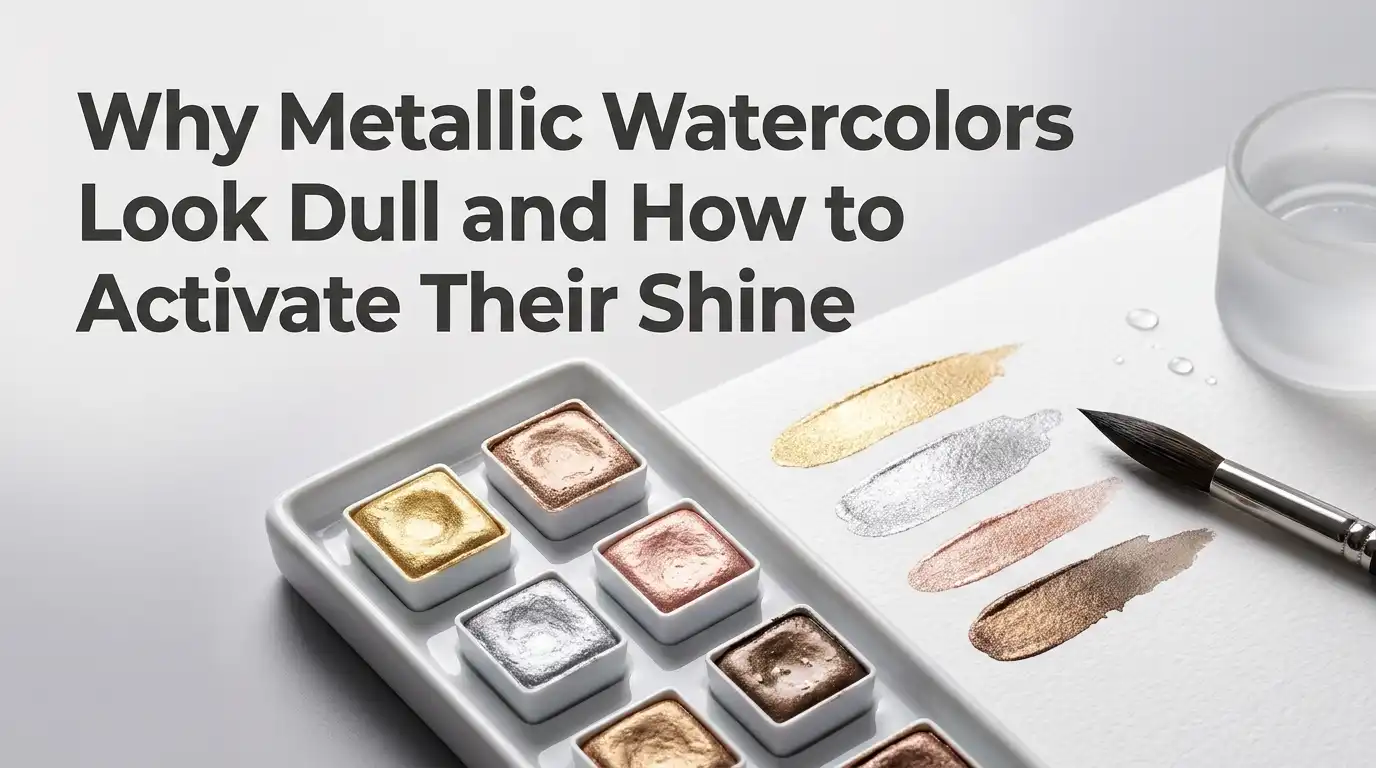
Why Metallic Watercolors Look Dull and How to Activate Their Shine?
Metallic watercolors can look amazing in the pan, then suddenly turn flat on paper. That gap is frustrating, especially when you expect a soft gold glow or a bright pearl flash. The good news is that dull metallics usually come from a few clear problems.
The paint may need more activation. The paper may be too absorbent. The layer may be too watery, too dry, or simply placed in the wrong spot.
Once you know what causes the shine to fade, you can fix it fast. This guide breaks the problem into simple steps. You will learn how metallic paint reflects light, how to wake up dry pans, and how to place the paint so the shine stays visible.
In a Nutshell
- Metallic watercolors shine because tiny reflective particles sit on the paper surface. If those particles sink too deep into soft paper or get spread too thin with too much water, the result looks weak. A bright metallic finish needs a smooth layer and the right amount of moisture.
- Activation matters more than many painters think. Dry metallic pans often need a light mist of water and a short wait before use. If you rush this step, your brush grabs uneven pigment. Then your strokes look patchy instead of smooth and bright.
- Paper changes the result in a big way. Smooth paper often gives a cleaner metallic flash. Dark paper can make many metallic shades look stronger. White paper can still work well, but the paint usually needs good contrast around it to stand out.
- Your brush and layering method also shape the shine. A brush that is too wet can flood the paint. A brush that is too rough can leave broken streaks. Two thin passes often give a better result than one heavy pass.
- Light angle changes what you see. Metallic watercolor does not behave like flat paint. It reflects light in a directional way. A color that looks dull from one seat may glow when you tilt the paper. That means some dullness is real, but some is just a viewing issue.
- The fastest fix is a rescue routine. Pre wet the pan, use less water, paint on a smoother or darker area, let the first layer dry fully, then add a second controlled layer. That simple process solves most dull metallic problems without stress.
What Makes Metallic Watercolors Shine in the First Place
Metallic watercolors shine because they hold tiny reflective particles, often mica based particles, inside the paint film. Those particles catch light and bounce it back to your eye. If they sit flat on the paper, the glow looks stronger. If they sink into texture or scatter in too much water, the shine drops.
That is why metallic paint is not just about color. It is also about surface, angle, and control. A smooth layer gives the particles a better chance to reflect light well. This is also why metallics can look stronger in person than in photos.
Pros: understanding the basic cause helps you solve the problem faster. Cons: metallics need a bit more care than regular watercolor, so quick loose methods can give mixed results.
Why Too Much Water Makes the Shine Sink
A common reason metallic watercolor looks dull is simple, too much water. When the mix is very thin, the reflective particles spread out too far. They may also settle unevenly as the puddle dries. The shine then looks weak, cloudy, or broken.
This does not mean you should use dry paint straight from the pan. It means you need enough water to move the pigment, but not so much that the metallic particles float away from each other. Think creamy, not watery.
A good test is to paint one stroke on scrap paper. If the stroke dries with pale edges and weak sparkle, it is likely too wet. If it looks smooth and catches light after drying, the ratio is better.
Pros: a balanced mix gives cleaner shine and stronger coverage. Cons: using less water can feel slower at first if you like very loose washes.
Why Too Little Water Leaves a Chalky Streak
Too little water can also cause dull metallic paint. In this case, the problem looks different. The stroke may feel scratchy, uneven, or chalky. The brush skips across the page and leaves dry gaps. The paint sits in broken lines instead of a smooth reflective film.
This happens when the pan is not fully activated or when the brush carries thick paint with no flow. Metallic particles need room to settle evenly. If the paint is pasty, the shine gets interrupted by dry streaks.
Try loading the brush, then mixing the paint once or twice on a palette before placing it on paper. That small step helps even out the particle spread. You want the paint to glide, not drag.
Pros: a slightly richer mix gives bold highlights. Cons: a mix that is too thick wastes paint and can create rough texture.
How to Activate the Pan the Right Way
Many metallic pans look dull because they were never fully activated. A better method is simple. Lightly mist the pan with clean water. Wait about thirty seconds. Then pick up the paint with a damp brush. This softens the binder and lets the metallic particles lift more evenly.
Do not scrub the pan hard with a wet brush right away. That can damage the brush tip and gives poor control over the water level. A short wait often makes a big difference. This is one of the easiest fixes for weak metallic shine.
If the pan is old and very hard, repeat the light mist once more. Then test the paint on scrap paper before using it in your piece.
Pros: this method improves flow and reduces patchiness. Cons: it adds a short prep step, so it may feel less fast than direct pickup.
Why Your Paper Choice Changes the Final Shine
Paper plays a big role in metallic watercolor results. Rougher and more absorbent paper can pull the paint down into the texture. That can soften the flash and make the surface look broken. Smoother paper often keeps more reflective particles on top, where they can catch light better.
That is why hot press paper often gives a cleaner metallic effect. Cold press paper can still work, but the shine may look softer and less even. If your metallics keep looking flat, test the same color on both paper types before blaming the paint.
This does not mean one paper is always best. Cold press gives texture and character. Hot press gives smoother sparkle and finer detail.
Pros: hot press can boost shine and smoothness. Cons: cold press may mute sparkle, while hot press can feel less forgiving for loose painting.
Why Dark Backgrounds Often Make Metallic Paint Glow More
Many metallic colors show up better on dark paper or over dark painted areas. The reason is contrast. A pale gold on white paper may reflect light, but your eye has less contrast to notice it. Place that same paint on a deep blue, black, or dark brown area, and the shine becomes much easier to see.
This is why metallic accents often work best as highlights over darker passages. You do not always need black paper, but you do need contrast. On white paper, a silver or pearl shade can disappear unless the area around it is darker.
Test one swatch on white paper and one on a dark wash. The difference is often clear right away.
Pros: dark backgrounds make many metallic shades pop fast. Cons: some metallics can look too strong or flashy if used everywhere.
How Brush Choice Affects Smooth Metallic Coverage
Your brush can make or break the finish. A very soft brush with too much water may flood the stroke. A worn brush can leave streaks and push particles into uneven clumps. Many painters get better metallic coverage with a simple synthetic brush that holds shape and releases paint in a more controlled way.
A good brush lets you place steady, smooth strokes. That matters because metallic shine looks better when the paint film stays even. If the stroke breaks apart, the reflective particles do too.
You do not need a special brush for every metallic color. But it helps to keep one brush for metallics if possible, especially if the paint is particle rich.
Pros: synthetic brushes can improve control and reduce waste. Cons: the wrong brush can make you blame the paint for a tool problem.
Why Mixing Metallics Into Muddy Colors Kills Sparkle
Metallic paint loses shine fast when you mix it into dull or muddy color piles. The reflective particles may still be there, but they get buried under flat pigment or spread so thin that the metallic effect becomes weak. This often happens when painters mix metallics deeply into dark neutral colors and expect a bright finish.
A better plan is to use metallic paint as a top accent or a separate layer. Let the base color do the value work, then let the metallic layer do the shine work. If you want a tinted metallic effect, keep the mix clean and simple.
Try mixing only a small amount of regular color into the metallic, not the other way around. That keeps the shimmer more visible.
Pros: cleaner mixes keep the sparkle alive. Cons: heavy color mixing can create pretty hues, but the shine often drops.
Why Layering Order Matters More Than Most People Think
Metallic watercolor often works best near the end of the process. If you place it too early, later layers can cover the reflective surface and cut the shine. If you add it after the main forms are dry, the metallic particles stay closer to the top and reflect more light.
This is why final accents often look brighter than early washes. Use metallics for highlights, edges, details, and selective glow. That gives you more control and protects the shimmer from later steps.
There are exceptions. Some artists like soft metallic underlayers for a hidden glow. That can look beautiful. But it is subtle by nature, so do not expect strong flash from that method.
Pros: final layer placement gives stronger shine. Cons: early layering can create depth, but the metallic effect usually looks softer.
How to Build Stronger Shine With Two Thin Layers
If one coat looks weak, many people reach for a thicker single coat. That can work, but it can also crack the smooth look of the finish. A smarter fix is often two thin layers. Let the first layer dry fully. Then add a second controlled pass right on top.
This method helps build particle density without turning the stroke into a heavy blob. Thin layers stay more even. Even coverage helps metallic particles catch light in a cleaner way.
Use the second layer only where you want the strongest flash. That gives you contrast inside the painting and keeps the metallic effect special.
Pros: two thin layers can increase shine and control. Cons: it takes more patience, and poor timing can lift the first layer if it is not fully dry.
Why Drying Time and Overworking Make Metallics Look Flat
Metallic watercolor needs time to settle. If you keep brushing the same area while it starts to dry, you disturb the reflective particles and break the surface. The result can look muddy, streaky, or dull. This is a classic overworking problem.
The fix is simple. Lay the stroke down, then leave it alone. A calm hand often gives a brighter finish than a busy hand. If the area looks weak, wait for full drying before you correct it.
This matters even more on absorbent paper, where the window for smooth application is short. Work with intention, not panic. One or two passes are often enough.
Pros: less overworking keeps the surface cleaner and shinier. Cons: stopping early can feel risky if you are used to correcting every stroke right away.
How Light Angle and Viewing Angle Change What You See
Sometimes your metallic watercolor is not dull at all. You are just viewing it from the wrong angle. Metallic particles reflect light in a directional way. So the same painted area can look quiet from one side and bright from another.
That means you should always tilt the paper under a lamp or near a window before deciding the result failed. A shine test needs movement. Static viewing can trick you into thinking the paint has no life.
This also explains why metallic work can look better in real life than in a flat photo. Cameras often miss the shifting sparkle. If you want to judge the finish honestly, move the paper and move yourself.
Pros: angle testing gives a more accurate read of the shine. Cons: a paint that depends too much on angle may look less bold in scans or prints.
A Simple Rescue Routine for Dull Metallic Watercolors
If your metallics look dull right now, use this quick routine. First, mist the pan lightly and wait. Second, test a creamy mix on scrap paper. Third, switch to a smoother area or darker base if possible. Fourth, use a controlled synthetic brush.
Fifth, lay one thin layer and let it dry fully. Sixth, add a second thin highlight only where you want the strongest flash.
This routine works because it fixes the main causes at once. It improves activation, water balance, surface choice, and layer control. You do not need a full restart in most cases.
Pros: this method is easy to repeat and easy to learn. Cons: it takes patience, and some paints will still look softer than highly reflective metallic mediums.
Final Thoughts
Dull metallic watercolor usually has a clear cause. The pan may be under activated. The mix may be too wet or too dry. The paper may be too textured. The paint may be buried under later layers or mixed into flat color. Once you fix those points, the shine improves fast.
The best part is that you do not need a complicated method. Small changes bring the biggest gains. Better prep, better water control, smarter placement, and patient layering can turn weak metallics into bright accents.
Test your paint on different papers, keep your strokes calm, and use contrast with purpose. Metallic watercolor shines best when you help it stay on the surface and catch the light.
FAQs
Why do metallic watercolors look bright in the pan but dull on paper?
The pan holds a dense surface of reflective particles. On paper, those particles spread out. If the paper is very absorbent, rough, or overloaded with water, the reflective effect gets weaker. Better activation and a smoother application usually fix this.
Can I use metallic watercolor on white paper and still get strong shine?
Yes, you can. The key is contrast. Metallic paint often stands out more on darker areas of the painting than on bright white space. If you paint it over a dark wash or near a shadow area, the shine is easier to see.
Should I use hot press or cold press paper for metallic watercolors?
Hot press often gives a smoother and brighter metallic finish because the surface is flatter. Cold press can still work well, but the texture may scatter the shine and make the result softer. Many artists test both and keep each for different looks.
How long should I let metallic pans soften before painting?
A short wait of about thirty seconds after a light mist of clean water often helps a lot. If the pan is very dry, you may need a little more time. The goal is soft activation, not a flooded pan.
Can I add gum arabic to make metallic watercolor shinier?
A very small amount can change flow and surface gloss, but too much can make reactivation harder later. For most painters, better pan activation, better water control, and layered placement improve shine more safely than adding extra binder.
Is one thick layer better than two thin layers?
Usually no. Two thin layers often look smoother and brighter than one heavy layer. Thick paint can sit unevenly and dry with rough patches. Thin layers let you build shine with better control.

Hi, I’m Zoe Ward, the creator and voice behind Fine Brush Vault. I’m passionate about art, painting, and exploring the world of colors. I spend my time testing and reviewing art supplies to help fellow creators find the best tools for their craft. Through honest reviews and detailed guides, my goal is to make your creative journey easier and more inspiring.