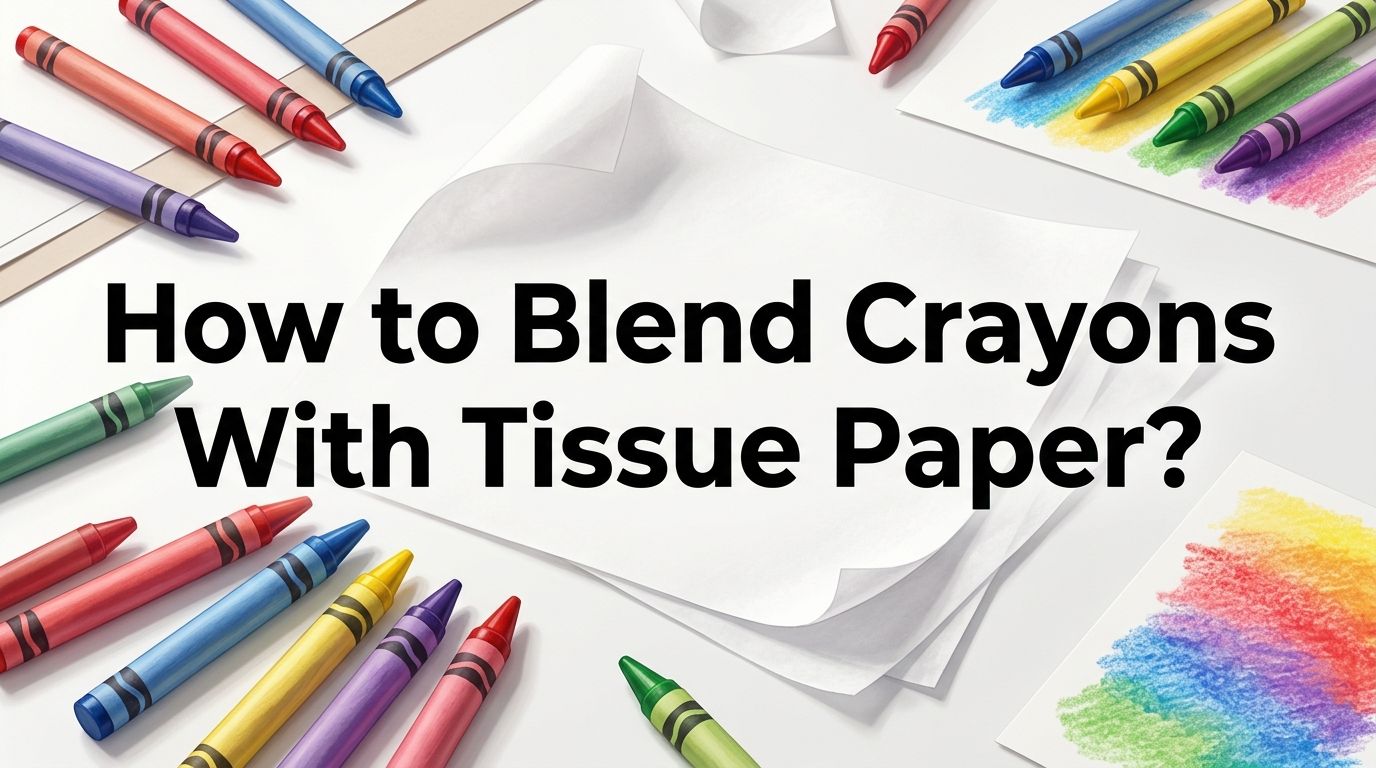
How to Blend Crayons With Tissue Paper? Complete Guide
Have you ever looked at a crayon drawing and wished the colors flowed into each other like a painting? Most people think crayons are limited to flat, streaky coloring.
That is simply not true. Blending crayons with tissue paper is one of the easiest, cheapest, and most effective ways to create smooth, professional color transitions.
Whether you are a beginner, a student, or a parent helping a child with an art project, this technique can change the way you see crayons forever.
Key Takeaways
- Tissue paper is one of the most affordable blending tools you can use with crayons. A single sheet costs almost nothing and produces surprisingly smooth results. You fold the tissue, press it onto the crayon layer, and rub gently in a circular motion. The soft fibers push the wax pigment into the paper grain and soften hard lines between colors.
- Light pressure is better than heavy pressure during the blending stage. Pressing too hard with the tissue can lift pigment off the page instead of smoothing it. Start gently and increase your pressure only as needed. This approach gives you more control over the final look of your blended area.
- Layering colors before blending is essential for a rich, deep finish. Apply your lightest crayon color first, then layer the darker shade on top. Use overlapping strokes where the two colors meet. The tissue paper will then merge those layers into a seamless gradient.
- The type of paper you draw on matters just as much as the blending tool. Textured or slightly toothy drawing paper holds more wax pigment and responds better to tissue blending. Very smooth or glossy surfaces can cause the crayon to skip and make blending difficult.
- You can combine tissue blending with other methods like finger blending, cotton swabs, or even a warm iron technique. Each method has different strengths. Tissue paper works best for broad, soft gradients. Cotton swabs are better for small detail areas.
- Practice and patience are the two biggest factors that determine your results. Your first attempt may not look perfect. That is completely normal. With a few practice sessions, you will develop a feel for the right pressure, motion, and layering order that works best for your style.
Why Tissue Paper Works So Well for Blending Crayons
Tissue paper is thin, soft, and slightly fibrous. These physical qualities make it perfect for pushing wax crayon pigment into the grain of your drawing paper. The gentle texture of the tissue smooths out visible crayon strokes without removing too much color.
Unlike blending stumps or tortillons, tissue paper covers a larger surface area in less time. This makes it ideal for backgrounds, skies, and any section that requires a wide, even color transition. The softness also means you are less likely to damage or tear your drawing paper.
Another advantage is the cost and availability of tissue paper. You can find it in any craft store, dollar store, or even in gift packaging at home. This makes the technique accessible to anyone, regardless of budget.
Pros: Very cheap, widely available, covers large areas quickly, gentle on paper.
Cons: Not ideal for small detail work, can tear if too wet or thin, may leave tiny fiber residues.
What Supplies You Need Before You Start
Gathering the right supplies makes the entire blending process smoother. You will need a set of wax crayons, a few sheets of plain white tissue paper (not the colored kind with dye), and a pad of medium weight drawing paper with some texture.
A hard, flat surface like a table or clipboard is also important. It gives your paper a firm backing so the tissue can press the pigment evenly. Keep a clean cloth or extra sheet of scrap paper nearby to wipe any color transfer off your hands.
Optional items include cotton swabs for detail blending, a craft knife for scraping highlights, and a can of workable fixative spray if you want to seal the finished piece. You do not need all of these to begin. The basics of crayons, tissue, and paper are enough.
How to Choose the Right Paper for Crayon Blending
The paper you use plays a huge role in how well tissue blending works. Smooth, glossy paper is a poor choice because wax crayons struggle to grip the surface. The pigment sits on top rather than sinking in, and blending becomes uneven.
Look for paper with a slight tooth or grain. Drawing paper, mixed media paper, and even heavier weight construction paper work well. These surfaces hold more crayon wax, which gives the tissue something to push and spread during blending.
Heavier paper (around 80 lb or higher) resists tearing and buckling during the rubbing process. Thinner papers may rip under repeated blending pressure. If you are using a sketchbook, make sure the pages are thick enough to handle friction.
Pros of textured paper: Holds pigment well, supports multiple layers, resists tearing.
Cons of textured paper: Visible grain can show through lighter applications, may require more crayon layers.
Step by Step Guide to Blending Crayons With Tissue Paper
Step 1: Choose your colors. Pick two or three crayon shades that sit near each other on the color wheel. Neighboring colors blend more naturally than contrasting ones.
Step 2: Apply the lightest color first. Use medium pressure and color in one direction. Cover the area evenly without leaving large gaps between strokes.
Step 3: Layer the second color. Overlap it slightly with the first color at the edges where you want the transition to happen. Use the same directional strokes for a consistent look.
Step 4: Fold a piece of tissue paper into a small, thick square. This gives you better control and prevents the tissue from tearing right away.
Step 5: Place the folded tissue on the colored area. Rub in small, circular motions with light to medium pressure. Work from the lighter color into the darker color. This pushes the lighter pigment into the darker one and creates a smooth gradient.
Step 6: Check your progress. Lift the tissue and look at the blended area. Add more crayon and repeat the blending if needed.
How Much Pressure Should You Apply During Blending
Pressure control is one of the most important parts of the tissue blending process. Too much pressure lifts pigment off the paper and can create bald spots in your color. Too little pressure does almost nothing.
Start with a light touch. Let the tissue glide over the wax. As you see the colors begin to merge, increase pressure slightly. The goal is to feel the friction between the tissue and the wax without pressing so hard that you smear the color completely.
A good rule of thumb is this: if your hand gets tired quickly, you are pressing too hard. Blending should feel easy and relaxed. Let the soft texture of the tissue do the work for you. Build up gradually rather than trying to achieve a perfect blend in one pass.
How to Layer Colors for the Best Blending Results
Layering is the foundation of any successful blend. Without proper layering, the tissue paper has nothing to work with. Always start with the lighter shade and build up to darker ones.
Apply the first layer using light to medium pressure. Fill the area evenly but do not press so hard that the paper becomes saturated with wax too early. Leave room for additional layers.
Add the second color on top. Focus on the overlap zone where the two colors meet. This is where the blend will happen. Use short, overlapping strokes to create a gradual change in hue.
You can add a third color for more complex gradients. For example, blending yellow into orange into red creates a beautiful sunset effect. Each additional layer adds depth and richness to the final result.
Pros of multiple layers: Richer colors, smoother transitions, more depth.
Cons of multiple layers: Can over saturate the paper, may require patience.
Circular Motion vs. Back and Forth: Which Blending Technique Is Better
The direction you move the tissue matters. Circular motions are the most common recommendation because they distribute the wax evenly in all directions. This prevents streaks and creates a uniform, soft look.
Back and forth motions can also work, especially if you want to maintain a sense of directionality in your art. A sunset sky, for example, might look more natural with horizontal blending strokes. This method tends to leave faint lines, though, so it requires more care.
A combination of both works well too. Start with circular motions to soften the initial crayon strokes. Then use gentle horizontal or vertical passes to refine the direction of the blend. Experiment with both and see which style fits your artwork.
Pros of circular motion: Even coverage, fewer streaks, natural looking blend.
Cons of circular motion: Harder to control in small spaces, may look too uniform for some styles.
Common Mistakes to Avoid When Blending Crayons With Tissue
Using colored tissue paper instead of white is the most frequent error. Colored tissue can bleed dye onto your drawing, especially if it gets damp from hand moisture. Always use plain white tissue for blending.
Another mistake is applying too much crayon in one layer. A thick wax buildup becomes slippery, and the tissue slides over it without blending. Multiple thin layers produce much better results than one heavy coat.
Skipping the folding step is also a problem. A single ply of tissue tears almost instantly. Fold it at least twice to create a sturdy pad. Replace the tissue once it becomes saturated with wax, or it will start smearing color instead of blending it.
Finally, do not blend too early. Let your crayon layers build up before reaching for the tissue. A rushed blend on thin color produces a washed out, patchy look instead of a smooth transition.
Other Blending Methods You Can Combine With Tissue Paper
Tissue paper blending does not have to work alone. You can pair it with several other techniques for better control and different effects.
Cotton swabs are excellent for blending small or detailed areas. Dip the tip lightly into the crayon color, or simply rub it over the colored area. This gives you precision that tissue paper cannot offer.
Finger blending uses the natural warmth and oils of your skin to soften wax crayons. It works fast but can get messy and may leave fingerprints. Use it for rough blending before finishing with tissue for a cleaner result.
Some artists also use rubbing alcohol on a cotton pad to dissolve wax crayons and create paint like effects. This method is more advanced and requires ventilation, but the results can look stunning.
Pros of combining methods: Greater flexibility, better detail work, varied textures.
Cons of combining methods: More supplies needed, steeper learning curve.
Tips for Blending Crayons With Tissue Paper on Different Art Projects
This technique works well beyond simple drawings. Greeting cards benefit from soft, blended crayon backgrounds. Color a section of the card stock, blend it with tissue, and then stamp or write over the top.
Coloring books for adults and children also look much better with tissue blended crayons. The smooth gradients give the pages a polished, finished appearance. Use tissue paper for large background areas and switch to cotton swabs for tight corners.
School projects and posters gain visual impact from blended crayon sections. A blended sky or gradient border immediately makes the project look more professional. Teachers and students both appreciate this simple upgrade.
For journal covers and scrapbook pages, crayon blending adds a handmade, artistic touch. Seal the finished blend with a light coat of fixative spray to prevent smudging over time.
How to Fix a Bad Blend Without Starting Over
A bad blend does not mean your artwork is ruined. You have several options for correction. Adding another light layer of crayon over the blended area and re blending with fresh tissue can often fix patchy spots.
If one color overpowered another, apply more of the lighter shade at the border zone. Blend again with gentle circular pressure. This pushes the lighter pigment back into the transition and rebalances the gradient.
For areas where too much wax built up and the surface feels slippery, use a craft knife or a toothpick to gently scrape away excess wax. Be careful not to damage the paper underneath. Once you remove the top layer, you can re apply color and blend again.
If all else fails, place a clean sheet of scrap paper over the problem area and rub it firmly. This can lift some of the excess wax and give you a cleaner surface to work with.
How to Preserve Your Finished Crayon Artwork
Blended crayon art is prone to smudging because the wax never fully dries. Protecting the surface is important if you want your work to last. A workable fixative spray creates a thin protective barrier over the wax without changing the color.
Hold the spray can about 12 inches from the paper. Apply two or three light coats, letting each coat dry before adding the next. Heavy spraying can dissolve or shift the wax, so thin layers are safer.
If you do not have fixative spray, you can place a sheet of wax paper or parchment paper over the finished drawing and store it flat. This prevents contact smudging and keeps the colors vibrant. Framing the art behind glass is another excellent long term option.
Avoid storing finished pieces in warm environments. Heat can soften the wax and cause colors to shift or stick to adjacent surfaces.
Frequently Asked Questions
Can you blend any brand of crayons with tissue paper?
Yes, most wax based crayon brands respond well to tissue paper blending. Higher quality crayons with more pigment and softer wax tend to blend more smoothly. Cheaper brands may require more layers and extra blending effort. The technique itself works across all standard wax crayons, so feel free to use whatever you have at home.
Does tissue paper blending work with oil pastels too?
It does. Oil pastels are softer and oilier than wax crayons, so they blend even more easily with tissue paper. The results tend to be smoother and more vivid. Use the same folding and circular motion technique. Just be aware that oil pastels produce more color transfer, so change your tissue more frequently.
What is the difference between using tissue paper and a blending stump?
Tissue paper covers broader areas and creates soft, wide gradients. A blending stump is a pointed, tightly rolled paper tool that gives you precise control over small areas. Tissue paper is better for backgrounds and large sections. Blending stumps are better for fine details and edges.
Can kids safely use this technique?
Absolutely. Tissue paper blending is safe, non toxic, and requires no special tools. It is a great activity for children of all ages. Younger kids may need help folding the tissue, but the actual blending motion is simple enough for small hands. It also teaches them about color mixing in a hands on way.
How do you prevent the tissue paper from tearing during blending?
Fold the tissue paper into at least two or three layers before blending. This creates a thicker pad that resists tearing. Use light pressure at first and increase gradually. Replace the tissue when it becomes thin, damp, or saturated with wax. Working on a firm, flat surface also helps reduce the chance of tearing.
Is there a specific type of tissue paper that works best?
Plain white, unscented tissue paper works best. Avoid tissue paper with printed designs, metallic coatings, or embedded dye, as these can transfer unwanted colors or textures onto your artwork. Standard gift wrapping tissue is perfectly fine. The thinner and softer the tissue, the more gently it blends the crayon wax.

Hi, I’m Zoe Ward, the creator and voice behind Fine Brush Vault. I’m passionate about art, painting, and exploring the world of colors. I spend my time testing and reviewing art supplies to help fellow creators find the best tools for their craft. Through honest reviews and detailed guides, my goal is to make your creative journey easier and more inspiring.