Why Is My Watercolor Palette Beading Up and How to Prep It for Mixing?
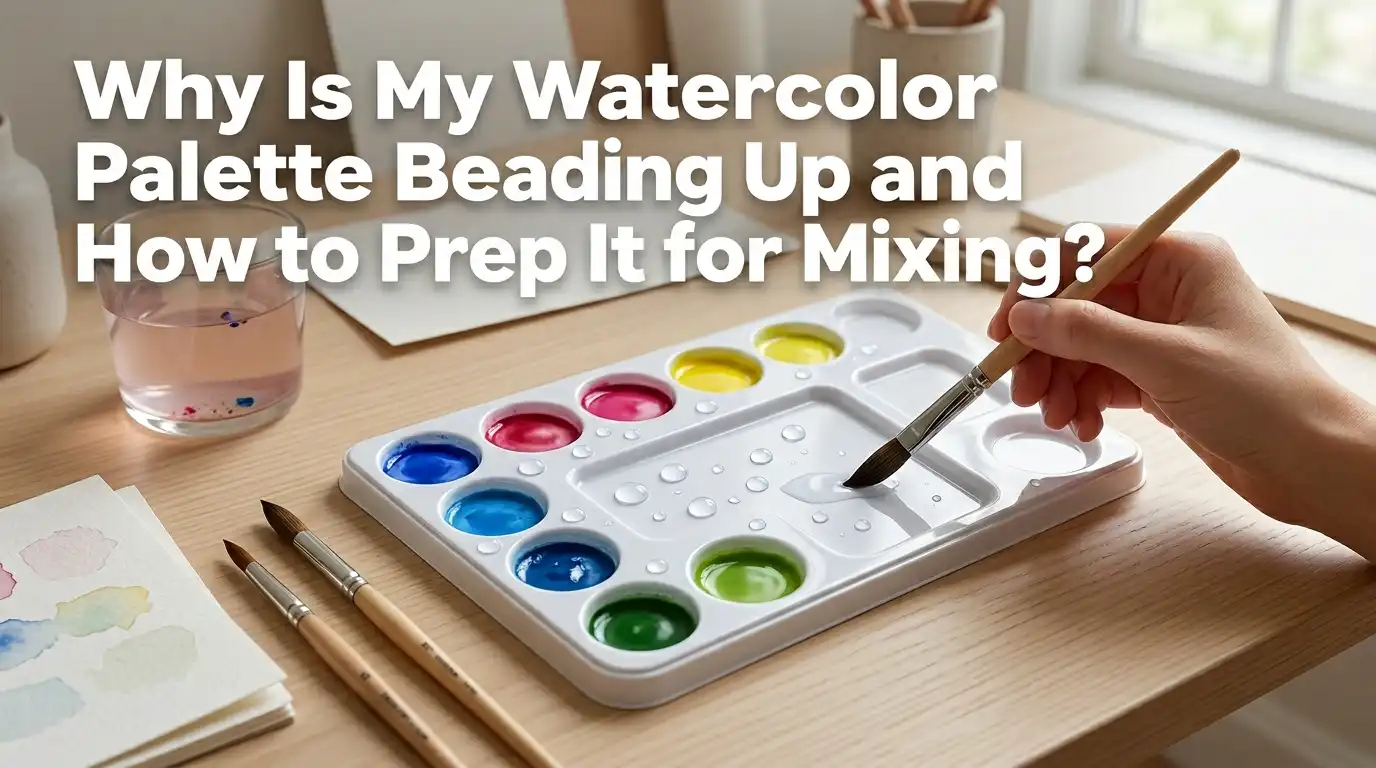
You just unboxed a shiny new watercolor palette. You scoop up a juicy mix of pigment and water, drop it into the mixing well, and then it happens. The paint shrinks into tiny, stubborn beads that refuse to spread. You poke them with your brush, and they scatter like marbles. Frustrating, right?
This problem hits almost every watercolor artist at some point. The good news is that beading has a clear cause and several easy fixes.
In this post, you will learn why your palette pushes paint away, how to prep its surface properly, and which methods work best for plastic, ceramic, metal, and enamel palettes. By the end, you will mix smooth puddles like a pro.
In a Nutshell
- Beading happens because of surface tension. New palettes have a smooth, slightly oily, factory finish that repels water. The paint cannot grip the slick surface, so it pulls itself into round drops.
- The fix is either to clean the oils away or to roughen the surface very slightly. A bit of dish soap, a quick rub with a melamine sponge, or a thin glue stick coating usually solves the issue in minutes.
- Plastic palettes need different prep than enamel or ceramic. Plastic responds well to glue stick or toothpaste. Enamel prefers gentle buffing. Metal often just needs soap and time.
- Avoid harsh tools like sandpaper, steel wool on enamel, or open flames. These can permanently scar your palette and leak chemicals into your paint.
- Patience helps too. Most palettes break in naturally after two or three painting sessions, so even if your first prep is imperfect, daily use will smooth the problem out.
- Always test with a neutral pigment like yellow ochre before judging the result. Some pigments naturally bead more than others.
What Beading Actually Means on a Watercolor Palette
Beading is when your watercolor mix forms small, round drops instead of spreading into a flat puddle. The paint looks like rain on a freshly waxed car. You try to push it around, but it keeps pulling back into balls.
This happens because water has surface tension. Water molecules cling to each other more than they cling to a slick plastic or glossy enamel surface. When the surface offers no grip, the water curls up to reduce contact.
The result is a palette where you cannot judge color, value, or consistency. Your mixes look darker and thicker than they really are, and you waste paint chasing the beads. Understanding this small physics fact is the first step to fixing it for good.
Why New Palettes Bead Up the Most
Brand new palettes almost always bead. There is a simple reason. During manufacturing, plastic and enamel palettes pick up thin layers of mold release oil, polishing wax, or factory residue. These coatings keep the palette from sticking to its mold and protect it during shipping.
Sadly, those same coatings are hydrophobic, which means they push water away. Your paint cannot soak in or even sit flat. It rolls up into drops as if you sprinkled it on a candle.
A new palette also has a microscopically smooth surface. There are no tiny scratches or pores for the paint to grab. Once you remove the oils and add a little texture, the beading vanishes. This is why almost every prep method targets one or both of these issues.
How to Tell If Your Palette Needs Prepping
Before you start scrubbing or rubbing, do a quick test. Drop a small puddle of clean water into one of the mixing wells. Watch what happens for about ten seconds.
If the water spreads into a flat shape, your palette is ready. If it beads up into a tight dome, you need to prep. You can also try a watered down stroke of yellow ochre or burnt sienna. These pigments are neutral and reveal the true behavior of your surface.
Test each well separately. Sometimes one section of a palette is fine while another beads heavily. This is common with cheaper palettes that have uneven coatings. Knowing which areas need help saves time and stops you from over treating areas that already work.
Method One: Wash With Dish Soap and Warm Water
The gentlest fix is also the easiest. Squeeze a drop of regular dish soap into the palette. Use a soft sponge or your fingers to scrub every well and the mixing area. Rinse thoroughly with warm water and dry with a lint free cloth.
This removes most factory oils and residues. Many artists find that a single wash is enough for low cost plastic palettes. Repeat the wash if beading remains after the first round.
Pros: It is fast, free, safe for every palette type, and uses things you already own. There is no risk of damaging the surface.
Cons: Soap alone may not work on stubborn coatings. Some glossy plastic palettes need extra steps because the slick finish itself, not just the oil, is the problem. You may still see light beading after washing.
Method Two: The Glue Stick Trick
This is the most popular fix among watercolor teachers. Grab a basic white glue stick, the kind kids use in school. Rub it across every mixing well and flat surface where you plan to mix paint. Coat it evenly but not thickly.
Then take a dry paper towel and wipe most of it off. You only want a thin invisible film left behind. Let the palette dry for a few minutes before you start painting.
Pros: It works almost instantly. The water soluble glue creates a friendly surface that grips paint without affecting color. It is cheap, nontoxic, and reversible. You can rinse it off any time.
Cons: The coating washes away after a few sessions, so you have to reapply. It also leaves a faint film inside deep wells, which some artists dislike for very fine washes. Avoid using glitter or scented glue sticks, since these can stain.
Method Three: Toothpaste Buffing
Plain white toothpaste, the non gel kind, contains gentle abrasives that polish teeth. Those same abrasives can lightly scratch a slick palette. Squeeze a pea sized drop into each well. Rub it in circles with your fingertip or a soft cloth for one to two minutes.
Rinse the palette under warm water and dry. The microscopic scratches give your paint something to grip, just like fine sandpaper would, but without harsh damage.
Pros: It is safe, mild, and effective on plastic and enamel. The mint smell is a small bonus. Toothpaste also removes oily residue at the same time, so you handle both causes in one step.
Cons: Avoid whitening or gel toothpastes, as they may contain chemicals that stain. The effect on very hard enamel can be subtle, so you may need to buff longer. Do not use this on metal palettes with delicate coatings.
Method Four: Melamine Sponge or Magic Eraser
A melamine foam sponge, often sold as a magic eraser, is the gold standard for enamel and ceramic palettes. Wet the sponge and gently rub it over the mixing surface in small circles. Use light pressure for five to ten minutes.
The melamine creates microabrasions that break surface tension without harming the palette. Rinse and dry, then test with water. If beading remains, repeat in those spots.
Pros: It works on tough enamel that resists soap and glue stick methods. The result is long lasting because the surface itself is changed, not just coated. Many enamel palette makers actually include a priming pad for this purpose.
Cons: Melamine wears down quickly, so you will use up the sponge fast. Use only the plain version without added cleaning chemicals. Skip this method on cheap soft plastic palettes, as it can cloud or scuff them too aggressively.
Method Five: Just Paint Through It
Some experienced artists swear by simply using the palette and waiting. Each painting session leaves tiny pigment particles in the wells. Over time, these create a thin, paint friendly skin that ends the beading on its own.
You can speed this up by staining the palette. Mix a strong wash of a staining color like phthalo blue or alizarin crimson. Spread it across the wells, let it sit for an hour, then wipe gently. Some color will remain, and that is fine.
Pros: It is the most natural, fuss free option. Your palette breaks in the way it would after months of use. There is zero risk of damage.
Cons: It is slow. You may struggle through several frustrating sessions before the beading fully stops. Light colors mixed in stained wells may pick up tints, which can affect color accuracy.
How to Prep a Plastic Palette Step by Step
Plastic palettes are the most common type, so let us walk through a clean routine. First, wash it with dish soap and warm water. Use a soft sponge and reach into every corner. Rinse and dry completely.
Next, decide on a prep method. Glue stick is the fastest fix, while toothpaste is the most permanent. Apply your chosen method evenly across the mixing wells. Wipe off any excess so the surface looks dry.
Test the result with clean water. If it spreads, you are ready to paint. If it still beads, repeat the process once more. Most plastic palettes need only one round. After painting, rinse gently. Avoid harsh scrubbers, since they can strip your prep work.
How to Prep a Ceramic, Enamel, or Metal Palette
These palettes need a softer touch. For ceramic and enamel, wet a melamine sponge and buff for five to ten minutes in circles. Rinse and check for beading. Repeat in stubborn areas. This method respects the smooth glaze while still adding grip.
For metal palettes, especially folding tin sets, start with warm soapy water. The painted enamel coating inside metal palettes is usually thinner. Use only gentle melamine buffing if soap fails. Skip toothpaste, which can dull the finish over time.
Never use sandpaper, steel wool, or knives on any of these surfaces. Deep scratches collect old pigment, harbor mold, and ruin the look of premium palettes. A primed surface should still feel smooth to the touch, just slightly less slick than before.
Common Mistakes That Make Beading Worse
A few well meant fixes can backfire. Some artists try to burn off the coating with a lighter or stove. This warps plastic, releases toxic fumes, and almost always ruins the palette. Never do this.
Others use coarse sandpaper or wire brushes. These leave visible scratches that trap pigment and stain forever. Your white mixing wells will look gray within weeks. Stick to gentle abrasives like melamine foam or toothpaste.
Another mistake is using oily hand creams or cooking oils on the palette. These add more hydrophobic residue and make beading worse. Always work with clean, dry hands. Also avoid silicone based polishes, since they create the slickest surface possible, the opposite of what you want.
How to Maintain Your Palette So Beading Does Not Return
Once your palette behaves, you want to keep it that way. After each session, rinse with warm water and a soft sponge. Skip soap unless the wells look greasy, since frequent washing can strip your prep.
Let the palette air dry upside down on a towel. Trapped water can leave mineral spots that cause uneven beading later. Store it in a clean, dust free spot, away from kitchen oils or hand lotions.
Reapply your glue stick or buff treatment every few weeks if you used those methods. With regular use, your palette will eventually break in for life. At that point, even a quick rinse will keep mixing smooth and predictable for years of painting ahead.
When to Replace Your Palette Instead of Fixing It
Sometimes a palette is just not worth saving. If the surface is deeply scratched, stained beyond cleaning, or warped from heat, prepping will not help. Mold and mildew that soaked into cracks are also a sign to move on.
Cheap dollar store palettes often have such uneven plastic that no method gives consistent results. If you have tried two or three fixes with no improvement, your money is better spent on a mid range plastic, ceramic, or enamel palette.
A good palette can last decades when treated well. Investing once in quality and prepping it correctly saves frustration and reduces waste. Look for porcelain butcher trays, folding metal palettes with white enamel interiors, or thick plastic palettes with deep wells.
FAQs
Why does my watercolor still bead after washing the palette with soap?
Soap removes oil but does not change the smoothness of the surface. If your palette is glossy plastic or new enamel, you may also need to buff it lightly with toothpaste or a melamine sponge to add grip.
Can I use hand soap or shampoo instead of dish soap?
Dish soap works best because it cuts oils more strongly. Hand soap and shampoo often contain moisturizers that leave a film behind. That film can actually make beading worse, not better.
How long does the glue stick prep last?
Most artists get three to six painting sessions per application. Once you notice beading return, simply rub on another thin coat. A single glue stick lasts a long time, so the cost is minimal.
Will beading damage my paintings?
No, beading does not affect the paint itself or your finished work. It only makes mixing harder and color judging less accurate. Once paint touches paper, it spreads normally.
Is it safe to use toothpaste on a child friendly palette?
Yes, plain white toothpaste is nontoxic and rinses off completely. Just make sure to wash the palette thoroughly afterward so no minty residue remains in the wells.
Do expensive palettes still bead?
Yes, even premium enamel and porcelain palettes bead when new. They often need the longest break in time because their surfaces are so polished. A few minutes with a melamine sponge usually fixes them quickly.
Can I use the same prep method on a porcelain dinner plate I use as a palette?
Absolutely. Wash with dish soap first, then buff gently with a melamine sponge if needed. Porcelain plates make excellent mixing surfaces once primed.

Hi, I’m Zoe Ward, the creator and voice behind Fine Brush Vault. I’m passionate about art, painting, and exploring the world of colors. I spend my time testing and reviewing art supplies to help fellow creators find the best tools for their craft. Through honest reviews and detailed guides, my goal is to make your creative journey easier and more inspiring.