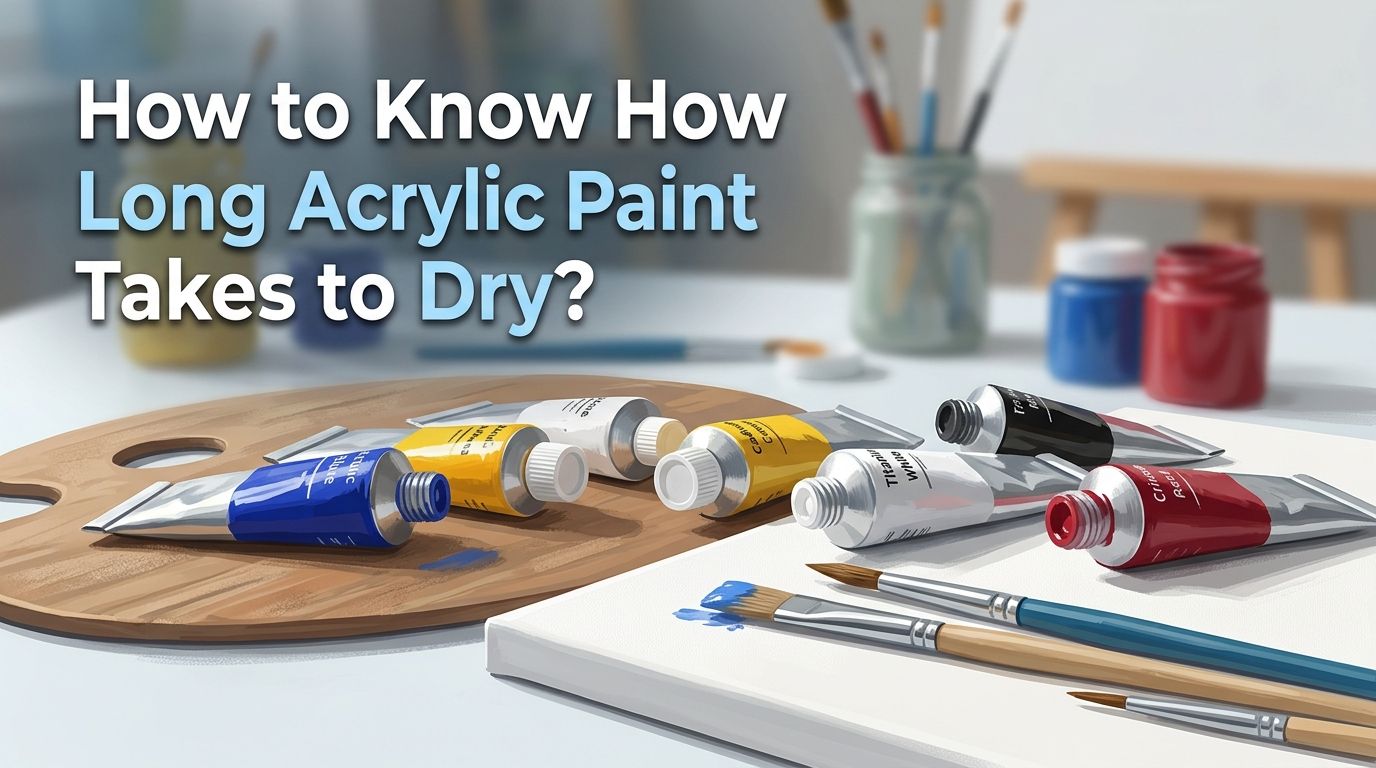
How to Know How Long Acrylic Paint Takes to Dry?
Have you ever touched your acrylic painting too soon and left a fingerprint right in the middle of your work? Or maybe you waited hours and the paint still felt sticky.
You are not alone. Acrylic paint is one of the most popular art mediums in the world, but its drying time confuses beginners and experienced painters alike. The truth is, acrylic paint does not have a single drying time. It depends on many factors you can actually control.
This blog post will walk you through everything you need to know about acrylic paint drying times.
Key Takeaways
- Acrylic paint dries to the touch in 10 to 30 minutes for thin layers. Thicker layers can take one to two hours or more. Full curing, where the paint reaches its strongest and most durable state, takes 24 to 72 hours depending on conditions.
- Temperature plays a big role. The ideal range for acrylic painting is between 60°F and 75°F. Paint dries faster in warm conditions and slower in cold environments. Avoid painting below 50°F, as the paint may not form a proper film.
- Humidity matters even more than temperature. High humidity slows down water evaporation from the paint, which means longer drying times. Low humidity speeds things up but can also cause paint to dry too fast on your palette.
- You can speed up drying by using thin layers, pointing a fan at your work, or using a hair dryer on a low setting. Keep the dryer at least 6 inches away and avoid temperatures above 100°F to protect the paint film.
- You can slow down drying by using a retarder medium, a wet palette, or misting your palette with water. This gives you more blending time and keeps your paint usable for longer sessions.
- Surface type changes drying time significantly. Porous surfaces like wood and unprimed canvas absorb water from the paint and speed up drying. Non porous surfaces like glass and plastic hold moisture longer, so drying takes more time.
How to Understand the Difference Between Drying and Curing
Many people think acrylic paint is done once it feels dry to the touch. That is only half the story. Drying and curing are two separate stages, and knowing the difference will save you from common mistakes.
The drying stage happens when water evaporates from the surface of the paint. This usually takes 10 to 30 minutes for a thin layer. At this point, the surface feels dry but the paint underneath may still be soft.
The curing stage is when all the water fully evaporates and the acrylic polymer particles fuse together into a solid film. This process can take 24 hours to several days depending on layer thickness and environmental conditions. You should avoid varnishing or stacking paintings until the paint has fully cured.
How to Tell If Your Acrylic Paint Is Fully Dry
Touching the surface is the simplest test, but it can be misleading. The top layer may feel dry while the layers underneath remain soft. Here are more reliable ways to check.
Press your fingernail gently into an edge or corner of the painting. If the paint dents or feels soft, it is not cured yet. A fully cured acrylic surface will feel hard and resistant to pressure.
Look at the color. Acrylic paint often appears slightly darker or more saturated after it dries. If the color still looks lighter than expected, the paint may still be drying. This color shift is normal and happens as the white acrylic emulsion becomes transparent.
For thick applications, wait at least 24 to 48 hours before testing. Some heavy body paints applied in thick layers can take up to 72 hours to fully cure.
How to Know What Factors Affect Acrylic Paint Drying Time
Several factors directly control how fast or slow your acrylic paint dries. Understanding these gives you the power to adjust your painting conditions for the best results.
Temperature is a major factor. Warm air speeds up evaporation, so paint dries faster in warmer rooms. The sweet spot is between 60°F and 75°F. Below 50°F, the paint may not form a proper film at all.
Humidity has an even bigger impact than temperature. In a humid environment, the air is already saturated with moisture, so water in the paint has nowhere to go. A room with 85% humidity can double or triple drying time compared to a room at 40% humidity.
Airflow also matters. Moving air carries moisture away from the paint surface and speeds up drying. A gentle fan pointed near your work can make a noticeable difference.
Paint thickness is the factor most within your control. Thin washes dry in minutes. Thick impasto layers can stay wet for hours.
How to Make Acrylic Paint Dry Faster
Sometimes you need your paint to dry quickly so you can add another layer or finish a project on deadline. Here are practical ways to speed things up.
Apply thin layers. This is the simplest and most effective method. Thin paint has less water to evaporate, so it dries in as little as 5 to 10 minutes. Build your painting in multiple thin coats instead of one thick layer.
Use a hair dryer on low heat. Hold it about 6 to 12 inches from the surface and keep it moving. Do not aim it at one spot for too long. Avoid temperatures above 100°F, as excess heat can crack the paint or damage the acrylic polymers.
Increase room airflow. Open a window or set up a small fan. The moving air will pull moisture away from the painting.
Lower the humidity. A dehumidifier in your painting space can reduce ambient moisture and cut drying time. This is especially helpful in basement studios or tropical climates.
Pros: Faster workflow, quicker layering, more productive painting sessions.
Cons: Less blending time, paint may dry on palette too quickly, risk of cracking if heat is too high.
How to Slow Down Acrylic Paint Drying Time
Fast drying is one of acrylic paint’s biggest advantages, but it can also be frustrating. If you enjoy blending, glazing, or working slowly, here is how to extend your working time.
Use a retarder medium. Mix a small amount of acrylic retarder into your paint. This additive slows evaporation and can extend working time by 10 to 15 minutes or more. Do not add more than 15% retarder by volume, or the paint may become sticky and fail to cure properly.
Try a wet palette. A wet palette uses a sponge layer and parchment paper to keep paint moist. It can keep your acrylic paint workable for hours or even a full day. This is a favorite tool among miniature painters and detail artists.
Mist your palette and canvas. A small spray bottle filled with water can keep things moist. Lightly mist the surface and your palette every few minutes.
Pros: More blending time, smoother gradients, less wasted paint.
Cons: Longer wait between layers, risk of overworking the paint, retarder can make paint gummy if overused.
How to Handle Acrylic Paint Drying Time on Canvas
Canvas is the most common surface for acrylic painting. Pre primed canvas has a slightly absorbent surface that pulls moisture from the paint at a moderate rate.
On a primed canvas, thin layers dry in about 15 to 30 minutes. Thicker applications can take one to two hours. The primer (usually gesso) seals the canvas fibers and creates a consistent surface for paint adhesion.
On unprimed canvas, the fabric absorbs water from the paint very quickly. This can cause the paint to dry within minutes and may result in a dull, matte finish. It also uses more paint because the raw fibers soak up the binder.
For best results, always prime your canvas with gesso before painting. This gives you more control over drying time and produces richer, more vibrant colors. Allow the gesso to dry for at least one hour before applying your first paint layer.
How to Manage Acrylic Paint Drying Time on Wood
Wood is another popular surface for acrylic paint, whether you are painting a sign, furniture, or an art panel. The drying process on wood has some unique qualities.
Raw wood is very porous. It absorbs water from acrylic paint rapidly, which means the paint can feel dry to the touch in 10 to 15 minutes. However, this fast absorption can lead to uneven coverage and a flat appearance.
Sealed or primed wood dries more slowly and evenly. Apply a coat of gesso or wood primer before painting. This creates a barrier that allows the paint to dry at a normal rate and improves adhesion.
Between coats, wait at least 30 minutes to one hour on primed wood. For a final protective layer or varnish, wait a full 24 to 48 hours to make sure the paint has cured completely. Rushing this step can trap moisture under the varnish and cause cloudy spots or peeling.
How to Deal With Acrylic Paint Drying Time on Glass and Plastic
Non porous surfaces like glass and plastic do not absorb moisture from acrylic paint. This creates a completely different drying experience compared to canvas or wood.
On glass, acrylic paint can take 30 minutes to a few hours to dry because the water has to evaporate only from the surface. There is no absorption happening underneath. The paint will also be less durable on glass unless you bake it or use a sealant.
On plastic, drying times are similar. The smooth, non porous surface prevents absorption and extends drying. Adhesion can also be a problem on plastic surfaces, so light sanding or a primer coat will help the paint grip.
Pros of painting on non porous surfaces: Longer working time, smooth finishes.
Cons: Slower drying, weaker adhesion without prep, paint can peel if surface is not prepared properly.
How to Wait the Right Amount of Time Between Coats
Applying a second coat too soon is one of the most common acrylic painting mistakes. If the first layer is not ready, the new paint can lift, smear, or mix with the layer below.
For thin layers, wait at least 15 to 30 minutes before adding a second coat. This gives the surface enough time to dry and form a stable base. For thicker layers, wait one to two hours to be safe.
A good rule of thumb: the paint should not feel cool to the touch. Wet acrylic feels slightly cool because of evaporating water. Once it reaches room temperature, it is usually safe to add another coat.
If you are applying varnish, wait much longer. Most experts recommend 24 to 72 hours after your final paint layer before varnishing. Some thick paintings may need even longer. Patience at this stage protects your finished work.
How to Prevent Common Problems Caused by Improper Drying
Many acrylic painting problems trace back to drying issues. Understanding these problems helps you avoid them.
Cracking happens when the top layer dries faster than the layer below. The dry surface shrinks and cracks over the still wet paint underneath. Prevent this by applying thin, even layers and avoiding excessive heat from dryers.
Cloudiness occurs when moisture gets trapped in the paint film. This is common in cold or humid conditions. Make sure your painting space is warm and well ventilated. If you see milky areas, they often clear up once the paint fully cures.
Peeling results from poor adhesion, usually on non porous surfaces that were not prepared. Always clean and prime glass, metal, and plastic before painting. Light sanding creates texture for the paint to grip.
Sticky surfaces can happen when too much retarder is used or when paint is applied too thickly in humid conditions. If your painting feels tacky after 48 hours, move it to a warmer, drier area with good airflow.
How to Choose the Right Paint Consistency for Your Drying Needs
Acrylic paint comes in different consistencies, and each one dries at a different rate. Choosing the right one for your project saves time and frustration.
Fluid acrylics are thin and pourable. They dry the fastest, often in under 10 minutes for thin applications. These work well for glazing, watercolor effects, and detail work where you want quick layer building.
Soft body acrylics have a creamy, yogurt like consistency. They dry in about 15 to 30 minutes and offer a good balance between drying time and workability. Most general painting techniques work well with soft body paint.
Heavy body acrylics are thick like butter. They hold brush and palette knife marks and can take one to two hours or more to dry depending on application thickness. These are best for impasto and textured techniques.
Pros of fluid acrylics: Fast drying, smooth coverage, great for layering.
Cons of fluid acrylics: Limited texture, can dry too fast for blending.
Pros of heavy body: Rich texture, bold strokes, longer working time.
Cons of heavy body: Slow drying, higher chance of cracking in thick layers.
How to Create the Perfect Painting Environment for Acrylic Drying
Your painting space has a direct effect on drying time. A few simple adjustments can make your studio work for you instead of against you.
Keep your room temperature between 65°F and 75°F. This is the ideal range for even drying without the risk of cracking or improper film formation. Avoid painting in unheated garages or outdoor spaces in cold weather.
Monitor humidity with an inexpensive hygrometer. Aim for 40% to 50% relative humidity for the best drying conditions. If humidity is above 60%, consider using a dehumidifier.
Ensure gentle airflow in your workspace. A small fan on low speed positioned a few feet from your easel moves enough air to help drying without blowing dust onto wet paint. Avoid strong drafts that could cause uneven drying across the painting surface.
Good lighting also helps. It allows you to spot areas that are still wet and avoid touching them too soon. Natural light or a daylight balanced lamp works best for accurate color and surface assessment.
Frequently Asked Questions
How long does acrylic paint take to dry on canvas?
Thin layers on primed canvas dry to the touch in about 15 to 30 minutes. Thicker applications can take one to two hours. Full curing takes 24 to 72 hours depending on layer thickness and room conditions. Always prime your canvas with gesso for the most consistent drying results.
Can I use a hair dryer to speed up acrylic paint drying?
Yes, a hair dryer works well on a low heat setting. Hold it 6 to 12 inches from the surface and keep it moving. Do not use high heat, as temperatures above 100°F can damage the acrylic polymer and cause bubbling or cracking. A cool or warm setting is safest.
How long should I wait between coats of acrylic paint?
Wait at least 15 to 30 minutes for thin layers and one to two hours for thicker applications. The paint should feel dry and room temperature before you add the next coat. Rushing this step can cause the new layer to lift or mix with the paint underneath.
Why does my acrylic paint feel sticky even after drying?
Sticky paint usually means the paint has not fully cured. High humidity, thick application, or too much retarder medium can cause this. Move the painting to a warm, dry area with good airflow. If it stays sticky after 72 hours, the paint may have been mixed with too much additive.
How long does acrylic paint take to dry on wood?
On raw wood, acrylic paint can feel dry in 10 to 15 minutes because the wood absorbs moisture quickly. On sealed or primed wood, expect 20 to 40 minutes for thin layers. Always wait 24 to 48 hours before applying varnish or sealant to a painted wood surface.
Does acrylic paint dry faster in hot weather?
Yes. Warm temperatures speed up water evaporation, which shortens drying time. However, extremely hot conditions above 90°F can cause the paint to dry too fast on the surface and trap moisture underneath. This leads to cracking or poor adhesion. The ideal temperature range is 60°F to 75°F.

Hi, I’m Zoe Ward, the creator and voice behind Fine Brush Vault. I’m passionate about art, painting, and exploring the world of colors. I spend my time testing and reviewing art supplies to help fellow creators find the best tools for their craft. Through honest reviews and detailed guides, my goal is to make your creative journey easier and more inspiring.