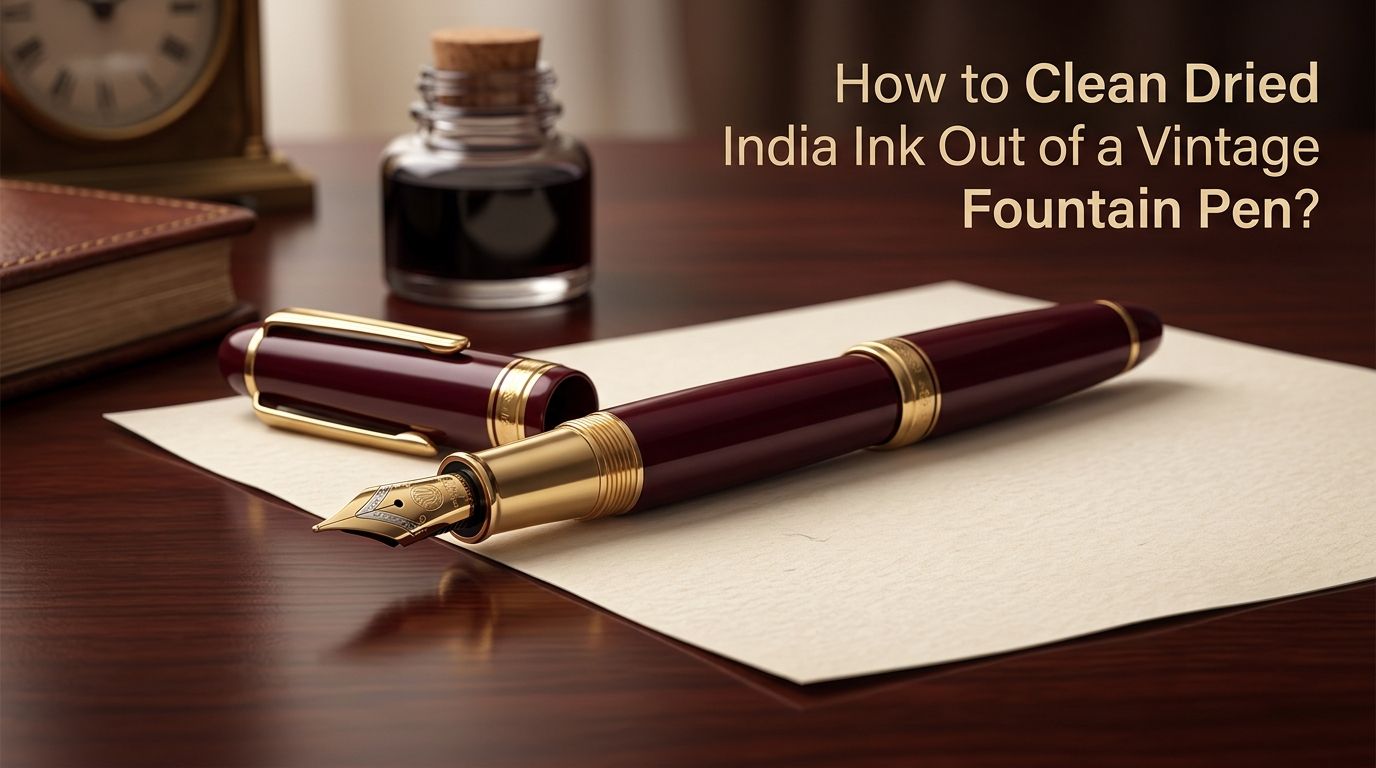
How to Clean Dried India Ink Out of a Vintage Fountain Pen?
You found a beautiful vintage fountain pen at an estate sale or inherited one from a family member. You uncap it, try to write, and nothing happens. The feed is completely clogged.
Worse, someone used India ink in it years ago, and now it has dried into a rock hard mess inside the nib, feed, and section. India ink contains shellac or lacquer, which makes it waterproof once dry. This is exactly why it bonds so stubbornly to fountain pen internals.
Do not panic. Your pen is not ruined. Thousands of vintage pen collectors have faced this exact problem and restored their pens to full working condition.
Key Takeaways
- India ink is different from standard fountain pen ink. It contains shellac or lacquer binders that become waterproof and nearly insoluble once dry. Plain water alone will not dissolve these binders. You need specific cleaning agents or extended soaking to break down the dried residue.
- An ammonia and water solution is the most popular DIY cleaning method. Mix one part household ammonia (5% concentration) with nine parts distilled water and add a few drops of dish soap. This solution softens and dissolves the shellac in dried India ink over several hours or days of soaking.
- A pen cleaning concentrate made for technical pens works extremely well. Products like Koh-I-Noor Rapido-Eze are specifically formulated to dissolve India ink residue. Many vintage pen restorers consider this the single best product for the job.
- An ultrasonic cleaner can speed up the process significantly. The vibrations help dislodge dried ink particles from tiny channels in the feed and nib. Combine ultrasonic cleaning with a proper cleaning solution for the best results.
- Never use hot water, alcohol, or harsh solvents on vintage pens. Hot water can warp or crack vintage materials like celluloid and hard rubber. Alcohol and strong solvents can damage or discolor pen bodies and feeds. Always use cool or lukewarm water.
- Patience is essential throughout this process. Dried India ink that has sat for years will not come out in one quick flush. Expect the full cleaning to take several days of repeated soaking, flushing, and gentle scrubbing.
Why India Ink Is So Difficult to Remove from Fountain Pens
Standard fountain pen inks are water based dyes. They dissolve easily in water even after they dry. India ink is fundamentally different. It uses carbon black pigment suspended in a liquid that contains shellac, lacquer, or another binding agent. This binder makes the ink permanent and waterproof on paper.
The same binder creates a serious problem inside a fountain pen. Once the ink dries, the shellac hardens and cements the carbon particles to every surface it touches. The narrow channels in a fountain pen feed become blocked solid.
This dried residue will not soften with plain water. You need a cleaning agent that can dissolve shellac, such as ammonia. Understanding this chemistry is the first step to cleaning your pen successfully.
Gather Your Cleaning Supplies Before You Start
Having the right supplies ready will make the process much smoother. You do not need anything exotic. Most items are common household products or easy to find at a local store.
You will need distilled water (tap water can leave mineral deposits), household ammonia (the plain 5% kind with no added scents or surfactants), a mild dish soap (a basic formula works best), a soft bristle toothbrush, a bulb syringe for flushing, and several small glass cups or jars for soaking.
Optional but very helpful tools include a Koh-I-Noor Rapido-Eze cleaning concentrate and an ultrasonic cleaner. You may also want paper towels, cotton swabs, and a magnifying glass to inspect small parts. Avoid any cleaning products that contain bleach, citrus oils, or alcohol.
Safely Disassemble the Pen Section
Before you clean anything, you need to separate the nib and feed assembly from the rest of the pen. This is critical because you should never submerge a vintage fountain pen barrel or cap in liquid. Soaking the barrel can damage ink sacs, lever mechanisms, celluloid, and hard rubber bodies.
Gently unscrew the section (the part you grip) from the barrel. If it does not unscrew, do not force it. Some vintage pens have friction fit sections. You can apply gentle heat from a hair dryer on low to soften any old shellac seal, then carefully twist and pull.
Once the section is free, you can focus all your cleaning on just the nib, feed, and section. Keep the barrel and cap dry and safe. If the nib and feed are removable, you can pull them straight out of the section for even better access. Handle vintage nibs with care because gold tines can bend easily.
Method 1: The Ammonia and Water Soak
This is the most widely recommended DIY method among vintage pen collectors. It is affordable, effective, and uses common household items.
Mix one part household ammonia with nine parts distilled water in a small glass jar. Add two or three drops of plain dish soap. The ammonia dissolves the shellac binder, and the soap acts as a surfactant to help lift the ink particles away from metal and plastic surfaces.
Place the nib, feed, and section into this solution. Let the parts soak for at least 12 hours. For severely clogged pens, soak for 24 to 48 hours. Change the solution every 12 hours or so because the dissolved ink will make it less effective.
Pros: Very affordable and easy to prepare at home. The ammonia directly attacks shellac. This method works on almost every type of dried India ink. Cons: It requires patience because soaking takes one to several days. The ammonia smell can be strong. You must rinse parts very thoroughly after treatment to remove all ammonia residue.
Method 2: Koh-I-Noor Rapido-Eze Cleaning Concentrate
This product was designed specifically to dissolve India ink in technical pens. It works exceptionally well on fountain pens too. Many professional pen restorers call it the gold standard for India ink removal.
Fill a small glass container with the concentrate. Submerge the nib, feed, and section fully. Let the parts soak overnight. After soaking, use a bulb syringe to flush the solution through the feed channels. Repeat this cycle of soaking and flushing until the rinse water runs clear.
Stubborn buildup may require two or three days of repeated soaking cycles. The solution can be reused until it becomes too saturated with ink.
Pros: Formulated for this exact purpose, so it is highly effective. It is safe for metal nibs and most feed materials. Cons: It costs more than a DIY ammonia solution. It may be harder to find in some areas. You still need to rinse thoroughly with clean water afterward.
Method 3: Using an Ultrasonic Cleaner
An ultrasonic cleaner uses high frequency sound waves to create tiny bubbles in liquid. These bubbles collapse rapidly and produce microscopic shock waves that dislodge debris from surfaces. This process works brilliantly on the intricate channels inside a fountain pen feed.
Fill the ultrasonic cleaner with water and add either your ammonia solution or Rapido-Eze concentrate. Place the pen parts in the basin. Run the cleaner for three to five minute cycles. Check progress between cycles and change the cleaning liquid as it becomes discolored.
The combination of ultrasonic vibration and a proper cleaning solution can accomplish in hours what soaking alone takes days to achieve. Many collectors use a “soak overnight, then ultrasonic clean, then soak again” cycle for the best results.
Pros: Dramatically speeds up the cleaning process. Reaches deep into feed channels that soaking alone might miss. Cons: Requires owning or purchasing an ultrasonic cleaner. Not safe for all vintage pen materials, especially fragile celluloid or cracked hard rubber. Use only on the nib and feed section, never the barrel or cap.
Flushing the Feed Channels Thoroughly
After soaking, you need to flush the loosened ink out of the feed. A bulb syringe is the best tool for this job. Fill the syringe with clean distilled water and press it firmly against the opening of the section to force water through the feed channels.
You will see dark, inky water coming out the other end. Keep flushing until the water runs completely clear. This may take many flushes over several sessions.
If you do not have a bulb syringe, you can hold the section under a gentle stream of cool running water. Direct the water into the section opening and let it flow through the feed. Avoid using high water pressure because it can damage delicate feed fins.
For pens with converter or piston fill mechanisms, you can use the filling mechanism itself to draw clean water in and push dirty water out. Repeat this draw and expel cycle until the water is clear.
Gentle Scrubbing for Stubborn Residue
Sometimes soaking and flushing alone will not remove every trace of dried India ink. Stubborn residue may cling to the nib, the feed fins, and the inside walls of the section. This is where gentle manual cleaning comes in.
Use a soft bristle toothbrush (a baby toothbrush is ideal) with a drop of dish soap or cleaning solution on the bristles. Gently brush the nib and feed surfaces. Work the bristles into the gaps between feed fins where dried ink tends to hide.
Cotton swabs dipped in ammonia solution can reach into the section barrel and around tight spots. A thin brass shim or a piece of brass sheet can be carefully slid between the nib tines to clear ink deposits from the slit.
Be very gentle throughout this step. Vintage gold nibs are soft and can bend or spread if you apply too much pressure. Hard rubber feeds can crack if handled roughly.
Rinsing and Drying Your Pen Parts
Once the cleaning solution has done its job and you have flushed and scrubbed the parts, a thorough final rinse is essential. Any ammonia or cleaning concentrate left inside the pen can cause corrosion or react with future inks.
Flush the nib and feed section with clean distilled water at least five or six times. You want zero trace of cleaning solution remaining. The final rinse water should be completely clear with no color, no soap bubbles, and no ammonia smell.
After rinsing, gently shake out excess water and place the parts on a clean, lint free cloth or paper towel to air dry. Allow at least 24 hours for complete drying before reassembly. Moisture trapped inside the feed can dilute your first fill of ink and cause flow issues.
Never use a heat source or compressed air to speed up drying. Heat can warp vintage pen components, and compressed air can force water into places where it should not go.
Reassembling the Pen and Testing
Once every part is completely dry, you can reassemble your vintage fountain pen. Slide the feed and nib back into the section if you removed them. Make sure the nib sits correctly on top of the feed and aligns with the ink channel.
Screw or press the section back into the barrel. If the original ink sac has deteriorated (which is common in vintage pens), you will need a new latex or silicone ink sac before the pen can hold ink again. This is a separate restoration step.
Fill the pen with a standard, water based fountain pen ink. Do not use India ink again. Write a few test lines on scrap paper. The ink flow may be slightly hesitant at first as the ink saturates the feed. Give the pen a few minutes of writing before judging the flow.
If the ink still flows poorly, the feed channels may still have residual blockage. Repeat the soaking and flushing process one more time.
Common Mistakes to Avoid During Cleaning
The biggest mistake is using hot water. Vintage fountain pen materials like celluloid, casein, and hard rubber can warp, crack, or discolor in hot water. Always use cool or lukewarm water at room temperature.
Never soak the pen barrel or cap. Only the nib, feed, and section should be submerged in cleaning solutions. Barrels can contain metal components that rust, and vintage plastics can be damaged by prolonged contact with ammonia.
Do not use rubbing alcohol, acetone, or household cleaners like glass cleaner. These solvents can dissolve or damage vintage pen materials. Rubbing alcohol in particular can cause hard rubber to become brittle and discolored.
Avoid forcing parts apart. If a section or nib does not separate easily, soak it longer or apply gentle warmth. Brute force cracks sections and bends nibs.
Preventing India Ink Problems in the Future
The simplest prevention strategy is to never use India ink in a fountain pen. India ink was designed for dip pens and technical drawing pens with removable tips, not for fountain pens. The shellac binder will always cause clogging over time, even with regular cleaning.
If you want a permanent or waterproof ink for your fountain pen, look for inks specifically labeled as fountain pen safe. Several modern pigmented inks are designed to be used in fountain pens without clogging. These inks use micro pigment particles that stay in suspension and wash out with water.
Clean your fountain pens regularly. Flush them with clean water every two to four weeks during regular use. If you plan to store a pen for more than a month, clean it completely and store it empty. This simple habit will prevent dried ink problems entirely.
When to Seek Professional Help
Some vintage pens are too valuable, too fragile, or too badly clogged for home cleaning. If the pen is a rare or collectible model, consider sending it to a professional pen restorer. They have specialized tools, decades of experience, and access to replacement parts.
Seek professional help if the nib or feed appears corroded, cracked, or physically damaged by the dried ink. Also consider a professional if the section is stuck and you cannot safely remove it yourself.
Professional restorers can also replace deteriorated ink sacs, re-shellac sections, and adjust nib tines for optimal ink flow. The cost is usually modest compared to the value of a properly restored vintage pen. A listing of reputable restorers can be found through vintage pen collecting communities and forums.
Frequently Asked Questions
Can I use vinegar instead of ammonia to clean dried India ink?
Vinegar is an acid and works differently from ammonia, which is a base. Ammonia is far more effective at dissolving shellac, the main binder in India ink. Vinegar may soften some types of dried ink, but it will not dissolve shellac nearly as well as ammonia. Stick with the ammonia and water solution for India ink removal.
How long should I soak a fountain pen nib clogged with India ink?
Start with a 12 hour overnight soak. For pens that have been clogged for years or decades, you may need to soak for 48 to 72 hours. Change the cleaning solution every 12 hours. Between soaks, flush the feed with a bulb syringe to clear loosened ink and allow fresh solution to reach remaining deposits.
Will dried India ink permanently damage a fountain pen nib?
In most cases, no. Gold and steel nibs are durable and can survive India ink clogging without permanent harm. The bigger risk is damage from aggressive cleaning. As long as you use gentle methods and proper cleaning solutions, the nib should recover fully. Feed damage is more common because ink can cement in the narrow channels.
Is it safe to use an ultrasonic cleaner on vintage fountain pens?
Ultrasonic cleaners are safe for metal nibs and most feeds when used carefully. However, you should never place vintage celluloid barrels, hard rubber caps, or delicate trim in an ultrasonic bath. Only clean the nib, feed, and section. Use short cycles of three to five minutes and check parts between cycles for any signs of stress.
Can I use rubbing alcohol to dissolve dried India ink in a fountain pen?
This is not recommended. While alcohol can dissolve shellac, it can also damage vintage pen materials. Hard rubber becomes brittle and discolored with alcohol exposure. Celluloid can crack or cloud. The ammonia solution or Rapido-Eze concentrate will dissolve India ink safely without risking damage to your pen.
How do I know if all the dried India ink has been removed?
Flush the feed with clean distilled water and watch the water that comes out. If it runs completely clear, the ink is gone. You can also hold the nib up to a light and look through the feed channels with a magnifying glass. Any remaining dark deposits will be visible. Test the pen with a safe fountain pen ink, and if the flow is smooth and consistent, the cleaning was successful.

Hi, I’m Zoe Ward, the creator and voice behind Fine Brush Vault. I’m passionate about art, painting, and exploring the world of colors. I spend my time testing and reviewing art supplies to help fellow creators find the best tools for their craft. Through honest reviews and detailed guides, my goal is to make your creative journey easier and more inspiring.