How to Travel Safely With Wet Oil Paintings on a Plane?
You just finished a beautiful plein air painting. The colors are rich, the light is perfect, and your brushwork is fresh.
There is just one problem: your flight home leaves in a few hours, and the paint is still wet. Carrying a wet oil painting onto a plane sounds like a recipe for disaster. But thousands of artists do it every year without smudging a single stroke.
Whether you are returning from a painting workshop in Tuscany or a weekend retreat in the mountains, this guide will walk you through every step.
In a Nutshell
- Wet oil paintings are allowed on airplanes. The TSA permits paintings in both carry on bags and checked baggage. The key is proper packaging so the wet paint does not transfer to other items or create a mess during screening.
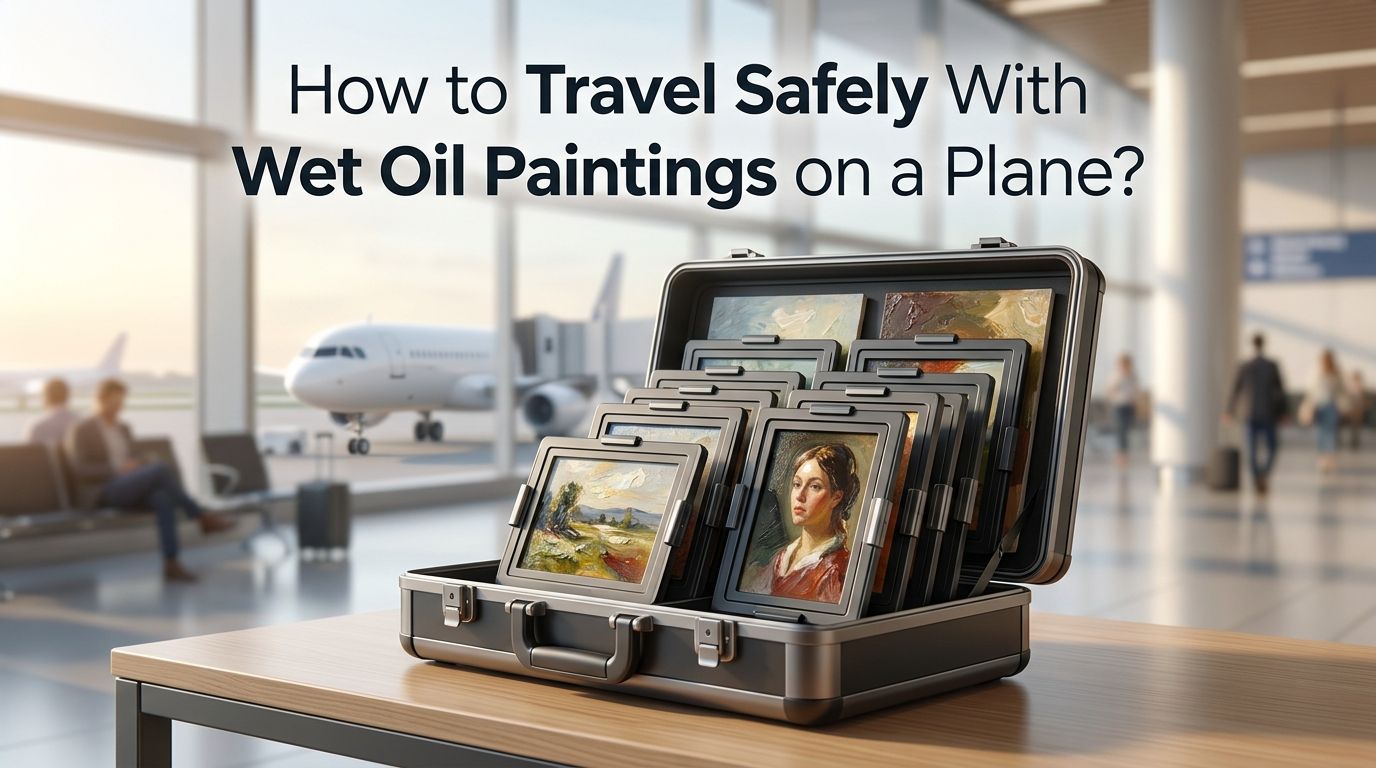
- A wet panel carrier is your best friend. These lightweight carriers hold wet panels apart with built in slots, keeping paint surfaces from touching anything. They are the single most reliable tool for air travel with fresh artwork.
- The wine cork method works for small panels. Slice wine corks into thin discs, place one at each corner of a wet painting, then sandwich another panel on top. Secure with painter’s tape. This is a favorite trick among plein air painters who need a lightweight and cheap solution.
- Never say “oil paints” at security. Experienced artists recommend calling your materials “artist’s colors made from vegetable oil.” The word “paint” can trigger extra scrutiny from TSA agents, even though oil colors are not flammable liquids.
- Ship solvents ahead or buy them at your destination. Flammable solvents like turpentine and mineral spirits are banned from both carry on and checked luggage. Plan around this restriction to avoid losing your supplies at the checkpoint.
- Speed up drying before you fly. Adding a drying medium like Galkyd to your paint mixture or painting in thin layers can give your work a touch dry surface faster, making transport much easier.
How to Understand Airline Rules for Wet Oil Paintings?
Before you start packing, you need to know what the rules actually say. The TSA website confirms that paintings are allowed in both carry on bags and checked bags. There is no size restriction specific to artwork, but standard luggage size limits still apply.
The FAA classifies most artist grade oil colors as non flammable because they are based on vegetable oils with a flash point above 550 degrees Fahrenheit.
This means your tubes of oil paint are safe to fly. The real concern is solvents. Turpentine, mineral spirits, and paint thinners are classified as flammable liquids and are forbidden in carry on and checked luggage under FAA rules.
The final decision at the checkpoint always rests with the individual TSA officer. Carry a Safety Data Sheet (SDS) for your paints to prove the flash point. This simple piece of paper can save you from having your supplies confiscated.
How to Choose the Right Wet Panel Carrier?
A wet panel carrier is a purpose built case that holds freshly painted panels with space between the surfaces. The paint never touches the walls of the carrier or another painting. This makes it the gold standard for transporting wet oil paintings by air.
Several styles exist. Rigid plastic carriers from brands like Raymar and PanelPak are popular choices. They come in various sizes and can hold two or more panels at once. Some are slim enough to slide into a carry on bag or backpack.
Pros: Maximum paint protection, reusable, purpose built for the job, available in many sizes.
Cons: Can be bulky for small suitcases, adds weight to your luggage, and some models only fit specific panel sizes.
If you travel often for painting, investing in a good wet panel carrier will pay for itself many times over. Look for one that matches the panel sizes you use most frequently.
How to Use the Wine Cork Method for Small Paintings?
This clever technique comes from experienced plein air artists who needed a fast, lightweight solution. You will need a few wine corks, a sharp knife, and blue painter’s tape.
Step one: Slice a wine cork into four thin, penny sized discs. Step two: Place one disc at each corner of the wet painting, on the unpainted edges or border. Step three: Gently lay a second painting face down on top of the cork pieces. The corks create a gap between the two wet surfaces. Step four: Wrap painter’s tape around all four corners to hold everything together firmly.
This creates a thin sandwich with air space protecting both wet surfaces. You can stack multiple pairs this way. The entire bundle fits easily into a carry on bag.
Pros: Extremely lightweight, almost zero cost, works great for small panels.
Cons: Less protection from impact, requires touch ups on painting edges later, not ideal for thick impasto work.
How to Build a DIY Wet Painting Carrier at Home?
If you do not want to buy a commercial carrier, you can build one with basic materials from any hardware store. The most common DIY approach uses corrugated plastic sheets (also called coroplast).
Cut two sheets of coroplast to a size slightly larger than your painting panel. Attach small blocks of foam, cork, or wooden strips at each corner of one sheet. These act as standoffs to keep the painting surface away from the carrier wall. Place your wet painting face up on the first sheet, then lay the second sheet on top.
Secure everything with rubber bands or tape. Some artists drill small holes in the coroplast and use zip ties for a more secure hold. The result is a rigid, lightweight carrier that costs just a few dollars to make.
Pros: Cheap, customizable to any panel size, lightweight, easy to replace.
Cons: Takes time to assemble, less durable than commercial options, can look rough at airport security.
How to Pack Wet Oil Paintings in Carry On Luggage?
Carrying your wet paintings in your carry on bag gives you the most control. You can monitor the bag, avoid rough baggage handling, and respond if anything shifts during the flight.
Start by wrapping your painting carrier (whether commercial or DIY) in a plastic bag. This prevents any stray paint from transferring to your clothes or other items. Place the wrapped carrier inside your bag so it sits flat and does not slide around. Use soft items like clothing or towels to cushion the sides.
Make sure nothing presses against the painted surface. Even through a carrier, heavy pressure over several hours can leave marks on soft, wet oil paint. Position the carrier near the top of your bag for easy access during security screening.
Keep your boarding pass and SDS handy. If a TSA officer asks about the contents, calmly explain that you are transporting artist’s colors. Showing the SDS builds trust and speeds up the process.
How to Pack Wet Oil Paintings in Checked Luggage?
Sometimes your painting is too large for carry on, or you simply do not want to deal with security screening. Checked luggage can work, but it requires more protective packing.
The biggest risk with checked bags is rough handling. Baggage handlers toss, stack, and compress suitcases. Your painting needs a rigid barrier between the wet surface and everything else. Use a wet panel carrier or build a DIY crate with stiff cardboard or coroplast around the painting.
Add layers of bubble wrap around the entire carrier. Fill any empty space in your suitcase so nothing shifts. Place a notice inside the bag that reads something like: “Artist’s materials enclosed. Non flammable vegetable oil based colors. Please handle with care.” This helps TSA inspectors understand what they are looking at if the bag is opened.
Pros: Allows larger paintings, frees up carry on space.
Cons: No control over handling, greater risk of damage, paintings may be opened for inspection.
How to Speed Up Drying Time Before Your Flight?
The best defense is a painting that is already dry to the touch before you fly. While oil paintings normally take days or weeks to dry, you can speed up the process with a few smart choices.
Use a drying medium. Products like Galkyd or liquin mixed into your paint will dramatically reduce drying time. Some artists report a touch dry surface within 24 hours.
Paint in thin layers. Thick impasto strokes hold more oil and take much longer to dry. If you know you are flying soon, keep your paint application lean. Thin layers of oil color can become touch dry overnight in warm, dry conditions.
Choose fast drying pigments. Earth tones like burnt sienna, raw umber, and burnt umber dry faster than colors like titanium white or cadmium yellow. Plan your palette with drying time in mind.
Expose the painting to warm, circulating air. Do not put it in direct sunlight, but a warm room with good airflow will help the paint skin over faster.
How to Handle TSA Security With Paintings and Art Supplies?
Security checkpoints can feel stressful when you are carrying unusual items. But with the right preparation, you can pass through smoothly.
Never use the word “paint” with TSA agents. Experienced traveling artists recommend saying “artist’s colors made from vegetable oil.” The word paint triggers an association with flammable house paint, which can lead to confiscation or delays.
Carry printed SDS (Safety Data Sheets) for your oil colors. These documents prove that your materials are non flammable with a flash point above 550 degrees Fahrenheit. Some artists laminate their SDS sheets so they always have them in their travel kit.
Leave palette knives and sharp tools in your checked bag. TSA will confiscate them from carry on. Keep all tubes of oil color under 3.4 ounces (100 ml) if they are in your carry on bag. Place them in a clear quart sized zip lock bag just like any other liquid or gel. Stay calm and cooperative at the checkpoint. A friendly attitude goes a long way.
How to Protect Paintings From Temperature Changes During Flights?
Airplane cargo holds can get very cold, and cabin temperatures fluctuate. These changes affect wet oil paint in a few ways you should know about.
Cold temperatures make oil paint thicker and slower to dry. The good news is that cold air is unlikely to crack or damage wet paint. The real risk comes from condensation. When a cold painting enters a warm room, moisture can form on the surface. This moisture can mix with wet oil paint and cause a hazy film.
To prevent this, let your painting warm up gradually after landing. Do not unwrap it immediately in a warm hotel room. Leave it in its carrier for 30 to 60 minutes so the temperature equalizes slowly.
If you are checking your painting in the cargo hold, add an extra layer of insulation with bubble wrap or a soft cloth. This buffers the painting against rapid temperature swings during the flight.
How to Travel With Larger Wet Canvases on a Plane?
Small panels are easy, but what about a 16 by 20 inch canvas or larger? These require more planning and sometimes a different approach.
Some airlines allow oversized items as checked baggage for an extra fee. You can build a flat crate from plywood or foam board that fits the painting snugly. Screw through the back of the crate into the stretcher bars to lock the canvas in place. Add foam padding around the inside edges to prevent shifting.
For very large pieces, consider shipping the painting separately through a fine art shipping service. These companies specialize in transporting artwork safely. They use climate controlled vehicles and custom crating.
Pros of crating and checking: You keep the painting with you on the same flight.
Cons of crating and checking: Oversized baggage fees, risk of rough handling, added weight to carry.
Pros of art shipping services: Professional handling, insurance options, climate control.
Cons of art shipping services: Higher cost, longer delivery time, painting arrives separately.
How to Use Water Mixable Oils for Easier Travel?
If you travel frequently and find regular oil paints stressful to transport, consider switching to water mixable oil paints for your travel work. Brands like Cobra and Holbein Duo make high quality water mixable oils that behave much like traditional oils.
The biggest advantage is that you eliminate the need for solvents entirely. You clean your brushes with water and thin your paint with water or a compatible medium. This removes the entire flammable liquids issue from your packing list.
Water mixable oils also tend to dry slightly faster than traditional oils, which is helpful before a flight. The color quality and texture are very close to regular oil paints. Many professional artists use them specifically for travel and plein air work.
Pros: No solvents needed, easier cleanup, slightly faster drying, no TSA issues with flammable materials.
Cons: Slightly different handling feel, limited brand options compared to traditional oils, some artists notice subtle differences in blending.
How to Prepare a Travel Checklist for Flying With Wet Paintings?
A simple checklist prevents last minute panic at the airport. Print this list and keep it in your painting kit so you never forget a step.
Before painting day: Confirm your airline’s baggage size limits. Buy or build your wet panel carrier. Print SDS sheets for your oil colors. Pack painter’s tape, plastic bags, and foam padding.
On painting day: Add drying medium to your paint mixtures. Paint in thin layers if possible. Let the painting sit in warm air as long as you can before packing.
Before leaving for the airport: Place the painting in your carrier. Wrap the carrier in a plastic bag. Secure it inside your luggage with padding on all sides. Place SDS and an explanatory note in your bag. Put palette knives and sharp tools in checked luggage only. Pack paint tubes in a clear zip lock bag for carry on.
At the airport: Stay calm at security. Use the phrase “artist’s colors made from vegetable oil.” Show SDS if asked. Keep your painting flat in the overhead bin or under the seat.
How to Unpack and Care for Your Painting After the Flight?
The journey does not end when you land. How you unpack your painting matters just as much as how you packed it.
Let the painting adjust to room temperature before opening the carrier. Wait at least 30 minutes. Remove the tape and separators gently. If you used the wine cork method, peel the tape slowly to avoid pulling paint from the edges.
Inspect the surface under good light. Look for smudges, dents, or areas where the paint may have shifted. Most minor issues are easy to fix with a small brush and matching color once the painting has dried.
Place the painting on an easel or lean it against a wall in a dust free, well ventilated area. Let it continue drying naturally. Avoid touching the surface for at least a week, depending on the thickness of the paint. If everything went well, you should see your painting looking exactly as you left it.
Frequently Asked Questions
How can I carry a wet oil painting through airport security?
Place the painting in a wet panel carrier or use the wine cork sandwich method. Wrap it in a plastic bag and put it in your carry on. At security, explain that you have artist’s colors made from vegetable oil. Have your SDS ready to show if the officer asks for proof that the materials are non flammable.
How can I prevent my oil painting from smudging during a flight?
The most important step is to keep anything from touching the wet paint surface. Use a carrier that creates a gap between the painting and any other object. Foam standoffs, cork slices, or a commercial wet panel carrier all work. Pack the carrier so it stays flat and does not shift inside your bag.
How long does an oil painting take to become safe for travel?
It depends on the thickness of the paint and the medium used. Thin layers with a fast drying medium like Galkyd can be touch dry in 12 to 24 hours. Thick impasto work without a drying medium can stay wet for a week or more. Plan your painting schedule around your travel date whenever possible.
Can I check a wet oil painting in my suitcase?
Yes, but it is riskier than carry on. Build a rigid protective barrier around the painting using a carrier, cardboard, or coroplast. Add bubble wrap and fill empty space in the suitcase. Include a note for TSA explaining the contents. Accept that you will have no control over how the bag is handled.
Are oil paint tubes allowed in carry on bags?
Yes. Oil paint tubes are allowed in carry on bags as long as each tube is 3.4 ounces (100 ml) or smaller. Place all tubes in a clear quart sized zip lock bag, just like you would with toiletries. The FAA considers artist grade oil colors non flammable because their flash point is above 550 degrees Fahrenheit. However, solvents like turpentine are banned.

Hi, I’m Zoe Ward, the creator and voice behind Fine Brush Vault. I’m passionate about art, painting, and exploring the world of colors. I spend my time testing and reviewing art supplies to help fellow creators find the best tools for their craft. Through honest reviews and detailed guides, my goal is to make your creative journey easier and more inspiring.