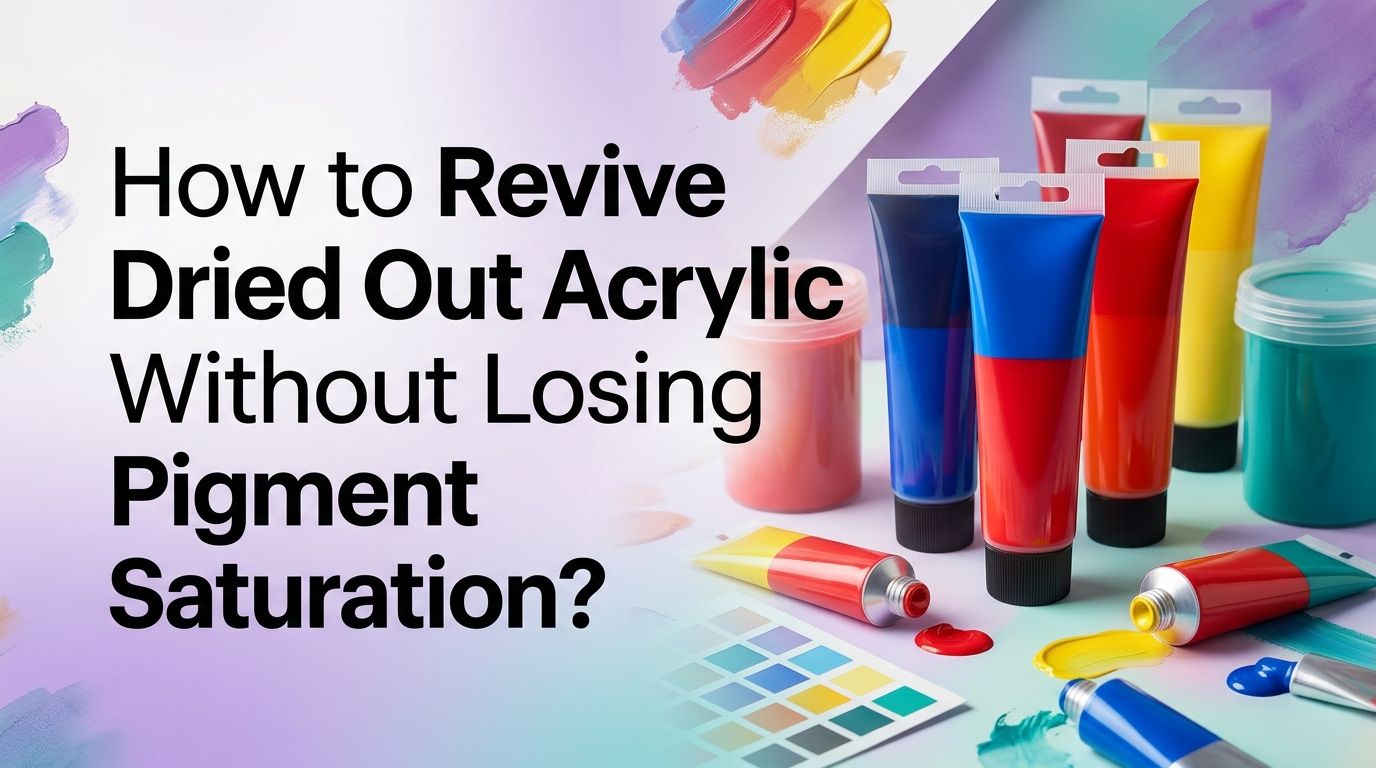
How to Revive Dried Out Acrylic Paint Without Losing Pigment Saturation?
Every artist has faced the moment: you open a tube or pot of acrylic paint and find a thick, rubbery mess instead of smooth, vibrant color. Your first instinct might be to throw it away and buy fresh paint.
But hold on. Dried acrylic paint can often be brought back to life with the right approach. The real challenge is doing it without washing out the color intensity you paid for.
Too much water and your brilliant cadmium red becomes a sad, chalky pink. Too little intervention and you are still stuck with unusable clumps.
In a Nutshell
- Understanding dryness level matters most. Not every dried paint pot needs the same fix. Slightly thickened paint responds well to a few drops of water, while severely dried paint requires specialized mediums and patience. Knowing the difference saves you time and prevents you from ruining the color.
- Water alone is not always the answer. Adding too much water breaks down the acrylic binder and dilutes pigment concentration. This leads to weak, chalky colors that lack the rich finish acrylics are known for. You need to balance hydration with binder preservation.
- Flow improvers protect pigment saturation better than plain water. These products reduce surface tension and restore paint flow without thinning the pigment load. They are one of the safest tools for reviving dried acrylics while keeping color intensity.
- Distilled water outperforms tap water every time. Tap water contains minerals and impurities that can degrade the acrylic binder over time. Distilled water gives you a clean rehydration without introducing unwanted chemicals.
- Mixing in fresh paint of the same color is a reliable backup plan. If your revived paint still looks slightly faded, blending in a small amount of fresh paint from the same shade restores both texture and color depth.
- Prevention is easier than revival. Proper sealing, cool storage, and regular checks on your paint pots will stop most drying problems before they start. A few good habits save hours of frustration later.
Why Does Acrylic Paint Dry Out So Fast?
Acrylic paint is a water based medium. It consists of pigment particles suspended in an acrylic polymer emulsion. Once the water in this emulsion evaporates, the polymer particles fuse together and form a solid, plastic like film. This chemical process is called coalescence, and it is irreversible once complete.
Several factors speed up this drying. Warm temperatures, low humidity, and air exposure all pull moisture from the paint faster. A tube or pot that was not sealed tightly will lose moisture in days. Even a small gap between the lid and rim allows enough air to start the hardening process.
The fast drying nature of acrylics is actually a feature, not a flaw. It lets artists layer colors quickly and finish paintings in a single session. But this same property makes acrylics vulnerable to drying out in storage if they are not handled carefully. Understanding this chemistry helps you choose the right revival method, because you are essentially trying to reverse or interrupt this coalescence process before it becomes permanent.
How to Check the Dryness Level of Your Paint
Before you attempt any fix, you need to assess how far gone your paint is. The method you use depends entirely on the severity of drying. There are three general stages to look for.
Stage one is surface thickening. The paint feels slightly sticky or thick on top but still has moisture underneath. A damp brush can lift color from the surface easily. This stage is very easy to fix with minimal effort.
Stage two is partial hardening. The paint has become clumpy, rubbery, or gummy. It holds its shape and resists gentle pressure. You can still press into it with a palette knife or toothpick, but it will not spread smoothly. This stage needs more aggressive treatment but is still salvageable.
Stage three is full curing. The paint has turned into a hard, plastic like solid. It cracks when you try to bend it. At this point, the acrylic polymer has fully fused and the paint cannot be revived in any meaningful way. You will need to replace it. Knowing which stage your paint has reached prevents you from wasting time on methods that will not work.
Method 1: The Warm Water Drop Technique
This is the simplest approach and works best on paint that has only lightly thickened. You add warm distilled water one drop at a time and stir gently between each addition. The warmth helps the water penetrate the thickened surface faster.
Start with two to three drops and use a clean brush or palette knife to stir in slow, circular motions. Avoid dumping water in all at once. Too much water at once will float on the surface and pool instead of mixing evenly into the paint body.
Check the consistency after each round of stirring. The paint should begin to loosen and approach a creamy, smooth texture. Stop adding water as soon as the paint feels workable. Over thinning is the number one cause of pigment saturation loss during rehydration.
Pros: Very easy. No special supplies needed. Works quickly on lightly dried paint.
Cons: Risk of over dilution if you add too much. Can weaken the acrylic binder and reduce color intensity if overdone. Not effective on paint that has passed the surface thickening stage.
Method 2: Using Flow Improver to Preserve Color Intensity
Flow improver is a liquid additive that reduces the surface tension of acrylic paint. It makes the paint flow more smoothly without diluting the pigment concentration. This is the key advantage over plain water. Flow improver essentially loosens the paint while keeping the binder and pigment ratio intact.
Add two drops of flow improver directly to the dried paint. Stir slowly and thoroughly. Then add two drops of diluted flow improver (mixed with a small amount of distilled water) and stir again. This two step approach gives you better control over the final consistency.
After stirring, seal the pot and let it sit for 10 to 15 minutes. This rest period allows the flow improver to soak into any remaining dry particles. Open the pot and stir once more. The paint should now have a smooth, usable texture with full pigment saturation.
Pros: Preserves color intensity far better than water alone. Gives excellent control over consistency. Works on moderately dried paint.
Cons: Requires purchasing a separate product. Takes slightly more time than the water method. Not always available in small quantities.
Method 3: Adding Acrylic Medium to Restore Both Texture and Saturation
Acrylic medium is essentially the binder used in acrylic paint, minus the pigment. When you add acrylic medium to dried paint, you are replenishing the very substance that holds the pigment together. This makes it one of the most effective ways to revive paint without any color loss.
Use a matte or gloss medium depending on your desired finish. Add a small amount to the dried paint and mix thoroughly with a palette knife. The medium will reintroduce the acrylic polymer that dried out, restoring both the paint’s body and its binding strength.
This method is especially useful for paint that has partially hardened. The medium can penetrate clumps and soften them over time. For best results, mix in the medium, seal the container, and let it sit overnight. The next day, stir again and check the texture. You may need to add a bit more medium and repeat.
Pros: Restores the actual binder, keeping pigment fully saturated. Gives a professional quality finish. Excellent for moderately to severely dried paint.
Cons: Can change the sheen of the final paint (matte medium makes it less glossy, gloss medium makes it shinier). Requires patience for overnight soaking. Slightly more expensive than water or flow improver.
Method 4: The Acrylic Retarder Technique
Acrylic retarder is an additive that slows down the evaporation rate of water from acrylic paint. Its primary ingredient is typically propylene glycol. While retarder is usually used during painting to extend working time, it can also help rehydrate paint that has begun to thicken.
Mix a few drops of retarder into the drying paint and stir well. The retarder slows the re drying process, giving you more time to work the paint back into a smooth state. It also adds a small amount of moisture that helps soften the thickened areas.
This method works best on paint in the early to moderate drying stages. It is less effective on paint that has fully hardened because the retarder cannot break through the cured polymer film. However, combining retarder with a small amount of distilled water creates a powerful softening solution for stubborn but not yet solid paint.
Pros: Extends working time while rehydrating. Does not significantly alter pigment concentration. Easy to use and widely available.
Cons: Should not exceed 15% of the total paint volume or it can cause the paint to remain tacky and never fully cure. Less effective on severely dried paint. Can slightly affect drying time of the finished painting.
Method 5: Mixing Dried Paint with Fresh Paint
Sometimes the simplest solution is the most effective. If you have a pot of dried paint and a fresh tube of the same color, blending the two together can restore both consistency and color depth in one step.
Take a small amount of fresh paint and add it to the dried pot. Use a palette knife to press and fold the fresh paint into the dry clumps. The moisture and binder from the fresh paint will gradually soften the dried particles. Keep working the mixture until you achieve a uniform texture.
This method has a built in advantage for pigment saturation. Because you are adding fully formulated paint (with its full pigment load and proper binder ratio), you are not diluting anything. You are actually reinforcing the color. The only requirement is that you use the exact same color to avoid shifting the hue.
Pros: Restores full pigment saturation automatically. No additional products needed beyond matching paint. Works on all drying stages except fully cured paint.
Cons: Requires having fresh paint in the same exact color. Can be wasteful if you use a lot of fresh paint. Difficult to color match if the original shade is discontinued or custom mixed.
Method 6: The DIY Glycerin and Water Solution
Glycerin is a household ingredient commonly found in soap making and baking supplies. It acts as a humectant, meaning it attracts and retains moisture. Adding a small amount of glycerin to dried acrylic paint can help reintroduce moisture without over thinning the paint.
Mix one part glycerin with nine parts distilled water to create a gentle rehydration solution. Add this mixture to the dried paint one drop at a time and stir between each addition. The glycerin helps the water stay in the paint longer, reducing the chance of rapid re drying.
This method works best as a supplement to other techniques. Glycerin alone will not restore severely dried paint, but it can improve the results of the warm water method or flow improver method by keeping the paint moist during the revival process.
Pros: Inexpensive and easy to find. Helps maintain moisture during the rehydration process. Works well as a supplement to other methods.
Cons: Can make paint slightly sticky if too much is used. May affect drying time of the finished painting. Not strong enough on its own for moderately or severely dried paint.
What NOT to Do When Reviving Dried Acrylic Paint
Many artists make common mistakes that damage their paint further. The biggest error is adding too much water too fast. This breaks the binder to pigment ratio and produces a weak, washed out color. Even if the consistency looks right, the paint will apply unevenly and dry with a chalky, powdery finish.
Another mistake is using tap water. Tap water contains chlorine, minerals, and other impurities that react with the acrylic binder. Over time, this can cause the paint to break down or develop an off color. Always use distilled water for any paint rehydration.
Do not use household solvents like rubbing alcohol or acetone on acrylic paint. These chemicals dissolve the acrylic polymer entirely and destroy the paint structure.
Cooking oil is sometimes recommended online, but it can alter the paint’s adhesion properties and prevent proper drying on canvas. Stick to products specifically made for acrylic paint to avoid permanent damage.
How to Test Revived Paint Before Using It on Your Artwork
After reviving your paint, always test it before applying it to your actual painting. Squeeze or brush a small amount onto a scrap piece of canvas or paper that matches the surface you plan to use.
Look at three things. First, check the color intensity. Compare it side by side with a fresh swatch of the same color. If the revived paint looks noticeably lighter or more transparent, it has lost pigment saturation and may need more medium or fresh paint mixed in.
Second, check the texture and flow. The paint should spread smoothly without clumps, graininess, or excessive running. If it feels gritty, there are still undissolved particles that need more working.
Third, let the test swatch dry completely and examine it again. Acrylics naturally darken slightly as they dry. If the dried swatch looks even and consistent, your revived paint is ready to use. If it appears patchy or uneven, add a bit more acrylic medium and test again. This five minute test can save hours of frustration on a finished piece.
How to Store Acrylic Paint to Prevent Drying
Prevention is always easier than repair. The single most important habit is sealing your paint containers tightly after every use. Wipe the rim and threads clean before replacing the cap. Dried paint residue on the rim creates tiny gaps that let air in.
Store paint in a cool, dry location away from direct sunlight and heat sources. High temperatures accelerate water evaporation from the paint. A closet or drawer works well for most artists. If you live in a very dry climate, consider placing your paint containers inside a sealed plastic bag or airtight box with a small damp sponge to maintain ambient humidity.
For palette paint, switch to a wet palette. This is a shallow tray lined with a damp sponge and a sheet of parchment paper. Paint placed on the parchment stays moist for hours or even days because the sponge below provides continuous moisture. This simple tool drastically reduces paint waste during painting sessions.
Check your stored paint every few weeks. If you notice any thickening, add a single drop of distilled water and seal it again immediately. Early intervention prevents full drying and makes future revival much easier.
When Should You Just Replace the Paint Instead?
Not every pot of dried paint is worth saving. If the paint has reached full curing stage and feels hard like plastic, it cannot be meaningfully revived. The acrylic polymer has completed its fusion process and no amount of water, medium, or flow improver will reverse it.
You should also replace paint if it has developed an unpleasant or sour smell. This can indicate bacterial contamination, which sometimes happens in paint that was repeatedly opened in warm, humid conditions. Using contaminated paint can produce unpredictable results on your artwork.
Finally, consider the time cost. Severely dried paint can take hours of mixing, soaking, and resting to partially revive. If you are working on a time sensitive project or the paint pot is small, buying fresh paint may be the smarter choice.
A good rule of thumb is this: if the paint does not respond to two revival attempts, it is more efficient to replace it and invest your energy in creating instead.
Frequently Asked Questions
Can I use rubbing alcohol to revive dried acrylic paint?
No. Rubbing alcohol dissolves the acrylic polymer binder. This destroys the paint structure and leaves you with separated pigment that will not adhere to canvas properly. Stick to distilled water, flow improver, or acrylic medium for safe rehydration.
How much water can I add before the pigment saturation drops?
There is no universal measurement because it depends on the paint brand and pigment load. A safe guideline is to add water in single drops and test after each addition. If the paint starts to look translucent or washed out on a test surface, you have added too much. At that point, mix in a small amount of acrylic medium or fresh paint to restore the color.
Does the type of pigment affect how well the paint revives?
Yes. Some pigments are more granular and settle to the bottom when water is added. Earth tones and natural mineral pigments tend to separate more easily than synthetic pigments. Thorough stirring and the use of flow improver instead of plain water help keep these pigments evenly distributed.
Can I microwave dried acrylic paint to soften it?
This is not recommended. Microwaving can cause uneven heating, which may damage the acrylic binder in some areas while leaving other spots untouched. The paint can also release fumes when heated rapidly. Warm (not hot) distilled water added gradually is a much safer and more effective approach.
How long does revived acrylic paint last before it dries out again?
If you seal the container properly after revival, the paint can last several weeks to months. The key is removing all dried residue from the rim, ensuring a tight seal, and storing the paint in a cool, stable environment. Adding a tiny drop of retarder before sealing can also extend the paint’s open time in storage.
Is it worth reviving cheap craft acrylic paint or only artist grade?
It depends on your project. Artist grade acrylics have a higher pigment concentration, so they are more forgiving during revival because there is more pigment to work with even after slight dilution. Craft grade acrylics already have a lower pigment load, so they lose color intensity faster when water is added. For craft acrylics, use flow improver or acrylic medium instead of water to protect the limited pigment.

Hi, I’m Zoe Ward, the creator and voice behind Fine Brush Vault. I’m passionate about art, painting, and exploring the world of colors. I spend my time testing and reviewing art supplies to help fellow creators find the best tools for their craft. Through honest reviews and detailed guides, my goal is to make your creative journey easier and more inspiring.