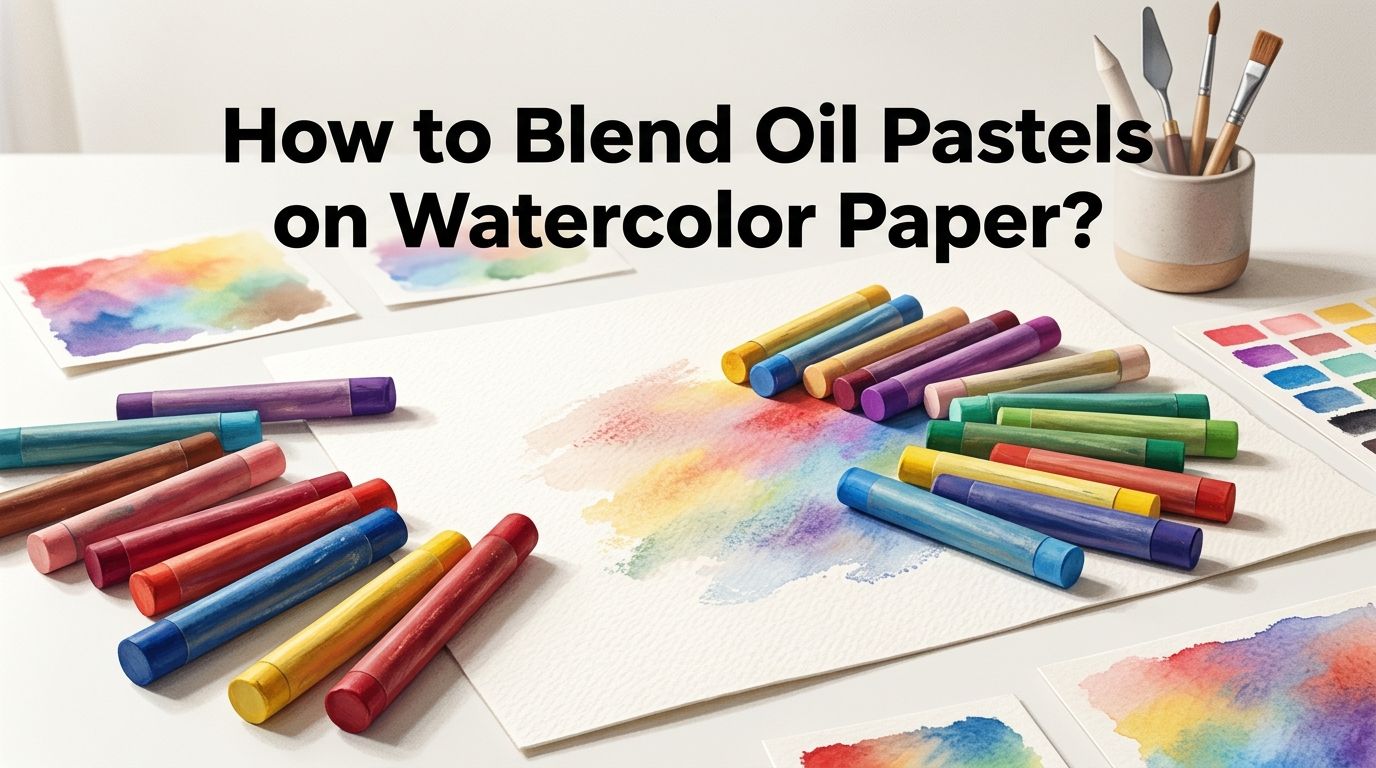
How to Blend Oil Pastels on Watercolor Paper?
Have you ever tried blending oil pastels on watercolor paper and ended up with patchy, uneven colors? You are not alone.
Thousands of artists struggle with this exact problem because oil pastels behave differently on textured watercolor paper compared to smooth surfaces. The paper’s tooth grabs pigment in ways you might not expect, and standard blending tricks sometimes fall flat.
The good news is that you can achieve beautiful, seamless blends on watercolor paper once you know the right techniques. This guide walks you through every method, tool, and trick you need.
Key Takeaways
- Watercolor paper works well for oil pastels, but you need to choose the right weight and texture. Cold press paper with at least 200 gsm provides enough tooth to hold pigment while still allowing smooth blending. Hot press paper gives a smoother surface that can make blending easier but holds fewer layers of color.
- Finger blending is the fastest method and gives you direct control over pressure and warmth. However, it can get messy and is not ideal for small or detailed areas. Keep baby wipes nearby to clean your fingers between colors.
- Blending stumps and tortillons are your best friends for precision work. These tightly rolled paper tools let you blend tiny areas and soften edges without smudging the rest of your artwork.
- Solvents like baby oil or odorless mineral spirits can dissolve oil pastel pigment into a smooth, paint like wash. This technique creates effects that look similar to watercolor or oil painting. Always test the solvent on a scrap piece of paper before using it on your final artwork.
- Layering is more important than blending alone. Build your colors from light to dark in thin layers, and then blend. Applying too much pastel at once clogs the paper’s tooth and makes further blending nearly impossible.
- Practice on scrap paper first. Every watercolor paper brand has a slightly different texture. Spending five minutes testing your blending approach saves hours of frustration on a finished piece.
Why Watercolor Paper Works for Oil Pastels
Watercolor paper is a popular surface for oil pastels because of its weight, durability, and texture. Most watercolor paper is made from cotton or wood pulp and weighs between 200 gsm and 640 gsm. This thickness prevents the paper from buckling or tearing under heavy pigment application.
The surface texture, known as “tooth,” grabs and holds oil pastel pigment. Cold press watercolor paper has a bumpy, textured surface. Hot press watercolor paper is smooth. Both can work for oil pastels, but they produce very different results.
Many artists on forums and communities prefer cold press paper at 300 gsm for oil pastel work. The texture provides enough grip to hold multiple layers of color. Hot press works better if you want fine detail and a smoother finish. Understanding this difference helps you pick the right surface for your project.
Cold Press vs Hot Press: Which Paper Should You Choose
Choosing between cold press and hot press watercolor paper depends on the effect you want. Cold press paper has a rough, textured surface. This texture holds oil pastel pigment firmly, making it easier to build up layers. Blending on cold press paper creates a slightly grainy, organic look that many artists prefer for landscapes and abstract work.
Hot press paper is smooth and flat. Oil pastels glide across this surface, making blending faster. However, hot press paper holds fewer layers. You may reach the paper’s saturation point sooner. This surface works best for portraits, still life, and work that needs crisp lines.
Pros of Cold Press: Holds more layers, creates interesting textures, excellent for heavy pigment application.
Cons of Cold Press: Blending takes more effort, fine details are harder to achieve, texture can feel uneven.
Pros of Hot Press: Smooth blending, sharp details, colors appear more vibrant.
Cons of Hot Press: Holds fewer layers, pigment can slide around, less forgiving of mistakes.
How to Prepare Your Watercolor Paper Before Blending
Preparation makes a real difference in your final result. Start by taping your watercolor paper to a flat board or table using painter’s tape. This keeps the paper from shifting while you work and creates clean edges around your artwork.
If your paper feels too smooth for your liking, you can lightly sand it with fine grit sandpaper. This adds more tooth and helps the oil pastel pigment stick. Some artists also apply a thin layer of clear gesso to the surface before drawing. Gesso creates a slightly gritty texture that grabs oil pastel very well.
Make sure your workspace is clean and free of dust. Oil pastels are sticky, and any debris on the paper surface will mix into your pigment. Lay out all your pastels, blending tools, and cleaning supplies before you start.
Finger Blending: The Most Direct Method
Finger blending is the first technique most artists learn. You simply rub the applied oil pastel with your fingertip to spread and mix the colors. The warmth of your skin softens the wax and oil binder in the pastel, making the pigment flow more easily.
This method gives you instant feedback. You can feel how the pigment moves under your finger and adjust your pressure in real time. Light pressure creates a soft, transparent blend. Firm pressure pushes more pigment into the paper’s tooth and creates dense, opaque color.
Pros: Fast, free, gives direct tactile control, great for large areas and gradients.
Cons: Gets messy quickly, hard to blend small areas, body oils can affect pigment adhesion over time.
To get the best results, clean your fingers with a baby wipe or paper towel every time you switch colors. This prevents muddy color mixing. Use your pinky finger for smaller areas and your thumb for broad strokes.
Using Blending Stumps and Tortillons for Precision
Blending stumps and tortillons are tightly rolled paper tools that taper to a point. They allow you to blend oil pastels in small, precise areas where your fingers are too large. These tools are inexpensive and available at most art supply stores.
A blending stump is solid and sanded on both ends. A tortillon is hollow and pointed on one end. For oil pastels, blending stumps tend to work better because they are sturdier. The pointed tip lets you soften edges, blend tiny color transitions, and smooth out details like eyes, petals, or distant objects.
Pros: Excellent for detail work, keeps your hands clean, affordable and replaceable.
Cons: Absorbs pigment quickly and needs frequent cleaning or replacement, not ideal for large areas, can remove too much pigment if you press too hard.
To use one, gently rub the tip in a circular motion over the area you want to blend. Rotate the stump as you work so you are always using a clean section. You can clean a blending stump by rubbing it on fine sandpaper.
Blending with a Cloth or Paper Towel
A soft cloth or paper towel offers a middle ground between fingers and blending stumps. Wrap the cloth around your finger and use it to smooth out oil pastel pigment. This method keeps your skin clean while still providing good control.
Choose a lint free cloth for the best results. Old cotton t shirts work surprisingly well. Paper towels can work too, but lower quality ones may leave fibers behind in your artwork. Microfiber cloths are another excellent option because they are smooth and easy to wash.
Pros: Keeps hands clean, good for medium to large areas, creates soft gradients.
Cons: Less precise than stumps or fingers, cloth can absorb too much pigment, harder to control pressure.
This technique works best for backgrounds, skies, and other large areas where you want a smooth, even transition between colors.
Solvent Blending for a Painterly Finish
Solvent blending is an advanced technique that transforms oil pastels into a paint like medium. You apply oil pastels to the paper and then brush a solvent over the pigment. The solvent dissolves the wax and oil binder, creating a smooth wash of color.
Common solvents include baby oil, odorless mineral spirits, linseed oil, and turpentine substitutes. Baby oil is the safest and most accessible option for beginners. Mineral spirits and turpentine substitutes are stronger and produce thinner, more transparent washes.
Pros: Creates unique watercolor like effects, produces very smooth blends, allows for thin glazes and layers.
Cons: Requires extra tools like brushes and containers, some solvents have strong fumes, can weaken the paper if overused, drying time varies.
Apply your oil pastel to the paper first. Then dip a soft brush into the solvent and gently stroke it over the pigment. You will see the color spread and smooth out almost immediately. Work in small sections and let each area dry before adding more layers. Always test your solvent on a scrap piece of the same paper first. Some solvents can stain or warp certain papers.
Sgraffito: Scraping for Texture and Color Mixing
Sgraffito is an Italian word meaning “to scratch.” In this technique, you apply a thick layer of oil pastel and then scrape through it to reveal the paper or a color underneath. This is not traditional blending, but it creates striking visual effects and color interactions.
You can use a palette knife, a toothpick, a wooden skewer, or even an old credit card. Apply a base layer of one color, then cover it completely with a second color. Scrape through the top layer to reveal lines, patterns, and textures in the first color.
Pros: Creates unique textures, excellent for fine details like hair or grass, adds visual interest.
Cons: Requires multiple heavy layers, mistakes are difficult to fix, can damage the paper if you scratch too deep.
Sgraffito works especially well on cold press watercolor paper because the thicker surface can handle the pressure of scraping without tearing.
Layering Techniques That Make Blending Easier
The way you layer your oil pastels directly affects how well they blend. Start with your lightest colors first and work toward your darkest shades. Apply each layer with light to medium pressure. Heavy pressure too early fills up the paper’s tooth and prevents additional layers from sticking.
Build color gradually. A common beginner mistake is applying too much pastel in a single layer. This creates a waxy, slippery surface that resists further blending. Thin, multiple layers give you much more control over your final result.
Between layers, you can lightly blend with your finger or a cloth to smooth the color. Then add the next layer on top. This approach produces richer, deeper colors and smoother transitions. It also gives you the freedom to adjust your composition as you go.
Common Mistakes to Avoid
Many beginners make the same errors with oil pastels on watercolor paper. The most common mistake is pressing too hard too early. Heavy pressure fills the paper’s tooth in the first layer, leaving no room for additional color. Start light and build up gradually.
Another frequent problem is using paper that is too thin. Paper below 200 gsm can buckle, tear, or let oil seep through to the other side. Always use paper that is at least 200 gsm for oil pastels, and 300 gsm if you plan to use solvents.
Dirty fingers cause muddy colors. Clean your hands every time you switch colors. Similarly, keep your blending stumps clean by sanding them between uses.
Skipping the planning stage is another mistake. Sketch your composition lightly with a pastel pencil or thin pastel stick before committing to heavy color. Planning your color placement saves time and reduces the chance of unwanted color mixing.
How to Fix Blending Mistakes on Watercolor Paper
Mistakes are part of the process. Oil pastels on watercolor paper are more forgiving than you might think. You can scrape off unwanted layers with a palette knife and then reapply fresh color. The paper’s tooth will accept new pigment even after scraping.
If a blended area looks muddy, try lifting some pigment with a clean cloth dipped in a small amount of solvent. Gently dab the area rather than rubbing. This removes the top layer of mixed color without disturbing the layers beneath.
For small errors, a white oil pastel can help. Apply it over the mistake and blend it into the surrounding area. This lightens the color and gives you a fresh base to work over. Some artists also use a kneaded eraser to lift light amounts of pigment from the surface.
Tips for Getting Professional Results
A few extra habits can elevate your oil pastel work from good to great. Warm your pastels slightly before use by holding them in your hands for a minute. Warmer pastels are softer and blend more easily on textured paper.
Work in layers and take breaks. Stepping away from your artwork for even 10 minutes gives your eyes a rest and helps you see problems you might have missed. Fresh eyes catch mistakes faster than tired ones.
Use a fixative spray between layers if you want to protect your work and add more layers on top. Final fixative spray can also protect the finished piece from smudging. However, test any fixative on scrap paper first, as some products can darken or shift colors.
Keep your workspace organized. Having your pastels arranged by color family, your tools within easy reach, and your reference images clearly visible speeds up your workflow and reduces frustration.
Frequently Asked Questions
Can you use any brand of oil pastels on watercolor paper?
Yes, most oil pastel brands work on watercolor paper. However, artist grade pastels blend more smoothly than student grade options. Artist grade pastels have a higher pigment load and softer consistency, which makes them easier to blend and layer. Student grade pastels are harder and may feel waxy or resistant on textured surfaces.
Do you need to seal oil pastels on watercolor paper?
Sealing is optional but recommended. Oil pastels never fully dry because they contain a wax and oil binder. A final fixative spray adds a protective layer that reduces smudging. Some artists prefer to frame their oil pastel work under glass instead of using a fixative, since certain sprays can alter the appearance of colors.
Is cold press or hot press watercolor paper better for oil pastels?
Cold press paper is the more popular choice because its texture grips pigment and supports multiple layers. Hot press paper works better for smooth blending and detailed work but holds fewer layers. The best choice depends on your project and personal preference. Many artists keep both types on hand.
Can you mix oil pastels with watercolor paint on the same paper?
Yes, this is a popular mixed media technique. Oil pastels resist water, so you can apply watercolor paint around or under oil pastel marks. This creates a resist effect where the watercolor fills the unpainted areas and the oil pastel stays vibrant on top. Apply the oil pastel first and then add the watercolor wash around it.
How do you prevent oil pastels from looking chalky on watercolor paper?
Chalky results usually happen because the pastel layer is too thin or the paper is absorbing too much of the oil binder. Apply more pressure to push the pigment into the paper, or use a solvent to dissolve the surface layer into a smooth, saturated finish. Choosing a higher quality pastel with more pigment also reduces the chalky look.
What is the best solvent for blending oil pastels on watercolor paper?
Baby oil is the safest and easiest solvent for beginners. It produces a gentle blend without strong fumes. Odorless mineral spirits create thinner, more transparent washes and are preferred by many professional artists. Always work in a ventilated area and test the solvent on scrap paper before applying it to your artwork.

Hi, I’m Zoe Ward, the creator and voice behind Fine Brush Vault. I’m passionate about art, painting, and exploring the world of colors. I spend my time testing and reviewing art supplies to help fellow creators find the best tools for their craft. Through honest reviews and detailed guides, my goal is to make your creative journey easier and more inspiring.