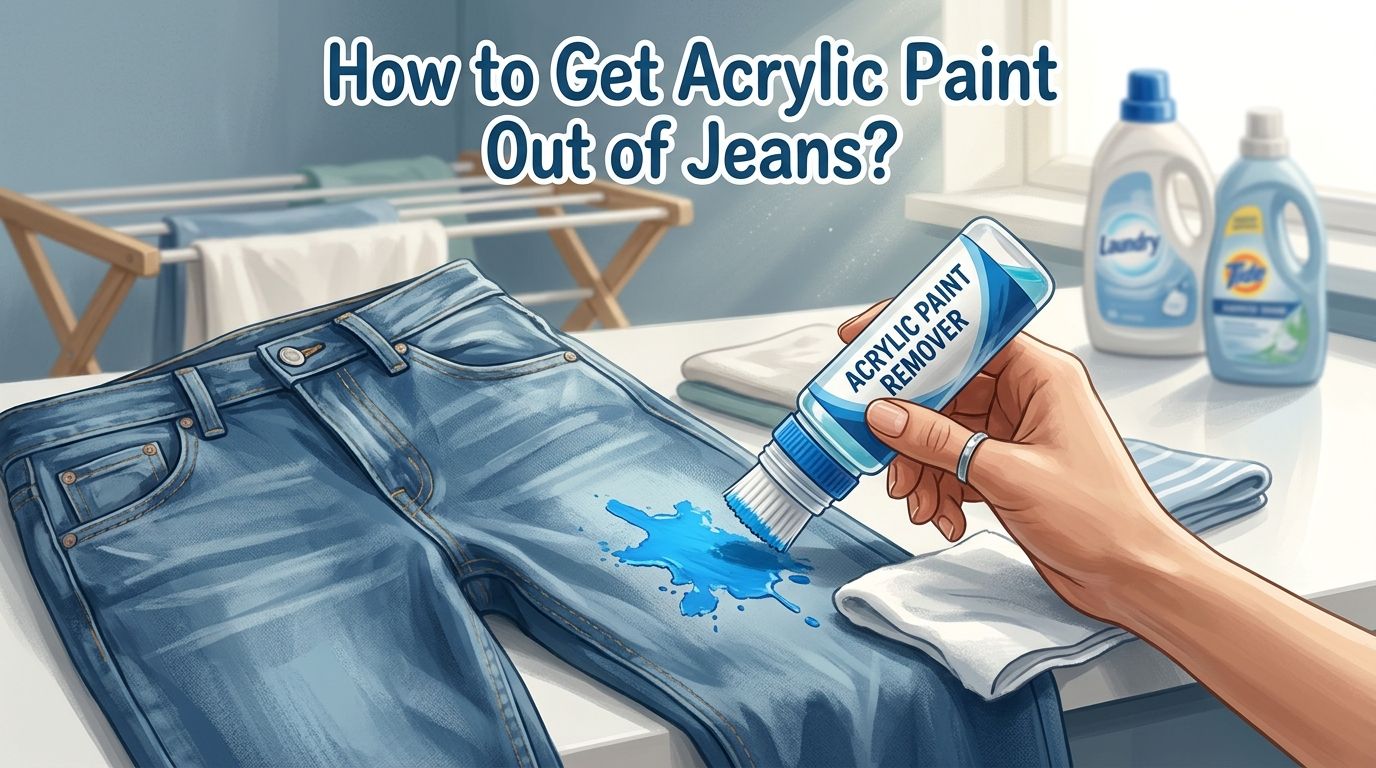
How to Get Acrylic Paint Out of Jeans? Simple Solutions
You just finished an amazing art session, looked down, and spotted a big streak of acrylic paint on your favorite jeans. Your heart sinks. That pair of jeans may feel ruined, but it probably is not.
Acrylic paint is water based, which means it dissolves in water while still wet. The challenge starts once the paint dries. Dried acrylic paint forms a plastic film that bonds to denim fibers. This makes removal harder, but far from impossible.
The good news? You likely already own the supplies you need. Items like rubbing alcohol, dish soap, baking soda, and vinegar can break down acrylic paint and lift it out of denim.
Key Takeaways
- Speed matters most. Fresh acrylic paint washes off jeans with just warm water and soap. The longer the paint sits, the harder the removal process becomes. Always treat the stain as soon as you notice it.
- Rubbing alcohol is your best friend for dried stains. Isopropyl alcohol (70% or 91%) breaks down the plastic bonds in dried acrylic paint. It is the single most effective household solution for old, set paint stains on denim.
- A paste of baking soda, dish soap, and rubbing alcohol handles stubborn spots. This triple combination attacks the stain from multiple angles. The baking soda provides gentle abrasion, the dish soap lifts grease, and the alcohol dissolves the paint.
- Always scrape before you scrub. Use a butter knife or spoon to remove excess dried paint from the surface. This reduces the amount of paint that needs to dissolve and shortens the cleaning time.
- Test any cleaning solution on a hidden spot first. Some methods, especially acetone and nail polish remover, can fade or damage certain denim dyes. A quick test on an inside seam protects your jeans from accidental discoloration.
- Never put stained jeans in the dryer. Heat from the dryer permanently sets acrylic paint into fabric. Always air dry your jeans until you confirm the stain is fully gone.
How to Understand Why Acrylic Paint Sticks to Denim
Acrylic paint uses water as its carrier, but the actual pigment sits inside a plastic polymer emulsion. While the paint is wet, water keeps the polymers loose and flexible. You can rinse them away easily at this stage.
Once the water evaporates, those polymers link together and form a tough, flexible plastic film. This film grips tightly to fabric fibers, especially thick ones like denim. That is why a dry acrylic stain feels like a hard, rubbery patch on your jeans.
Denim’s tight weave makes things trickier. The paint seeps into small gaps between cotton threads and locks in place. Removal requires a solvent strong enough to dissolve the polymer bonds without destroying the cotton fibers or the indigo dye. Understanding this chemistry helps you pick the right cleaning approach.
How to Remove Fresh Wet Acrylic Paint From Jeans Immediately
Fresh acrylic paint is the easiest to remove. You have a window of about 15 to 30 minutes before the paint starts to set. Use this time wisely.
Start by blotting the stain with a paper towel or clean cloth. Press straight down and lift. Do not rub or smear the paint, as this pushes it deeper into the fabric and spreads the stain wider.
Next, hold the stained area under warm running water from the back side of the fabric. This forces the paint out the way it came in. Add a few drops of liquid dish soap and gently work it into the stain with your fingers.
Rinse and repeat until the water runs clear. Then wash the jeans in your washing machine on a normal cycle. Air dry the jeans and inspect the area. Most fresh stains disappear completely with this method alone.
Pros: Very easy, requires no special supplies, and works almost every time on wet paint.
Cons: Only effective within the first few minutes before the paint begins to dry.
How to Scrape Off Excess Dried Acrylic Paint Before Cleaning
Before you apply any liquid solution, remove as much dried paint as possible by scraping. This step saves time and makes every other method more effective.
Grab a butter knife, spoon edge, or old credit card. Hold it at a low angle against the fabric and gently push under the edge of the dried paint. Work slowly and peel off flakes and chunks.
Be careful not to press too hard. Aggressive scraping can damage denim fibers or push paint fragments deeper. The goal is to lift the top layer of dried paint so your cleaning solution can reach the stain beneath.
After scraping, brush away loose paint flakes with an old toothbrush or your fingers. You should see a thinner, lighter stain on the fabric. This remaining stain is what you will treat with one of the methods below.
How to Use Rubbing Alcohol to Dissolve Dried Acrylic Paint on Jeans
Rubbing alcohol is the most recommended solution for dried acrylic paint on denim. It dissolves the plastic polymer bonds that hold the paint to the fabric.
Use isopropyl alcohol with a concentration of 70% or higher. The 91% version works even faster. Saturate the stained area completely. Let the alcohol soak into the paint for two to three minutes.
Then take a clean cloth or old toothbrush and scrub the stain in small circular motions. You will see the paint start to loosen and transfer onto the cloth. Reapply alcohol and repeat the process until the stain fades.
Rinse the area under cold water after each round of scrubbing. Once the stain is gone or very faint, wash the jeans in the washing machine. Check the stain before drying. If any paint remains, repeat the alcohol treatment.
Pros: Highly effective on dried stains, affordable, and available at any drugstore or grocery store.
Cons: Strong smell, requires multiple applications on thick stains, and can slightly lighten some dark denim.
How to Make a Baking Soda and Dish Soap Paste for Tough Stains
This method combines three common household items into a powerful stain removal paste. It works well on stains that rubbing alcohol alone cannot fully remove.
Mix equal parts baking soda, liquid dish soap, and rubbing alcohol in a small bowl. Stir until you get a thick, spreadable paste. The consistency should resemble toothpaste.
Apply the paste directly to the stain. Use an old toothbrush to work the paste into the fabric with gentle circular motions. Let the paste sit on the stain for at least 15 to 20 minutes. The baking soda provides mild abrasion, the dish soap cuts through grease and pigment, and the alcohol dissolves the plastic binder.
After soaking, scrub the area again and rinse under cold water. Repeat if needed. Wash the jeans normally once the stain is gone.
Pros: Uses cheap, common ingredients and tackles multi layered stains effectively.
Cons: Takes more time and effort than single product methods, and the paste can be messy.
How to Use Vinegar to Break Down Acrylic Paint on Denim
White vinegar is a mild acid that can soften and loosen dried acrylic paint from denim fibers. It works best on light to medium stains.
Heat about one cup of white vinegar until it is warm but not boiling. Soak a clean cloth in the warm vinegar and press it against the paint stain. Hold it in place for 10 to 15 minutes. The heat and acidity work together to break the paint’s grip on the fabric.
After soaking, use the cloth or a toothbrush to scrub the softened paint away. Rinse the area with cold water. You may need to repeat this process two or three times for best results.
Some people mix equal parts vinegar and baking soda to create a fizzing paste. Apply it to the stain, let it sit for 30 minutes, then scrub and rinse. This adds extra cleaning power through the chemical reaction.
Pros: Natural, non toxic, and gentle on most fabrics including denim.
Cons: Less effective on heavy or old stains, and requires patience with multiple applications.
How to Try Hairspray or Nail Polish Remover on Stubborn Paint Stains
Hairspray and nail polish remover both contain solvents that dissolve acrylic paint. Hairspray works because it contains alcohol. Nail polish remover works because it contains acetone.
For hairspray, spray it directly onto the dried paint stain until the area is wet. Let it sit for one to two minutes, then scrub with a toothbrush or cloth. Rinse and repeat as needed.
For nail polish remover, soak a cotton ball in acetone based nail polish remover and press it onto the stain. Hold it in place for a minute, then blot and scrub gently. Rinse the area with cold water immediately after.
A critical warning applies here. Acetone can strip dye from dark denim and damage certain fabric blends. Always test these products on a hidden area of your jeans first, such as an inside seam or the back of the waistband.
Pros: Effective on dried and caked on stains that resist other methods.
Cons: Risk of fabric damage, color fading, and strong chemical fumes. Not suitable for all denim types.
How to Use Laundry Detergent and Warm Water Soaking for Large Stains
Large paint stains that cover a big area of your jeans respond well to a long soaking method. This approach loosens paint across the entire stained zone at once.
Fill a bucket or sink with warm water and add a generous amount of liquid laundry detergent. Stir the water to create suds. Submerge the stained section of your jeans in the solution.
Let the jeans soak for one to six hours. Check the stain every hour and gently scrub it with a brush. The combination of warm water and detergent slowly softens and lifts the paint from the fibers.
After soaking, remove the jeans and scrub the stain directly with more detergent. Rinse under cold water and check your progress. Wash the jeans in the machine on the warmest setting safe for denim. Air dry and inspect before wearing.
Pros: Great for large stains, requires minimal hands on effort, and uses supplies you already own.
Cons: Time consuming, and may not fully remove thick or deeply set stains without additional treatment.
How to Avoid Common Mistakes That Set Acrylic Paint Permanently
Several common errors can make acrylic paint stains permanent. Knowing what to avoid is just as important as knowing what to do.
Never use hot water on a fresh stain. Hot water can cause the acrylic polymers to set faster. Always start with warm or cold water and switch to hot water only during the final machine wash after the stain is mostly gone.
Do not put stained jeans in the dryer. The heat from a clothes dryer permanently bonds the paint to the fabric. Always air dry your jeans until you are 100% certain the stain has been removed. You can rewash and retreat the stain if needed.
Avoid rubbing a wet stain aggressively. This pushes the paint deeper into denim fibers and spreads it to clean areas. Blot instead of rub, and always work from the outside edges of the stain inward. Taking these precautions protects your jeans from further damage during the cleaning process.
How to Handle Acrylic Paint Stains on Different Colors of Denim
Not all denim reacts the same way to cleaning solutions. Dark indigo jeans, black denim, and white jeans each require slightly different care.
For dark blue and black jeans, rubbing alcohol and the baking soda paste are your safest options. Avoid acetone and nail polish remover, as these can strip the dark dye and leave a lighter patch. Always do a spot test on a hidden seam before treating the visible stain.
For white or light colored jeans, you have more flexibility. You can use rubbing alcohol, acetone, vinegar, and even diluted bleach if needed. The risk of visible discoloration is much lower on lighter fabrics. Hydrogen peroxide also works well on white denim as a follow up treatment.
For distressed or pre washed denim, be extra gentle. These fabrics are thinner and weaker at stress points. Use the soaking method rather than aggressive scrubbing to avoid creating holes or tears.
How to Prevent Acrylic Paint From Getting on Your Jeans in the Future
Prevention saves you from stain removal entirely. A few simple habits can protect your jeans during painting sessions.
Wear a dedicated painting apron or smock that covers your lap and thighs. These are the areas where jeans collect the most paint drips and brush wipes. An old oversized shirt worn backward works well as a free alternative.
Keep a damp cloth nearby while you paint. If you spot a fresh drip on your jeans immediately, you can wipe it off in seconds before it sets. This one habit prevents most stains from becoming a problem.
Change into old clothes or designated “paint jeans” before starting any art project. Many artists keep one pair of jeans specifically for messy creative work. This simple switch means your good jeans never face the risk of acrylic paint contact.
How to Know When Professional Cleaning Is the Best Option
Sometimes home methods are not enough. Large, old, or deeply set acrylic paint stains may need professional attention.
Consider professional dry cleaning if the stain covers a large area and has been dried for weeks or months. Dry cleaners have access to industrial solvents and equipment that work better than household supplies. Tell the cleaner exactly what type of paint caused the stain so they can choose the right treatment.
Professional help also makes sense for expensive or delicate designer jeans. The risk of accidental damage from DIY methods may not be worth it on a high value pair. A professional can test solvents in a controlled way and minimize fabric damage.
If you have tried three or more home methods without success, that is a clear sign to seek professional help. Continuing to scrub and treat the same area repeatedly can weaken the denim and cause more harm than the stain itself.
Pros: Higher success rate on old stains, no risk of personal error, and safe for valuable garments.
Cons: Costs money, requires a trip to the cleaner, and results are still not guaranteed on very old stains.
Frequently Asked Questions
How to Get Dried Acrylic Paint Out of Jeans After They Have Been Washed and Dried?
If your jeans went through the washer and dryer with the stain, the paint is now heat set. Start by scraping off the top layer with a butter knife. Then saturate the stain with 91% isopropyl alcohol and let it soak for five minutes. Scrub with a toothbrush and repeat several times. The baking soda, dish soap, and alcohol paste is also effective here. The stain may not come out completely, but you can lighten it significantly with persistent treatment.
How to Tell if Acrylic Paint Has Permanently Stained Your Jeans?
If you have treated the stain multiple times with rubbing alcohol and the baking soda paste, and the stain has not changed at all, it may be permanent. Heat exposure from a dryer is the most common cause of permanent staining. You can try one final round with acetone on a test area. If that fails, the paint has likely bonded too deeply with the fibers.
How to Remove Acrylic Paint From Jeans Without Rubbing Alcohol?
You have several alternatives. Warm white vinegar softens dried paint effectively. Hairspray contains alcohol and works as a substitute. Dish soap and warm water handle fresh stains well. A vinegar and baking soda paste also breaks down dried paint over time. Each method takes a bit more patience, but they can still produce good results.
How to Get Acrylic Paint Off Jeans Using Only Natural Products?
Combine equal parts white vinegar and baking soda into a paste. Apply it to the stain and let it sit for 30 minutes. Scrub gently and rinse with cold water. You can also try warm vinegar soaking by pressing a vinegar soaked cloth against the stain for 15 minutes. Lemon juice is another natural acid that can help soften paint, though it is less effective than vinegar.
How to Remove Small Acrylic Paint Spots From Jeans Quickly?
Small spots respond well to a quick rubbing alcohol treatment. Dab a cotton ball soaked in isopropyl alcohol directly onto the spot. Hold it in place for one minute, then scrub gently with the cotton ball. Rinse under cold water. For tiny fresh spots, warm water and a drop of dish soap is usually enough to remove them in under a minute.

Hi, I’m Zoe Ward, the creator and voice behind Fine Brush Vault. I’m passionate about art, painting, and exploring the world of colors. I spend my time testing and reviewing art supplies to help fellow creators find the best tools for their craft. Through honest reviews and detailed guides, my goal is to make your creative journey easier and more inspiring.