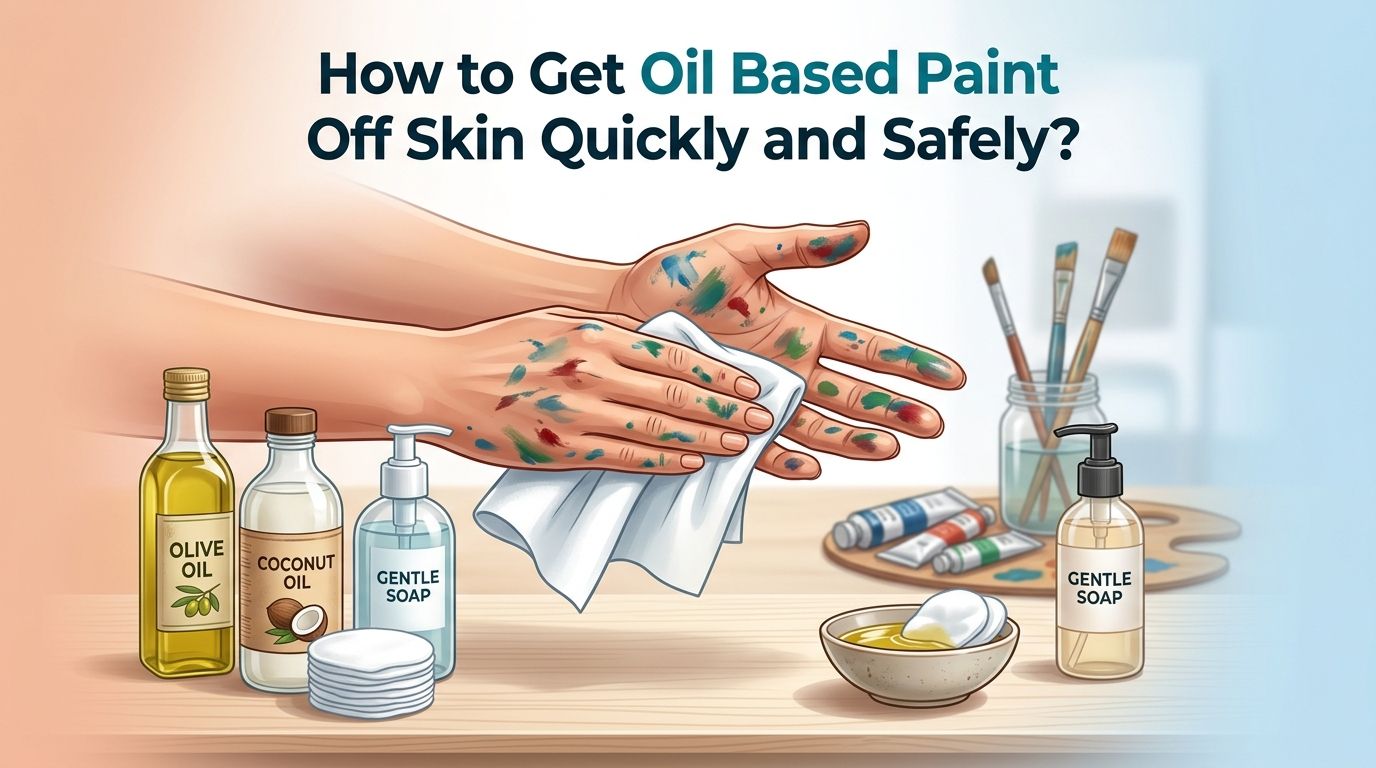
How to Get Oil Based Paint Off Skin Quickly and Safely?
You just finished a painting project, looked down at your hands, and saw them covered in stubborn oil based paint. Sound familiar?
Oil based paint bonds to skin much faster and harder than water based paint. Regular soap and water won’t cut it. The good news is that you don’t need harsh chemicals to solve this problem.
This guide walks you through safe, proven methods to remove oil based paint from your skin. You will learn how to use common household items like olive oil, baby oil, coconut oil, and dish soap.
Key Takeaways
- Oil dissolves oil. The fastest and safest way to remove oil based paint from your skin is to use another oil based substance. Olive oil, baby oil, and coconut oil all break down the paint’s bond with your skin without causing irritation.
- Act fast for easier removal. Wet oil based paint comes off much more easily than dried paint. The sooner you start cleaning, the less effort and scrubbing you will need. Keep a rag or paper towels nearby during any painting project.
- Avoid paint thinners on your skin. Products like turpentine and mineral spirits can remove paint, but they also strip your skin’s natural oils, cause dryness, and may lead to chemical burns or allergic reactions. Stick to gentler alternatives whenever possible.
- Dish soap is your best friend after oil. Once you loosen the paint with a natural oil, follow up with warm water and dish soap. Dish soap cuts through grease and oil effectively. This two step method handles most oil based paint stains on skin.
- Moisturize after cleaning. Any paint removal process can dry out your skin. Always apply a good moisturizer or lotion after you finish cleaning. This protects your skin barrier and prevents cracking or peeling.
- Prevention saves time. Wearing gloves, using barrier cream, and covering exposed skin before you start painting are the easiest ways to avoid this problem entirely.
How to Understand Why Oil Based Paint Sticks to Skin So Strongly
Oil based paint uses a binder made from natural or synthetic oils. These oils create a strong adhesive bond with most surfaces, including your skin. Water cannot break this bond because oil and water do not mix.
Your skin also produces natural oils. Oil based paint grabs onto these oils and settles into the tiny grooves and pores on your hands and arms. This is why the paint feels like it becomes part of your skin after just a few minutes.
The longer oil based paint sits on your skin, the more it dries and hardens. Dried oil paint is significantly harder to remove than wet paint. This is because the solvents in the paint evaporate over time, leaving behind a tough, sticky film. Understanding this chemistry helps you pick the right removal method.
How to Remove Oil Based Paint from Skin Using Olive Oil
Olive oil is one of the most effective and gentle ways to remove oil based paint from skin. The principle is simple: like dissolves like. Oil breaks down oil.
Pour a small amount of olive oil directly onto the painted area. Rub it into your skin with your fingers or a soft cloth for about two to three minutes. You will notice the paint starting to loosen and lift. Use a paper towel to wipe away the dissolved paint.
Repeat the process if needed. For stubborn spots, let the olive oil sit on the paint for a minute before scrubbing. Once the paint is gone, wash your hands with warm water and dish soap to remove the oily residue.
Pros: Safe for all skin types, no harsh chemicals, inexpensive, and available in most kitchens.
Cons: May require multiple applications for dried paint, leaves oily residue that needs a soap follow up.
How to Use Baby Oil to Get Oil Based Paint Off Your Hands
Baby oil works the same way as olive oil but often feels smoother on the skin. It is essentially mineral oil with a light fragrance. Many painters and DIY enthusiasts keep a bottle nearby during projects.
Apply baby oil generously over the paint stained area. Massage it in with circular motions for two to four minutes. The baby oil softens and dissolves the paint, making it easy to wipe off with a cloth or paper towel.
For dried paint, soak a cotton ball in baby oil and press it against the spot for one to two minutes. This gives the oil more time to penetrate the hardened paint. Then scrub gently and wipe clean.
Pros: Very gentle on sensitive skin, pleasant smell, widely available.
Cons: Slightly less effective on very thick or dried paint compared to cooking oils, requires soap and water to fully clean afterward.
How to Clean Oil Based Paint Off Skin with Coconut Oil
Coconut oil has become a favorite among artists and painters for removing oil based paint from skin. Its thick texture allows it to cling to the skin and work on stubborn paint for longer periods.
Scoop a tablespoon of coconut oil and rub it between your palms. Spread it over the painted areas and massage firmly for two to three minutes. The paint will begin to break apart and transfer onto the coconut oil. Wipe everything away with a clean cloth.
Coconut oil also moisturizes your skin while removing the paint. This is a major benefit because most paint removal methods tend to dry out your skin. You still need to wash with soap afterward, but your hands will feel softer rather than stripped.
Pros: Moisturizing, effective on both wet and dried paint, safe for sensitive skin, antibacterial properties.
Cons: Can be messy, solid at cooler temperatures so you may need to warm it first.
How to Remove Dried Oil Based Paint from Skin with Mayonnaise
This one surprises most people, but mayonnaise is an excellent paint remover for skin. Mayonnaise contains oil and vinegar, both of which help break down oil based paint. The thick consistency also keeps it in place while it works.
Spread a generous layer of mayonnaise over the dried paint. Let it sit for five to ten minutes. The oils in the mayonnaise will soften the dried paint and loosen its grip on your skin. After waiting, scrub the area gently with a cloth or soft brush.
Wipe away the residue and wash with soap and warm water. You may need to repeat this for heavily dried spots. This method works especially well on large areas where paint has dried for several hours.
Pros: Works well on dried paint, inexpensive, safe for skin.
Cons: Messy, has a strong smell, requires patience as you wait for it to soak in.
How to Get Oil Based Paint Off Skin Using Dish Soap and Warm Water
Dish soap alone won’t remove oil based paint, but it plays an important supporting role. Dish soap is designed to cut through grease and oil, which makes it perfect for cleaning up after you use one of the oil based methods above.
Start by wetting your hands with warm water. Apply a generous amount of dish soap and scrub thoroughly. Focus on the areas where paint remains. The warm water opens your pores slightly and helps lift paint particles. Scrub for at least one to two minutes.
For better results, combine this method with an oil treatment first. Use olive oil or baby oil to loosen the paint, then switch to dish soap and warm water to remove both the paint and the oil residue. This two step approach handles most situations.
Pros: Available in every home, effective as a follow up step, safe and non toxic.
Cons: Not effective as a standalone method for oil based paint, may dry out skin with repeated use.
How to Use Baking Soda and Oil to Scrub Oil Based Paint Off Skin
Adding baking soda to your oil creates a gentle abrasive paste that scrubs away stubborn paint without damaging your skin. This method is ideal for dried paint that resists oil alone.
Mix two tablespoons of cooking oil with one tablespoon of baking soda in a small bowl. Stir until you get a thick paste. Apply this paste to the painted areas and scrub in circular motions for two to three minutes.
The baking soda acts as a mild exfoliant while the oil dissolves the paint. Together, they tackle even the most stubborn spots. Rinse with warm water and finish with dish soap to remove any remaining residue.
Pros: Very effective on dried and stubborn paint, uses common household ingredients, gentle exfoliation.
Cons: Can cause mild irritation on broken or very sensitive skin, requires mixing beforehand.
How to Safely Use Rubbing Alcohol to Remove Oil Based Paint from Skin
Rubbing alcohol (isopropyl alcohol) can dissolve certain components of oil based paint. It works best on small spots or areas where other methods have not fully cleaned the paint.
Soak a cotton ball or pad in rubbing alcohol. Press it against the painted spot and hold for 30 seconds. Then rub gently in small circles. The paint should dissolve and transfer onto the cotton. Switch to a fresh cotton ball as needed.
Wash the area with soap and water immediately after. Apply moisturizer because rubbing alcohol dries out skin quickly. Do not use this method on large areas or on your face. It is best reserved for small, stubborn spots on hands or arms.
Pros: Fast acting on small areas, widely available, effective on partially dried paint.
Cons: Dries out skin, can cause irritation with prolonged contact, not suitable for sensitive skin or large areas.
How to Avoid Common Mistakes When Removing Oil Based Paint from Skin
Many people reach for paint thinner or turpentine as their first choice. This is a mistake you should avoid. These products contain harsh solvents that absorb through your skin and can cause burns, rashes, and long term health issues.
Never use gasoline, acetone, or nail polish remover on large areas of skin. While these products can dissolve paint, they also strip away your skin’s protective barrier. This leads to dryness, cracking, and potential chemical burns.
Another common mistake is scrubbing too hard with rough materials. Using steel wool, hard bristle brushes, or abrasive sponges can break the skin and cause wounds. Always use soft cloths, cotton pads, or gentle brushes. Patience and the right solvent will do the work for you.
How to Remove Oil Based Paint from Sensitive Skin on Your Face and Neck
Paint splashes on the face or neck require extra caution. The skin in these areas is thinner and more sensitive than on your hands. Harsh chemicals or aggressive scrubbing can cause serious irritation or damage.
Use baby oil or coconut oil for facial skin. Apply a small amount to a soft cotton pad and gently dab the painted area. Do not rub hard. Let the oil sit for a minute, then gently wipe in one direction. Repeat with fresh cotton pads until the paint is gone.
Wash your face with a gentle cleanser afterward. Avoid rubbing alcohol, dish soap, or baking soda pastes on your face. These can irritate delicate skin. If paint gets near your eyes, flush with clean water immediately and seek medical attention if irritation continues.
Pros of oil method for face: Extremely gentle, moisturizing, no stinging.
Cons: Slower process, may need many repetitions for dried paint.
How to Protect Your Skin Before Working with Oil Based Paint
Prevention is always easier than removal. A few minutes of preparation can save you a lot of scrubbing later. Here are practical steps to keep oil based paint off your skin.
Wear nitrile or latex gloves during the entire painting process. Nitrile gloves resist oil based solvents better than latex. Replace them whenever they tear or become saturated.
Apply a barrier cream to exposed skin before you start painting. Barrier creams create an invisible layer between your skin and the paint. This makes any accidental splatters much easier to wipe off.
Wear long sleeves and old clothes that cover your arms. Keep wet wipes or a damp cloth nearby to clean splatters immediately. The faster you wipe off fresh paint, the less work you have later. These simple habits make a big difference.
How to Moisturize and Care for Your Skin After Paint Removal
Removing oil based paint can leave your skin feeling dry, tight, or irritated. Proper aftercare is essential to restore your skin’s health. Skip this step and you risk peeling, cracking, or discomfort.
After washing off all paint and cleaning residue, pat your skin dry with a soft towel instead of rubbing. Apply a thick moisturizer or hand cream immediately. Look for products that contain shea butter, glycerin, or ceramides. These ingredients repair and strengthen your skin’s natural barrier.
If your skin feels red or irritated after paint removal, apply aloe vera gel to soothe it. Avoid using any harsh soaps or chemicals for the next 24 hours. Give your skin time to recover. If irritation persists for more than a day or two, see a dermatologist for advice.
Frequently Asked Questions
How to Get Oil Based Paint Off Skin Without Using Any Chemicals?
Use natural oils like olive oil, baby oil, or coconut oil. Rub the oil into the painted area for two to three minutes. Wipe away the dissolved paint with a cloth. Follow up with mild soap and warm water. This method is completely chemical free and safe for all skin types.
How to Remove Dried Oil Based Paint from Skin If It Has Been There for Hours?
Apply a thick layer of mayonnaise or coconut oil over the dried paint. Let it soak for five to ten minutes. The oil will soften the dried paint. Scrub gently with a soft cloth or use a baking soda and oil paste for extra scrubbing power. Repeat as needed until the paint is fully removed.
How to Know If Oil Based Paint on Skin Is Harmful to Your Health?
Most oil based paints are not immediately dangerous on skin for short periods. However, some pigments contain heavy metals like cadmium or lead that should not stay on your skin for long. Always remove paint as soon as possible. If you notice a rash, burning, or swelling, wash the area immediately and consult a doctor.
How to Get Oil Based Paint Off a Child’s Skin Safely?
Use baby oil or coconut oil. These are the gentlest options available. Avoid rubbing alcohol, dish soap, or any chemical solvents on a child’s skin. Work slowly and gently. Wash the area with a mild child friendly soap afterward. If the child has sensitive skin or eczema, consult your pediatrician.
How to Clean Oil Based Paint from Under Your Fingernails?
Soak your fingertips in warm olive oil or baby oil for five minutes. Use an old toothbrush or nail brush to gently scrub under your nails. The oil loosens the paint trapped in those tight spaces. Finish with soap, warm water, and a thorough rinse. You may need to repeat the soaking step for stubborn spots.
How to Remove Oil Based Paint from Skin If You Are Allergic to Most Oils?
Try using plain petroleum jelly as an alternative. Apply a thick layer over the paint and let it sit for a few minutes. Wipe it away with a damp cloth. You can also try micellar water, which many people with sensitive skin tolerate well. Always patch test any product on a small area first if you have known allergies.

Hi, I’m Zoe Ward, the creator and voice behind Fine Brush Vault. I’m passionate about art, painting, and exploring the world of colors. I spend my time testing and reviewing art supplies to help fellow creators find the best tools for their craft. Through honest reviews and detailed guides, my goal is to make your creative journey easier and more inspiring.