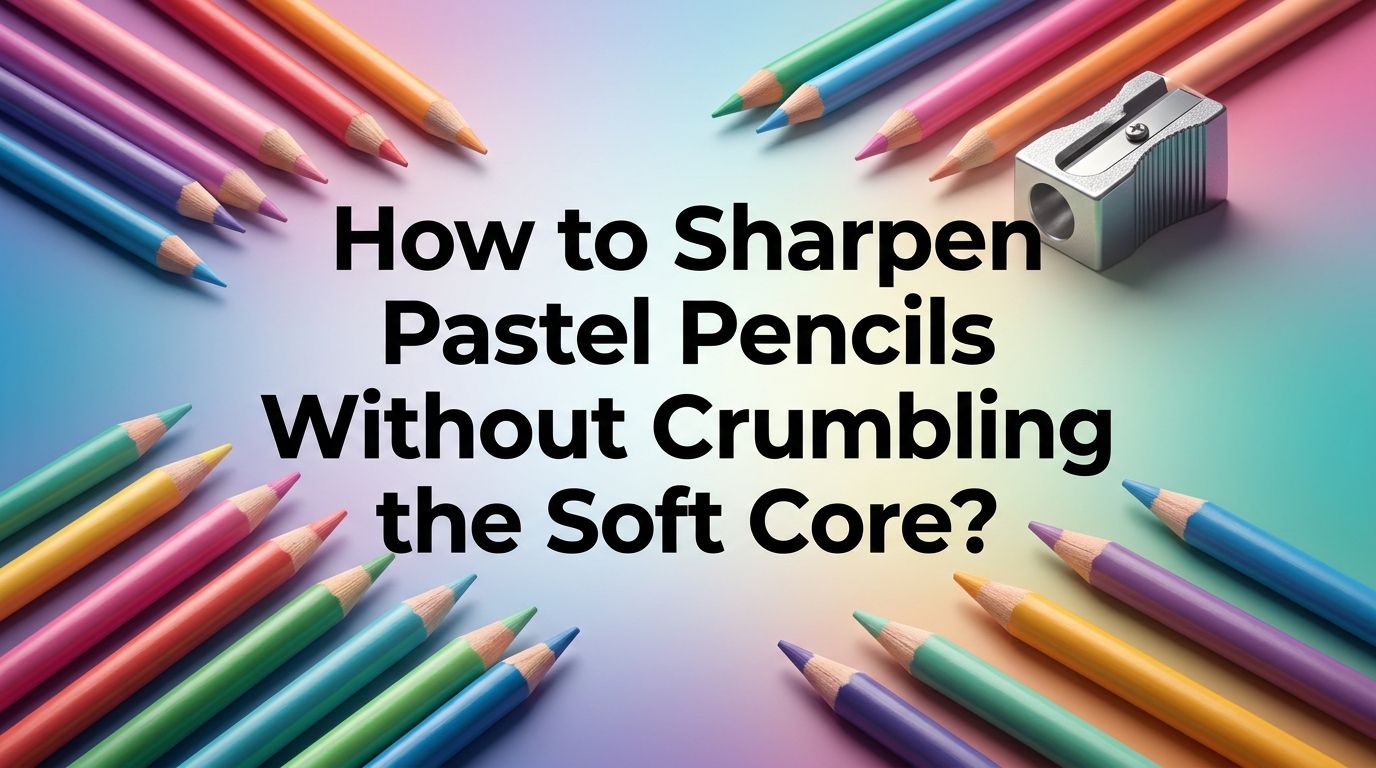
How to Sharpen Pastel Pencils Without Crumbling the Soft Core?
Pastel pencils are a joy to use until you try to sharpen them. That soft, pigment rich core crumbles the moment a standard sharpener touches it. You twist, the tip snaps, and a chunk of expensive pigment falls into the sharpener barrel.
Sound familiar? You are not alone. Artists at every skill level deal with this frustrating problem. The pastel core is made from compressed pigment and binder, and it is far more fragile than graphite or wax based colored pencil leads.
A wrong sharpening method can waste half the pencil before you even start drawing. This post gives you clear, practical, and tested solutions so you can get a fine, usable point on every pastel pencil you own.
In a Nutshell
- Pastel pencils break because their cores are soft and brittle. They contain high concentrations of pure pigment held together by a minimal binder. Standard twist sharpeners apply sideways torque that cracks this delicate structure. Understanding why they break is the first step to preventing it.
- A craft knife and sandpaper combo is the most reliable method. Use a sharp craft knife to carefully shave away the wood casing. Then refine the exposed core into a point with fine grit sandpaper or a sanding block. This two step process gives you full control and avoids the twisting pressure that causes snapping.
- Avoid electric sharpeners and dull blades at all costs. Electric sharpeners generate vibration that shatters pastel cores. Dull blades on any sharpener force you to apply more pressure, which leads to breakage. A fresh, sharp blade is essential no matter which sharpening method you pick.
- Lighter colored pastel pencils tend to be softer and break more easily. Brands vary in hardness too. Pencils from softer ranges need extra care, gentler pressure, and sharper tools. Harder brands sharpen with less effort.
- Rotate the pencil while sharpening to distribute pressure evenly. This single habit prevents uneven stress on the core. Whether you use a knife, sandpaper, or a manual sharpener, gentle rotation is your best friend.
- You do not always need a pin sharp point. Sharpening a pastel pencil to an extremely fine tip wastes pigment and increases breakage risk. A slightly rounded point works well for most applications. Save the super sharp tips for detail work only.
How to Understand Why Pastel Pencil Cores Crumble?
Pastel pencil cores are different from standard pencil leads. They are made from finely ground pigment pressed together with a small amount of binder. This gives them rich color and smooth application, but it also makes them fragile.
A graphite pencil core is dense and flexible. A pastel core is dry, chalky, and rigid. Any sideways force or twisting motion can crack it instantly. Standard barrel sharpeners rotate the pencil against a fixed blade, and that rotation creates lateral stress on the core.
The abrasive nature of pastel pigment also dulls sharpener blades fast. A dull blade drags instead of cuts, pulling the core out of alignment with the wood casing. This mismatch causes the core to snap inside the barrel.
Temperature matters too. Cold pastel pencils are more brittle. If your studio is chilly, let the pencils warm to room temperature before sharpening. This small step reduces unexpected breakage.
How to Use a Craft Knife for the Best Results?
A sharp craft knife is the most popular sharpening tool among professional pastel artists. It gives you direct control over the angle, depth, and pressure of every cut.
Hold the pencil firmly in your dominant hand. Position your thumb on the back of the blade for guidance. Slice into the wood casing only, using smooth curved strokes that move away from your body. Your goal is to expose about 6 to 8 millimeters of the pastel core without touching it with the blade.
Work slowly and make many small cuts rather than a few large ones. Large cuts remove too much wood at once and can jar the core loose. Once the core is exposed, do not use the knife to shape the tip directly. The knife applies too much focused pressure on the soft pigment.
Pros: Full control over sharpening angle. No sideways torque on the core. Works with every brand and pencil diameter.
Cons: Requires practice and a steady hand. There is a small risk of cuts if you are not careful. Slower than other methods.
How to Shape the Tip with Sandpaper or a Sanding Block?
After you remove the wood casing with a craft knife, sandpaper becomes your best tool for creating the actual point. Use fine grit sandpaper (around 150 to 220 grit) or a dedicated sanding block.
Place the sandpaper flat on your work surface. Hold the pencil at a low angle, around 20 to 30 degrees, and gently drag the exposed core across the surface. Rotate the pencil as you go. This rotation creates an even, conical point without putting pressure on one side of the core.
Use light strokes. Let the abrasive surface do the work. Pressing hard will snap the tip. You can also hold the sanding block in one hand and draw the pencil across it, which some artists find gives better control.
Pros: Extremely gentle on the pastel core. Creates a smooth, even point. You control the sharpness level. Minimal pigment waste compared to sharpener methods.
Cons: Creates pastel dust that needs cleanup. Takes slightly more time than a sharpener. You need a flat, stable surface.
How to Choose the Right Manual Sharpener for Pastel Pencils?
Not all manual sharpeners will destroy your pastel pencils. Some artists get good results with specific types of hand crank sharpeners that use a helical blade mechanism rather than a single fixed blade.
The key factor is blade sharpness. A brand new blade in a quality hand crank sharpener can produce clean, smooth points on pastel pencils. The moment that blade starts to dull, breakage begins. Pastel pigment is highly abrasive and wears down metal blades much faster than graphite does.
Choose a sharpener that offers replaceable blades. This lets you swap in a fresh blade whenever you notice rough cuts or increased breakage. Some artists keep two sharpeners on their desk: one with a new blade for soft pastels and one with an older blade for harder pencils.
Pros: Faster than hand sharpening. Produces a consistent point angle. Good for sharpening many pencils at once.
Cons: Blades dull quickly with pastel pencils. Broken tips can get stuck inside. Not ideal for softer pastel brands.
How to Avoid Common Mistakes That Break Pastel Pencils?
Several common habits cause pastel pencil cores to snap. The first is over sharpening. You do not need a needle sharp point. An extremely fine tip is fragile and will break the moment it touches paper. Aim for a functional point, not a perfect one.
The second mistake is applying too much pressure while drawing. Heavy pressure on a freshly sharpened tip snaps it immediately. Let the soft pigment do the work. Light, repeated strokes build color better and preserve your point longer.
Dropping your pencils is another hidden cause of breakage. When a pastel pencil hits a hard floor, the core can fracture inside the wood casing even if the outside looks fine. The next time you sharpen, the fractured sections crumble apart. Store your pencils flat in a padded case.
Finally, avoid sharpening cold pencils. Room temperature pencils are slightly more flexible and less prone to cracking. Give them a few minutes to warm up if they have been stored in a cold space.
How to Handle Softer Pastel Pencil Brands?
Not all pastel pencils are equal in hardness. Brands like Caran d’Ache and Gioconda have softer cores that break more easily. Brands like Carbothello, Faber Castell PITT, and Derwent are harder and more forgiving during sharpening.
Softer brands need extra attention. Use only freshly sharpened knife blades and fine grit sandpaper. Reduce the amount of core you expose. A shorter exposed core has more support from the surrounding wood and is less likely to snap.
You may also notice that lighter colored pencils within any brand tend to be softer. Whites, light yellows, and pale pinks often have a higher pigment to binder ratio that makes them more fragile. Sharpen these colors with extra gentleness and avoid aiming for a very fine point.
If a softer pencil keeps breaking in a manual sharpener, switch to the craft knife and sandpaper method for that specific pencil. Sometimes the best solution is simply matching the right method to the right pencil.
How to Maintain Your Sharpening Tools for Pastel Pencils?
A dull blade is the number one cause of preventable pastel pencil breakage. Pastel pigment is gritty and abrasive. It wears down steel blades much faster than graphite or wax based cores.
Replace your craft knife blade as soon as you notice it dragging or tearing the wood instead of slicing cleanly. Most artists who work with pastels daily swap their blade every one to two weeks.
For manual sharpeners, a helpful trick is to sharpen a graphite or woodless pencil between every few pastel pencils. The graphite acts as a lubricant on the blade and helps it stay sharp longer. This small habit can extend blade life noticeably.
Keep your sandpaper or sanding block clean by tapping off accumulated pigment dust regularly. Clogged sandpaper loses its grit and forces you to press harder, which defeats the purpose. Replace sanding sheets when they become smooth or heavily loaded with pigment.
How to Sharpen Pastel Pencils if You Have Arthritis or Limited Hand Strength?
Hand sharpening with a craft knife requires grip strength and fine motor control. If you have arthritis, tremors, or limited hand strength, this method may not be comfortable or safe.
A mounted sharpening stand can help. Some brands offer a desktop mount that holds the pencil steady while you move the blade. This removes the need to grip both the pencil and the knife at the same time.
A sanding block used on a flat surface is another gentle option. You can roll the pencil across the block with your palm instead of gripping it tightly. This uses larger muscle groups in your hand and arm rather than small finger muscles.
You can also ask someone to pre sharpen a batch of pencils for you before a drawing session. Having ten or twelve pencils ready to go means you can focus on your art without frequent sharpening breaks.
Pros: Mounted stands reduce strain. Sanding blocks need minimal grip strength.
Cons: Mounted stands are an extra purchase. Pre sharpening a batch means more pencils to store.
How to Save and Reuse Pastel Dust from Sharpening?
Sharpening pastel pencils creates a surprising amount of pigment dust. Many artists throw this away, but it has real value.
Collect the dust in small containers sorted by color. You can use this loose pigment to create soft washes and base layers. Rub it into your pastel paper with a finger, cotton pad, or blending stump to lay down a smooth field of color before adding pencil detail on top.
This technique is especially useful for backgrounds and skies where you want a soft, even tone. The loose pigment blends more smoothly than pencil strokes and covers large areas faster.
Keep your containers sealed to prevent cross contamination between colors. Small plastic jars or empty mint tins work well. Label them with the color name for quick reference.
Not every artist finds this step worthwhile, and that is fine. If you already have a supply of soft pastels or pastel sticks, the extra dust may be redundant. But for artists who work primarily with pastel pencils, saving that dust stretches the value of each pencil.
How to Sharpen Pastel Pencils on the Go?
Studio sharpening setups are not practical for plein air painting or travel. You need a portable method that works without a stable desk surface.
A small folding craft knife fits easily in a pencil case. Pair it with a palm sized sanding pad, and you have a complete portable sharpening kit. Practice sharpening over a small container or plastic bag to catch the shavings and keep your workspace clean.
Some artists carry pre sharpened pencils in a hard shell case with individual slots. This protects the points during transport and reduces the need to sharpen in the field. Wrap each tip with a small piece of tissue paper for extra protection against bumps.
If you prefer a sharpener for travel, choose a small single hole sharpener with a brand new blade. A fresh blade on a compact sharpener can produce acceptable results on harder pastel brands. Replace the blade before every trip to avoid frustration outdoors.
How to Tell When Your Pastel Pencil Needs Sharpening?
You do not need to sharpen after every few strokes. Over sharpening wastes pigment and shortens the life of your pencils.
Sharpen when your lines become wider than you intend or when you lose control over the edge of your mark. If you are doing broad color work, a slightly blunt tip is perfectly fine and will actually help you cover area faster.
A good habit is to rotate the pencil in your fingers every few strokes while drawing. This exposes a fresh edge on the point and delays the need for sharpening. Many experienced artists do this automatically and find they sharpen far less often.
Watch for uneven wear on the tip. If one side is flat while the other is still pointed, your drawing angle is too steep. Adjusting your grip can extend the useful life of each sharpened point and give you more consistent lines.
How to Build a Reliable Pastel Pencil Sharpening Routine?
A consistent routine saves time and reduces frustration. Set aside five minutes before each drawing session to check and sharpen your most used colors.
Keep your sharpening tools in one place: craft knife, sandpaper or sanding block, a dust container, and a small brush for cleanup. Having everything within arm’s reach makes the process quick and painless.
Sharpen in batches. If you know your next project uses a warm color palette, sharpen all your reds, oranges, and yellows at once. This batch approach is more efficient than stopping mid drawing to sharpen a single pencil.
Inspect your blades weekly. A sharp blade is the foundation of clean sharpening. Set a reminder if you need to. Replace knife blades and sharpener blades on a regular schedule rather than waiting for breakage to tell you they are dull.
Over time, this routine becomes second nature. You will spend less time fighting broken cores and more time creating the art you love.
Frequently Asked Questions
How to Sharpen Pastel Pencils Without a Knife?
You can use a sanding block or fine grit sandpaper alone. Hold the pencil at a low angle and gently drag it across the abrasive surface while rotating it. This wears down both the wood and the core gradually without any cutting tool. It takes longer than a knife, but it is safe and effective. A manual sharpener with a fresh blade also works if you use gentle, slow rotations.
How to Fix a Pastel Pencil That Keeps Breaking Inside the Sharpener?
Remove the pencil and switch to hand sharpening. The core may have internal fractures from being dropped. Use a craft knife to carefully shave the wood down past the fractured section until you reach solid, intact pigment. Then shape the tip with sandpaper. Avoid putting this pencil back into a sharpener, as the remaining fractures will cause repeated breakage.
How to Keep Pastel Pencil Points Sharp While Drawing?
Rotate the pencil in your fingers every three to five strokes. This exposes a fresh edge and keeps the point functional without sharpening. You can also lightly touch the tip to a small sanding pad beside your drawing surface for a quick refresh between sharpening sessions.
How to Sharpen Thick Pastel Pencils That Do Not Fit Standard Sharpeners?
Some brands like Caran d’Ache have a wider barrel that does not fit standard sharpener holes. For these, use a craft knife to shave the wood and sandpaper to shape the core. You can also look for sharpeners with adjustable diameter openings, but hand sharpening remains the most reliable option for oversized pencils.
How to Reduce Pastel Dust While Sharpening?
Sharpen over a damp paper towel or a shallow container. The moisture in the towel captures airborne dust and keeps it from spreading. You can also sharpen inside a plastic bag with the opening around the pencil to contain the dust. Clean your sanding block regularly to prevent buildup that creates extra airborne particles.

Hi, I’m Zoe Ward, the creator and voice behind Fine Brush Vault. I’m passionate about art, painting, and exploring the world of colors. I spend my time testing and reviewing art supplies to help fellow creators find the best tools for their craft. Through honest reviews and detailed guides, my goal is to make your creative journey easier and more inspiring.