How to Get Oil Paint to Dry Faster on Canvas? 11 Proven Methods
Oil paint is slow. That is its greatest strength and its most frustrating quality. You finish a gorgeous layer on your canvas and then you wait. And wait. Sometimes for days or even weeks before you can add the next layer without smearing your hard work.
If you have a deadline, a commission to deliver, or simply want to keep your creative momentum going, this waiting game can feel painful.
The good news is that you do not have to sit around hoping your paint decides to cooperate. There are real, practical solutions that artists use every day to cut oil paint drying time significantly without ruining the quality of their work.
In a Nutshell
- Oil paint does not dry by evaporation like acrylic paint does. It dries through a chemical process called oxidation, where the oil in the paint reacts with oxygen in the air. This is why oil paint takes so much longer to dry and why the strategies to speed it up are different from what you might expect.
- Use alkyd mediums like Liquin or Galkyd mixed into your paint to reduce drying time from days to as little as 12 to 24 hours. These are one of the most popular and reliable solutions among professional artists.
- Paint in thin layers and follow the fat over lean rule. Thin layers expose more surface area to air and dry dramatically faster than thick applications. A thin wash can be touch dry within a single day.
- Improve airflow and warmth in your painting space. A well ventilated room with gentle air circulation and moderate warmth (around 70 to 75 degrees Fahrenheit) creates ideal conditions for faster oxidation.
- Choose your pigments wisely. Earth tone pigments like raw umber, burnt sienna, and raw sienna contain iron and manganese oxides that naturally speed up the drying process. Cadmiums and alizarin crimson dry much more slowly.
- Avoid common mistakes like using a hair dryer on high heat or placing your painting in direct harsh sunlight. These can crack the paint, yellow the surface, or cause uneven drying that leads to long term damage.
Why Oil Paint Takes So Long to Dry
Oil paint dries through oxidation, not evaporation. The linseed oil, walnut oil, or safflower oil in the paint reacts with oxygen molecules in the surrounding air. This chemical reaction forms a solid film over time.
This process is slow by nature. A thin layer of oil paint can take 2 to 7 days to become touch dry. Thicker applications can take weeks. Full curing, where the paint is completely hardened all the way through, can take 6 months to over a year.
Several factors affect how fast this oxidation happens. These include the type of oil binder, the pigment used, the thickness of the paint layer, room temperature, humidity levels, and airflow. Understanding these factors gives you the power to control and speed up drying time with purpose.
Use Alkyd Mediums to Speed Up Drying
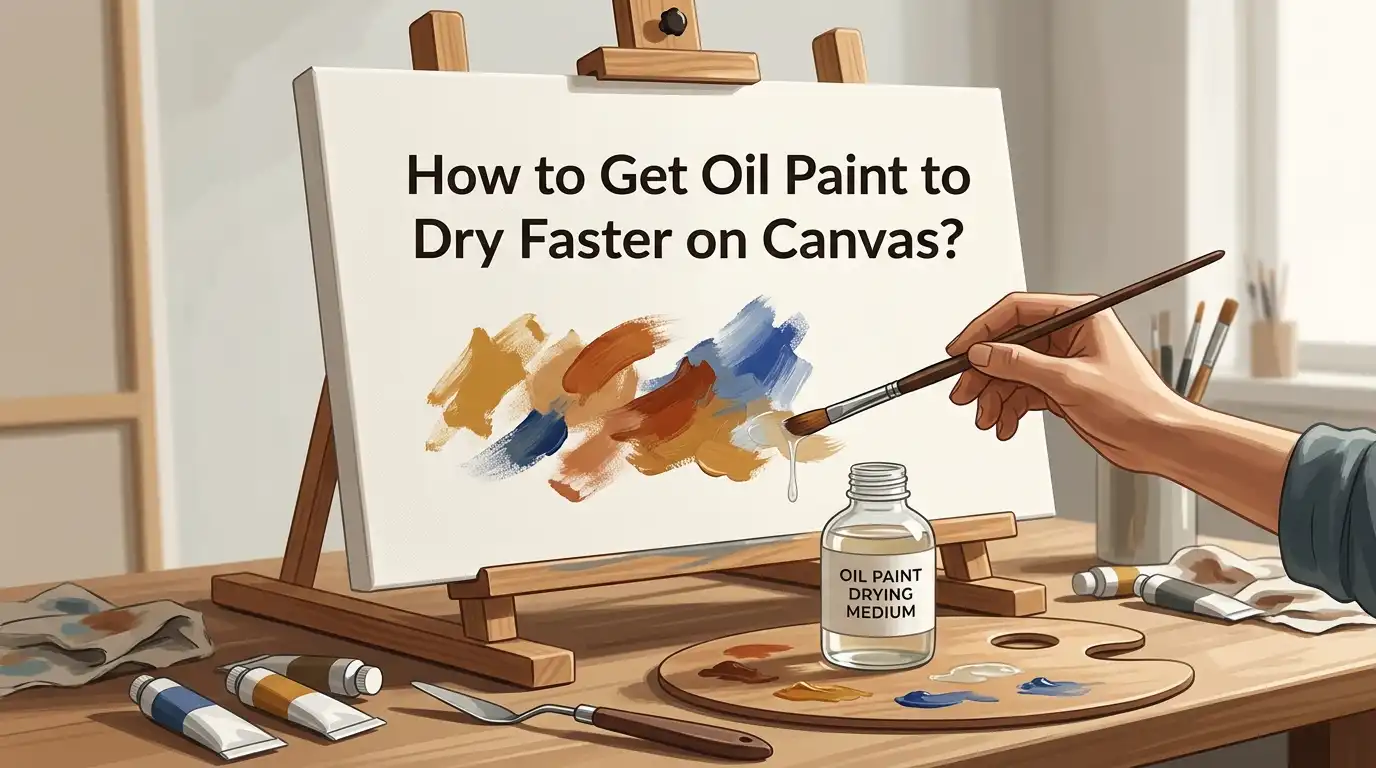
Alkyd mediums are one of the most effective tools for faster drying. Products like Liquin Original and Galkyd are alkyd resin based mediums that you mix directly into your oil paint on the palette.
When you add an alkyd medium, your paint can go from touch dry in several days to touch dry in 12 to 24 hours. Alkyd mediums work by accelerating the oxidation process without changing the color or consistency of your paint in a noticeable way.
Mix a small amount into your paint as you work. Start with a ratio of about one part medium to three parts paint and adjust based on your preference.
Pros: Dramatically faster drying. Compatible with traditional oil paints. Does not change color vibrancy. Adds a smooth, consistent finish.
Cons: Reduces your open working time, which can be a problem for blending. Some artists notice a slightly glossier finish. The paint becomes less forgiving once it starts to set.
Paint in Thin Layers
Thick paint traps oil beneath the surface and prevents oxygen from reaching the inner layers. This slows drying significantly. Thin layers, on the other hand, expose more paint surface to air and dry much faster.
A thin wash of oil paint mixed with a bit of solvent can be touch dry within 24 hours in good conditions. Compare that to a thick impasto stroke that might stay wet for a week or more.
The fat over lean principle supports this approach. Start your painting with leaner (less oily) layers and gradually increase oil content in later layers. This ensures each layer dries properly before the next one goes on top.
Pros: Much faster drying. Better adhesion between layers. Reduces risk of cracking.
Cons: Limits impasto and heavy texture techniques. Requires patience and planning in your layering approach.
Choose Fast Drying Pigments
Not all oil paint colors dry at the same speed. The pigment itself plays a major role in how fast the paint oxidizes. Earth tone pigments are naturally fast dryers because they contain iron and manganese oxides, which act as catalysts for the oxidation reaction.
Fast drying pigments include raw umber, burnt umber, burnt sienna, raw sienna, and most earth reds. These can be touch dry in as little as one to two days even without mediums.
Slow drying pigments include cadmium yellow, cadmium red, alizarin crimson, and ivory black. Titanium white in safflower oil is also a notoriously slow dryer.
If speed matters, try building your underpainting with earth tones. You can also mix a small amount of raw umber into slow drying colors to give them a drying boost, though this will slightly alter the hue.
Increase Airflow Around Your Painting
Good air circulation is one of the simplest ways to speed up oil paint drying. Because oil paint cures through oxidation, it needs a steady supply of fresh oxygen at the surface.
Place your painting in a room with open windows or use a gentle fan pointed near (but not directly blasting) the painting surface. The goal is to keep air moving around the canvas without creating strong gusts that could attract dust or debris.
A ceiling fan on a low setting works well. You can also place the painting near a doorway where natural air movement occurs throughout the day.
Pros: Free and easy to implement. No chemicals or special supplies needed. Works well in combination with other methods.
Cons: Effect is modest on its own. Does not help much with very thick paint layers. Dust can settle on wet paint if the area is not clean.
Control Room Temperature
Warmer temperatures accelerate the oxidation process in oil paint. A room temperature of 70 to 75 degrees Fahrenheit (21 to 24 degrees Celsius) provides a sweet spot for faster drying without introducing risks.
Cold studios slow down drying significantly. If you paint in a garage or basement during winter, your oil paint could take two to three times longer to dry than it would in a warm room.
You do not need extreme heat. Simply keeping your painting space at a comfortable, consistent temperature makes a noticeable difference. Avoid placing paintings near radiators or space heaters, as uneven heat can cause cracking.
Pros: Easy to manage with a thermostat. Consistent results. No impact on paint quality.
Cons: Limited effect on its own. Very warm rooms may dry paint too quickly on the surface while the interior stays wet, which can lead to wrinkling.
Reduce Humidity in Your Studio
High humidity slows down oxidation because moisture in the air competes with the oil’s ability to react with oxygen. A dry environment encourages faster curing.
Aim for a relative humidity of around 40% to 50% in your painting space. If you live in a humid climate, consider using a dehumidifier in your studio.
You can check humidity levels with an inexpensive digital hygrometer. Running the air conditioning also naturally reduces indoor humidity.
Pros: Creates better overall studio conditions for painting. Helps prevent mold growth on stored canvases. Works well alongside increased airflow and warmth.
Cons: Too little humidity can dry out other art materials. A dehumidifier adds a small ongoing electricity cost.
Use a Solvent Underpainting
Starting your painting with a lean, solvent based underpainting is a classic technique that also speeds up your overall drying time. Mix your oil paint with a small amount of odorless mineral spirits or turpentine for the first layer.
This thin, lean mixture dries quickly because the solvent evaporates fast and the remaining paint film is very thin. You can often start your next layer within 12 to 24 hours after a solvent underpainting.
This method also establishes your composition and values early, giving you a solid foundation to build on with thicker, richer layers of color.
Pros: Very fast drying for the initial layer. Establishes composition quickly. Low cost.
Cons: Solvents produce fumes that require ventilation. Some artists prefer solvent free methods for health reasons. The underpainting layer will look matte and thin.
Try Water Mixable Oil Paints
Water mixable oil paints (also called water soluble oils) use a modified linseed or safflower oil that allows the paint to be thinned and cleaned up with water instead of solvents. These paints generally dry faster than traditional oils.
Because water evaporates more quickly than oil based solvents, the initial thinning agent leaves the paint film faster. Many artists report that water mixable oils are touch dry in one to three days for thin to moderate layers.
They are real oil paints and produce similar color depth and blending quality. You can use them on regular canvas just like traditional oils.
Pros: Faster drying than traditional oils. No solvent fumes. Easy cleanup with soap and water. Good for artists with chemical sensitivities.
Cons: Slightly different handling feel compared to traditional oils. Less compatible with some traditional oil painting mediums. Some brands have a narrower color range.
Place Your Painting in Indirect Sunlight
Natural light, especially indirect sunlight, can help oil paint dry faster. Ultraviolet light promotes oxidation in the oil binder, which accelerates the curing process.
Place your finished canvas near a sunny window where it receives bright, indirect light throughout the day. Avoid placing it in harsh, direct sunlight for extended periods, as this can cause yellowing or uneven drying.
Many experienced painters keep a dedicated drying area near a north facing window (in the Northern Hemisphere) where their completed works receive consistent natural light.
Pros: Free and natural method. Also helps prevent yellowing of the oil film over time. Gentle and effective.
Cons: Requires a suitable window or space. Direct sunlight can cause damage. Not practical during winter months or in low light climates.
Avoid Common Mistakes That Slow Drying
Several common habits can actually make your oil paint take longer to dry or cause damage to your painting. Knowing what to avoid is just as important as knowing what to do.
Do not use a hair dryer on high heat. Oil paint does not dry by evaporation, so blasting it with hot air does little to speed up the actual curing process. Worse, it can cause the surface to skin over while the paint underneath stays wet, leading to cracking and wrinkling.
Do not store wet paintings in dark, enclosed spaces. Oil paint needs air and light to oxidize. A dark closet with no ventilation is the worst possible environment for drying.
Do not add too much oil to your paint mixture. Extra oil means more material that needs to oxidize, which adds significant drying time.
Build a Consistent Drying Routine
The fastest results come from combining multiple methods into a consistent routine. Here is a simple workflow that many artists find effective.
Start your painting session by mixing an alkyd medium into your paint on the palette. Apply a lean underpainting with earth tones for your first layer. Paint in thin, controlled layers and let each one dry before adding the next.
Keep your studio warm (around 70 to 75 degrees Fahrenheit) with good airflow. Place finished layers near a window with bright indirect light. Monitor your humidity and use a dehumidifier if needed.
With this routine, you can realistically achieve touch dry surfaces within 24 to 48 hours for most applications. This lets you work on a painting across multiple sessions during a single week rather than waiting weeks between layers.
Pros: Reliable and repeatable results. Combines the best of all methods. Flexible enough to adapt to different painting styles.
Cons: Requires some initial setup and awareness of studio conditions. Alkyd mediums are an added expense.
Frequently Asked Questions
Can I put my oil painting in the oven to dry it faster?
No. Placing an oil painting in an oven is dangerous and will likely damage your work. The high heat can cause the canvas to shrink, warp, or even ignite. Oil paint and canvas materials are flammable. The linseed oil in the paint can also become discolored or crack under extreme temperatures. Stick to gentle warmth at room temperature and use the other methods described in this post for safe results.
Does oil paint dry faster on certain surfaces?
Yes. Oil paint generally dries faster on absorbent surfaces like raw canvas, gessoed boards, or paper because the surface pulls some of the oil away from the paint. Non absorbent surfaces like glass or metal allow the oil to sit on top, which slows down the drying process. A properly primed canvas with acrylic gesso offers a good balance of absorption and surface quality for faster drying.
How long does oil paint take to fully cure?
Oil paint can take 6 months to over a year to fully cure, depending on the thickness of the application and the conditions. Touch dry is different from fully cured. A painting that feels dry to the touch may still be soft underneath. You should wait at least 6 months before applying a final varnish to ensure the paint has cured enough to handle it.
Is it safe to mix alkyd mediums with regular oil paint?
Yes. Alkyd mediums are fully compatible with traditional oil paints. They are made from modified oil based resins and will not cause adhesion problems or chemical reactions. Many professional artists use alkyd mediums daily. Just keep in mind that they reduce your working time, so plan your blending and detail work accordingly.
Will using a fan blow dust onto my wet painting?
It can. If you use a fan to improve airflow, make sure your studio space is clean and dust free. Point the fan to circulate air in the room rather than blasting it directly at the painting surface. Covering nearby surfaces and keeping floors clean will reduce the amount of airborne particles that might settle on your wet paint.
Can I speed up drying and still do thick impasto work?
Yes, but it requires patience. Apply your thick impasto layers with an alkyd medium mixed in, and allow extra drying time for those specific areas. Thick paint will always dry more slowly than thin paint, but the alkyd medium still reduces the time compared to using no medium at all. Some artists apply impasto details in the final layer and let the painting dry for several extra days before considering it finished.

Hi, I’m Zoe Ward, the creator and voice behind Fine Brush Vault. I’m passionate about art, painting, and exploring the world of colors. I spend my time testing and reviewing art supplies to help fellow creators find the best tools for their craft. Through honest reviews and detailed guides, my goal is to make your creative journey easier and more inspiring.