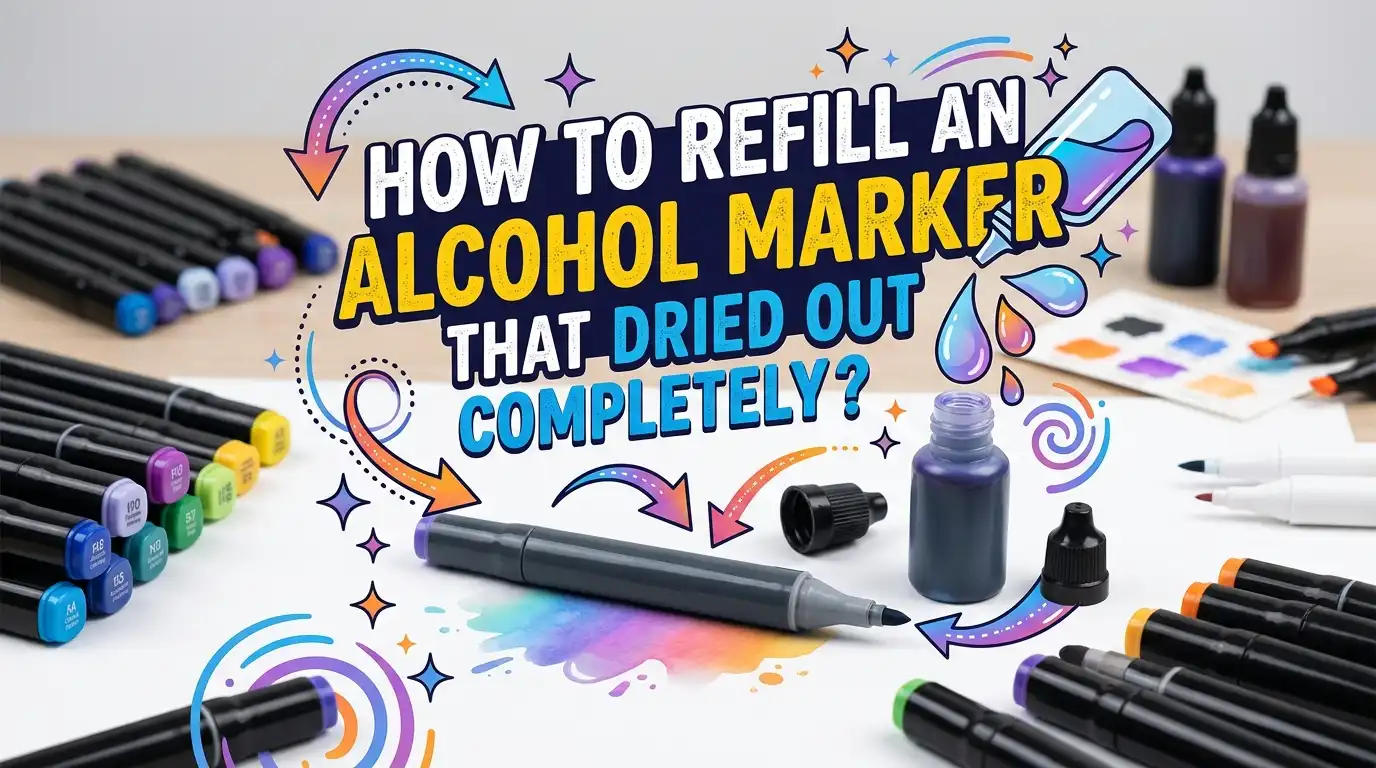
How To Refill An Alcohol Marker That Dried Out Completely?
Your favorite alcohol marker stopped working. You press it down, you scribble harder, and nothing shows up but a faint ghost of color. It feels like the marker died for good. Here is the good news.
A dried out alcohol marker is rarely a lost cause. In most cases, you can bring it back to life in under twenty minutes with simple tools you already own. This guide walks you through every method, from the easy alcohol bath to a full ink refill and a fresh nib swap.
You will learn what works, what fails, and how to keep it from happening again. Let us save your markers together.
Key Takeaways
- Dried alcohol markers can usually be revived. Most markers dry out because the alcohol solvent evaporated, not because the ink is gone. Add alcohol back, and the color often returns.
- Isopropyl alcohol is your best friend. Use a concentration of 90 percent or higher for the strongest results. Hand sanitizer or vodka can work in a pinch.
- The soaking method is the safest first step. Dip the nib in alcohol for five to ten minutes, shake gently, then test on scrap paper.
- A true refill needs matching ink. If the marker is fully empty of pigment, soaking alone will not help. You must add fresh, brand matched ink.
- A clogged or frayed nib may need replacing. Sometimes the ink is fine but the tip is the problem. A new nib costs little and fixes a lot.
- Prevention beats repair every time. Store markers horizontally, cap them tightly, and keep them away from heat.
Why Alcohol Markers Dry Out In The First Place
Understanding the cause helps you pick the right fix. Alcohol markers hold ink made of pigment mixed with an alcohol based solvent.
The solvent keeps the ink liquid and helps it flow through the nib. Over time, that solvent evaporates. When it escapes, the pigment dries up and clogs the tip. This is the most common reason a marker stops working.
A cracked or loose cap speeds up this process dramatically. Air sneaks in, the alcohol leaves faster, and your marker dies early. Heat, sunlight, and humid storage spaces also pull moisture and solvent out quickly.
Heavy use wears the nib down too. Knowing whether your marker lost its solvent or its pigment tells you which rescue method to try first.
How To Tell If Your Marker Is Truly Dried Out Or Just Empty
This step matters because it decides your whole approach. A dried out marker still has pigment inside, but the alcohol that carries it has evaporated. An empty marker has used up the actual ink. The fixes for these two problems are completely different.
Here is a simple test. Uncap the marker and look at the nib. If the tip looks pale, hard, or crusty but the barrel still feels slightly heavy, the marker is likely dried out, not empty.
Add alcohol and it should revive. If the marker feels very light and the nib stays colorless even after soaking, the pigment is probably gone. In that case, you need a real ink refill. Pressing the nib on scrap paper after a quick alcohol test confirms which problem you face.
Gather The Right Tools Before You Start
Good preparation saves time and prevents mess. Gather everything before you touch your markers so you can work in one smooth session. Alcohol ink can stain hands, clothes, and tables, so set up smartly.
You will want these items ready: isopropyl alcohol at 90 percent or higher, a small cup or container, clean tissues or paper towels, tweezers, plastic gloves, and a sheet of scrap paper for testing.
If you plan a full refill, you also need brand matched refill ink for your specific marker. Cover your work surface with newspaper or an old cloth to catch drips.
Keeping a roll of paper towels nearby helps you wipe the nib between tests. Having the right supplies on hand turns a frustrating job into a quick and tidy one.
Method One: The Alcohol Soak To Revive A Dried Nib
This is the easiest and safest method, and it works most of the time. The alcohol dissolves the dried pigment clogging the tip and gets the ink flowing again. Many artists call this the magic bath.
Follow these steps. First, pour a small amount of isopropyl alcohol into your cup, just deep enough to cover the nib. Second, dip the marker tip first into the alcohol.
Third, let it soak for five to ten minutes. Fourth, take it out and shake it gently to loosen any leftover pigment. Fifth, dab the nib on scrap paper to test the flow.
If the color returns, you saved your marker. If it stays weak, soak it again for a few more minutes and retest.
Pros: It is cheap, fast, and uses tools most people already own. It rarely damages the marker.
Cons: It only works if pigment still remains inside. It will not help a truly empty marker.
Method Two: Adding Alcohol Drops Directly Into The Nib
Sometimes a soak is not enough, and you want to push alcohol deeper into the marker. Adding drops directly to the nib forces solvent into the dried ink core. This method gives the pigment more liquid to dissolve into.
To do this, remove the nib with tweezers. Add three to four drops of isopropyl alcohol into the open barrel where the ink reservoir sits.
Then place the nib back in, recap the marker, and shake it gently. Let it rest for about five minutes so the alcohol spreads through the ink. Test on scrap paper afterward.
Pros: It reaches dried ink that surface soaking cannot touch. It often revives markers that the bath alone failed to fix.
Cons: It carries a higher risk of ink blots and smudges. Adding too much alcohol can over dilute the color and make it look faded. Add drops slowly and test often.
Method Three: Using A Colorless Blender Marker
This trick helps when you have no alcohol on hand but you own a colorless blender. A blender marker is filled with the same solvent used in alcohol markers, minus the pigment. That solvent is exactly what your dried marker is missing.
Here is how to use it. Hold the dried marker in one hand and the blender in the other. Press the blender tip against the dried marker nib and move it in small circles for ten to fifteen seconds.
The blender pushes solvent into the dried tip and reactivates the pigment. Test on scrap paper and repeat if needed.
Pros: It is clean, simple, and needs no separate alcohol supply. It is great for quick fixes mid project.
Cons: It only adds a small amount of solvent, so it suits light drying, not severe cases. You also use up your blender marker faster.
Method Four: A Full Ink Refill For Empty Markers
When soaking fails and the marker is truly empty, a real refill is the only fix. This method replaces the lost pigment, not just the solvent. Refillable brands like Copic make this easy, and many other brands sell matching ink too.
There are two common ways. The drip method works like this. Uncap both ends of the marker. Hold the marker at an angle and drip refill ink onto the broad nib, one drop at a time, checking fullness every few drops. Stop when the nib looks saturated but not dripping. Wipe excess ink with a tissue.
The soak method involves pulling the nib with tweezers, adding ink into the reservoir, then reinserting the nib.
Pros: It fully restores a dead marker and can extend its life by months.
Cons: Refill ink costs money and must match the marker brand. Using the wrong ink can ruin the marker.
How To Replace A Worn Or Clogged Nib
Sometimes the ink is fine, but the nib is the real villain. A frayed, hardened, or clogged tip blocks ink flow even when the reservoir is full. Replacing the nib is often the missing piece of a successful revival.
Here is the process. Grip the old nib firmly at its base with tweezers. Pull it out slowly and straight to avoid splashing ink. Then take a fresh replacement nib and push it carefully into the same slot.
Press it in until it sits snug. After replacing it, the ink needs a little time to wick into the new tip, so wait a few minutes before testing.
Pros: A new nib instantly fixes flow problems that alcohol cannot solve. Replacement nibs are cheap.
Cons: Not every brand sells matching nibs. If the ink reservoir is also low, you may need to refill ink at the same time for the color to flow well.
Combining Methods For Stubborn Markers
Some markers refuse to cooperate after a single fix. In these cases, layering two methods together gives the best results. A marker that sat dry for months often lost both solvent and nib quality.
Try this combined approach. First, soak the nib in alcohol to clear the clog. Next, add a few drops of alcohol into the barrel for deeper penetration.
Finally, replace the nib if it still looks frayed. If the color stays faint after all this, the pigment is likely gone and you need a proper ink refill.
Working through the methods in order saves you from buying ink you may not need. Start with the cheapest fix and move up only if needed. This ladder approach rescues even badly neglected markers. Patience pays off here, so retest at every stage before giving up.
Common Mistakes That Make Things Worse
Avoiding these errors keeps your rescue mission on track. Many people accidentally damage their markers while trying to save them. A few simple habits prevent these slip ups.
The first mistake is using water on an alcohol marker. Alcohol markers need alcohol based solvent, so water dilutes the pigment poorly and can leave it patchy.
The second mistake is pouring too much alcohol directly into the barrel, which causes blots and faded color. The third is shaking the marker too hard, which can damage the delicate nib.
Another common error is using low concentration alcohol below seventy percent. Weaker alcohol holds more water and works far less effectively. Lastly, skipping the scrap paper test means you may smear a half fixed marker across your finished art. Slow, careful steps protect your work.
How To Store Alcohol Markers So They Never Dry Out Again
Prevention is the smartest fix of all. A few storage habits keep your markers wet and ready for years. Most premature drying comes from poor storage, not poor quality.
Follow these rules. Store your markers horizontally so the ink spreads evenly across both ends. This matters most for double sided markers, since vertical storage lets one end starve while the other floods.
Keep every cap pressed on tightly to block air and slow evaporation. Replace any cracked caps right away.
Store markers in a cool, dry place away from direct sunlight and heat sources. Heat and humidity pull solvent out fast. Using your markers regularly also helps, since fresh use keeps the ink moving and prevents settling.
With good care, alcohol markers can last twelve to eighteen months or longer before needing any attention.
When To Give Up And Recycle A Marker
Not every marker can be saved, and knowing when to stop saves you time. Some markers reach a point where the ink has truly cured. When the resin in the pigment hardens completely, even alcohol cannot fully restore it.
Here are the signs. If you have soaked the nib, added alcohol drops, swapped the nib, and the color still refuses to flow, the marker is likely beyond repair. A marker that feels feather light and shows no pigment after multiple alcohol tests has lost its ink for good.
In these cases, refilling with brand matched ink is the only real option, and if your marker is not refillable, replacement is wiser. Check whether your local area recycles marker barrels. Some brands run take back programs for empty markers, which keeps plastic out of landfills.
Frequently Asked Questions
Can I revive a dried alcohol marker with just rubbing alcohol?
Yes, in most cases. Rubbing alcohol, also called isopropyl alcohol, dissolves the dried pigment clogging the nib. Use a concentration of ninety percent or higher for the best results. Soak the tip or add a few drops into the barrel, then test on scrap paper.
Does water work to fix alcohol markers?
Warm water can help slightly in an emergency, but it is not the ideal choice. Alcohol markers use an alcohol based solvent, so alcohol matches the ink far better. Water can leave the color patchy and weak. Use alcohol whenever you can.
How long should I soak the marker nib in alcohol?
Soak the nib for five to ten minutes for most markers. If the color stays faint, soak it again for a few more minutes and retest. Avoid soaking far longer than needed, since too much alcohol can over dilute the pigment.
What can I use if I do not have rubbing alcohol?
Several alcohol based products can work. Hand sanitizer, vodka, cologne, or nail polish remover all contain alcohol that may revive the nib. A colorless blender marker is another great option since it holds the same solvent your marker needs.
How do I know if my marker needs ink or just alcohol?
Check the weight and the nib. If the barrel feels slightly heavy and the nib is crusty, it likely just needs alcohol. If the marker feels very light and stays colorless after soaking, the pigment is gone and you need a full ink refill.
Why does my marker still not work after refilling?
The nib may be clogged or worn out. Try soaking the nib in alcohol or replacing it entirely. After a refill, the ink also needs time to wick into the nib, so wait a few minutes and test again before deciding the fix failed.
How often should I check my markers for drying?
Check them every few months if you do not use them often. Markers stored well can last twelve to eighteen months, but caps loosen and alcohol slowly escapes over time. Regular use and tight capping are the best ways to catch problems early.

Hi, I’m Zoe Ward, the creator and voice behind Fine Brush Vault. I’m passionate about art, painting, and exploring the world of colors. I spend my time testing and reviewing art supplies to help fellow creators find the best tools for their craft. Through honest reviews and detailed guides, my goal is to make your creative journey easier and more inspiring.