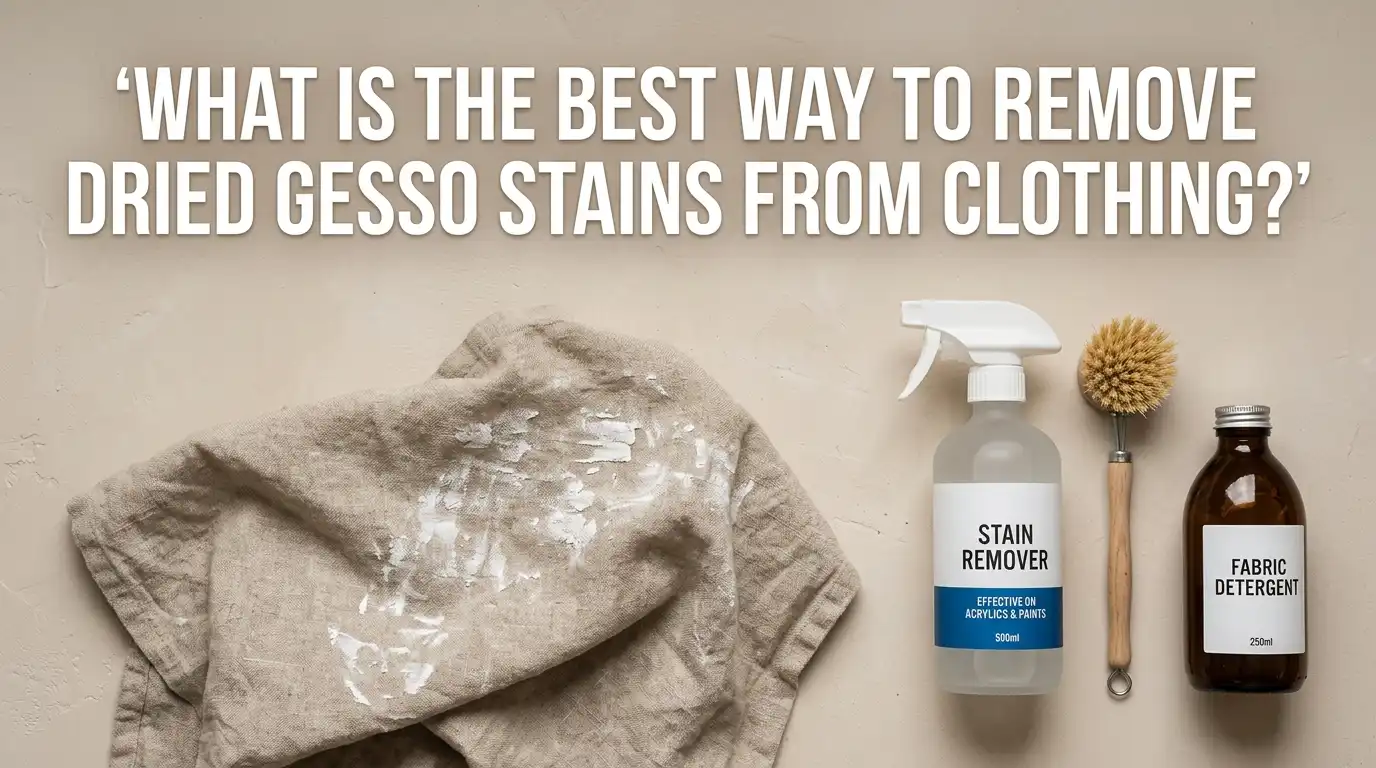
What Is the Best Way to Remove Dried Gesso Stains From Clothing?
Gesso splatters happen to every artist. One moment you are priming a canvas, and the next, white blobs appear on your favorite shirt.
By the time you notice, the gesso has dried into a stiff, chalky patch that feels impossible to remove. The good news? You can save your clothes with the right approach.
Gesso is essentially acrylic paint mixed with chalk or gypsum. Once it dries, it bonds tightly to fabric fibers. Regular washing rarely works. You need solvents, scraping tools, and a bit of patience.
Key Takeaways
- Act fast when possible, but dried gesso can still be removed with the right tools and solvents like rubbing alcohol or acetone.
- Rubbing alcohol (isopropyl) is the safest and most effective first choice for most fabrics because it softens dried acrylic without bleaching colors.
- Always test any solvent on a hidden area first, such as an inside seam or hem, to make sure it does not damage dyes or fibers.
- Mechanical scraping with a dull knife or spoon edge helps lift softened gesso, but never use sharp blades that can cut threads.
- Acetone and paint thinners work on tough stains but can dissolve synthetic fibers like acetate, rayon, or modacrylic, so check the fabric label first.
- Wash the garment separately after stain treatment with a heavy duty detergent, and air dry to confirm the stain is fully gone before machine drying.
- Some stains will not come out completely if the gesso has been heat set through a dryer cycle, so avoid drying stained clothes until treatment is finished.
Why Dried Gesso Is So Hard to Remove From Fabric
Gesso behaves like a glue once it dries. It contains an acrylic polymer binder mixed with calcium carbonate or titanium dioxide. The polymer forms a flexible plastic film that grips fabric fibers tightly. Water alone cannot break this bond.
When gesso dries on cotton or polyester, it seeps between threads. The chalk fills the gaps, and the acrylic hardens around them. This double action creates a stain that resists normal washing.
Heat makes the problem worse. If you toss a stained shirt into a hot dryer, the acrylic melts slightly and bonds even more firmly. That is why dried gesso stains often look permanent after one wash cycle. You need a solvent that dissolves the acrylic binder, which then lets the chalky residue rinse away.
Test Your Fabric Before Using Any Solvent
Solvents can damage fabrics just as much as gesso can. Before you treat a visible stain, pick a hidden spot to test. Try the inside of a hem, a seam allowance, or under a collar.
Apply a small drop of your chosen solvent. Wait two to three minutes. Then blot with a white cloth. Check for color transfer, fading, or fiber damage. If the test spot looks fine, you can move to the stained area.
Synthetic fabrics like acetate, triacetate, and modacrylic dissolve in acetone. Silk and wool react badly to strong solvents. Cotton, denim, polyester, and most blends handle rubbing alcohol well.
Pros of testing first: prevents permanent damage, builds confidence in your method, and saves expensive clothes.
Cons: adds five extra minutes to your process, but it is always worth it.
Step One: Scrape Off Excess Dried Gesso
Before applying any liquid, remove the bulk of the dried gesso. This step makes solvents work faster and prevents the stain from spreading. Grab a dull butter knife, a spoon edge, or an old credit card.
Lay the garment flat on a hard surface. Hold the fabric taut with one hand. Use the dull edge to scrape gently along the surface of the dried gesso. Work from the outside of the stain toward the center to avoid pushing residue further into the fibers.
You should see white flakes lifting away. Brush them off as you go. Do not press too hard or use sharp tools, since you can tear or fray the cloth. Once most of the crusty top layer is gone, you are ready for the solvent stage.
Method One: Rubbing Alcohol Soak
Isopropyl rubbing alcohol is the artist favorite for a reason. It dissolves the acrylic binder in gesso without harming most fabrics. Use 70 percent or 91 percent strength for best results.
Pour enough alcohol onto the stain to fully saturate it. Place an old towel underneath to catch drips. Let the alcohol soak in for 15 to 20 minutes. Then scrub the area with an old toothbrush using small circular motions.
You will notice the gesso softening into a paste. Wipe it away with a clean cloth. Repeat the soak and scrub cycle two or three times for stubborn stains. Rinse with cold water afterward.
Pros: safe on most fabrics, inexpensive, easy to find, low odor compared to acetone.
Cons: takes patience, may need multiple rounds, slightly less effective on very old stains.
Method Two: Acetone or Nail Polish Remover
Acetone is stronger than rubbing alcohol. It cuts through dried acrylic quickly, making it useful for tough or thick gesso patches. Pure acetone works best, but pure nail polish remover with acetone also works.
Dampen a cotton ball with acetone. Press it firmly onto the stain for about 30 seconds. Then dab and lift, replacing the cotton ball as it picks up gesso. Never rub aggressively, since acetone can weaken some fibers.
Always check the care label first. Acetone destroys acetate, modacrylic, and triacetate fabrics. It is generally safe on cotton, denim, and polyester. Rinse thoroughly with cold water after treatment.
Pros: fast acting, removes thick layers, widely available as nail polish remover.
Cons: strong fumes, can damage synthetic fabrics, may fade certain dyes especially on dark cotton.
Method Three: Hairspray for Light Stains
This method surprises people, but it works. Aerosol hairspray contains alcohol, which softens dried acrylic gesso. It works best on small or thin stains, not thick blobs.
Spray the hairspray directly onto the stain. Let it sit for ten minutes. Use an old toothbrush to scrub the area in gentle circles. Reapply as needed until the gesso lifts. Then rinse with cold water.
Choose a basic alcohol based hairspray, not the modern alcohol free formulas. The cheaper and more old fashioned the brand, the better it tends to work. This is a handy emergency option when you do not have rubbing alcohol on hand.
Pros: convenient, low cost, gentle on most fabrics, smells better than acetone.
Cons: less effective on large or old stains, leaves sticky residue if not rinsed well, multiple applications needed.
Method Four: Commercial Paint Removers for Fabric
Several commercial products are made for paint stains on clothing. These formulas combine solvents and surfactants to break down acrylic films. You can find them at hardware stores and craft suppliers.
Apply the product directly to the stain. Let it penetrate for five to thirty minutes depending on the label instructions. Scrub with an old toothbrush. Wash the garment immediately after treatment, since some of these products can stain fabric if left too long.
Always follow the directions on the bottle. Ventilation matters because many of these products have strong fumes. Wear gloves if you have sensitive skin.
Pros: designed for the job, often work on very old stains, professional results possible.
Cons: stronger chemicals, more expensive, fumes can be unpleasant, may need careful rinsing.
Method Five: White Vinegar and Hot Water Mix
For artists who prefer gentler approaches, vinegar offers a mild alternative. It will not work as fast as alcohol or acetone, but it can lift smaller or newer dried stains.
Mix equal parts white vinegar and hot water in a bowl. Soak the stained area for 30 minutes. Scrub gently with a toothbrush as the gesso softens. Repeat the soak if needed.
This method works best as a follow up to scraping or as a first step before trying stronger solvents. It is also great for delicate fabrics where harsh chemicals could cause damage.
Pros: safe for most fabrics, no harsh fumes, kitchen pantry friendly, gentle on dyes.
Cons: slower acting, less effective on thick or old stains, vinegar smell lingers until washed.
Method Six: Dish Soap and Warm Water Pretreatment
Sometimes the simplest method works as a backup. Heavy duty dish soap cuts grease and helps lift loosened gesso particles after a solvent treatment. It works best as a follow up step.
Squirt a generous amount of dish soap onto the treated stain. Add a small amount of warm water. Work the soap into a lather with your fingers or a soft brush. Let it sit for ten minutes.
Rinse thoroughly with warm water. You should see remaining gesso wash away. This step also helps remove solvent residue so your washing machine is not exposed to chemicals.
Pros: safe, cheap, found in every kitchen, removes solvent traces.
Cons: rarely works alone on dried gesso, mainly useful as a finishing rinse, may need to be combined with other methods.
Wash the Garment Properly After Treatment
Once the stain looks gone, you need to wash the garment to remove any leftover solvent or loosened gesso. Use the hottest water the fabric allows according to the care label. Add a heavy duty laundry detergent.
Wash the stained item separately. Do not mix it with other clothes, since trace gesso could transfer. Use the longest wash cycle for tough stains.
After the cycle ends, check the stain area before drying. If you still see white residue, repeat the solvent treatment. Heat from the dryer can permanently set any remaining gesso into the fibers. Always air dry stained items until you confirm the stain is fully gone.
What to Avoid When Removing Gesso Stains
Some common mistakes can make stains worse. Never put a stained item in the dryer until the gesso is completely removed. Heat bonds acrylic to fibers permanently.
Avoid using bleach as your first option. Chlorine bleach can react with acrylic and turn it yellow or set it deeper. Skip wire brushes and rough scrubbing pads, since they damage fabric weave.
Do not use boiling water on fresh or dried gesso. While warm water helps, boiling water can sometimes lock acrylics into fibers. Lastly, do not mix solvents like acetone and bleach together. The fumes can be dangerous, and the chemicals may cancel each other out.
Sticking to one method at a time, with proper rinsing in between, gives you the best chance of success without harm.
How to Prevent Future Gesso Stains
Prevention saves time and clothes. Wear an apron, smock, or designated paint clothes when working with gesso. Cotton aprons offer the best protection and wash easily.
Roll up your sleeves before priming canvases. Tie back loose clothing. Keep paper towels nearby for quick splatter cleanups while the gesso is still wet. Wet gesso wipes off in seconds, while dried gesso fights you for hours.
Cover your work surface with a drop cloth or old sheet. This catches drips and protects flooring too. If you do get a splash, dab it with a wet cloth immediately. The faster you act, the less likely the stain will set.
Building these habits into your studio routine means fewer ruined shirts and more time for actual painting.
Frequently Asked Questions
Can dried gesso ever become permanent on clothing?
Yes, especially if the garment has been through a hot dryer cycle. Heat sets acrylic polymers into fibers permanently. Once that happens, even strong solvents may only fade the stain rather than remove it. Always treat stains before drying.
Is gesso harder to remove than regular acrylic paint?
Gesso contains the same acrylic binder as acrylic paint, plus chalky fillers. The chalk can leave a faint white shadow even after the acrylic dissolves. You may need extra rinses or a follow up with dish soap to fully clear the residue.
Will rubbing alcohol damage colored clothes?
Most of the time, no. Isopropyl alcohol is safe for the majority of dyes and fabrics. However, some dark or hand dyed fabrics can lose color. Always spot test on a hidden area before applying alcohol to a visible stain.
How long should I soak the stain in solvent?
For rubbing alcohol, 15 to 20 minutes works well. Acetone needs only a few minutes at a time. Vinegar mixtures benefit from 30 minute soaks. Match the soak time to the strength of the solvent and the thickness of the stain.
Can I use these methods on delicate fabrics like silk or wool?
Be very careful with delicate fabrics. Strong solvents can dissolve protein fibers or damage finishes. For silk, wool, or vintage textiles, take the garment to a professional dry cleaner and tell them the stain is dried acrylic gesso.
What if the stain is still visible after all these methods?
Try one more round with a stronger solvent like acetone, followed by a heavy duty detergent wash. If the stain remains, consider creative cover ups like fabric paint designs, patches, or embroidery. Sometimes a stubborn stain becomes the start of a new project.

Hi, I’m Zoe Ward, the creator and voice behind Fine Brush Vault. I’m passionate about art, painting, and exploring the world of colors. I spend my time testing and reviewing art supplies to help fellow creators find the best tools for their craft. Through honest reviews and detailed guides, my goal is to make your creative journey easier and more inspiring.