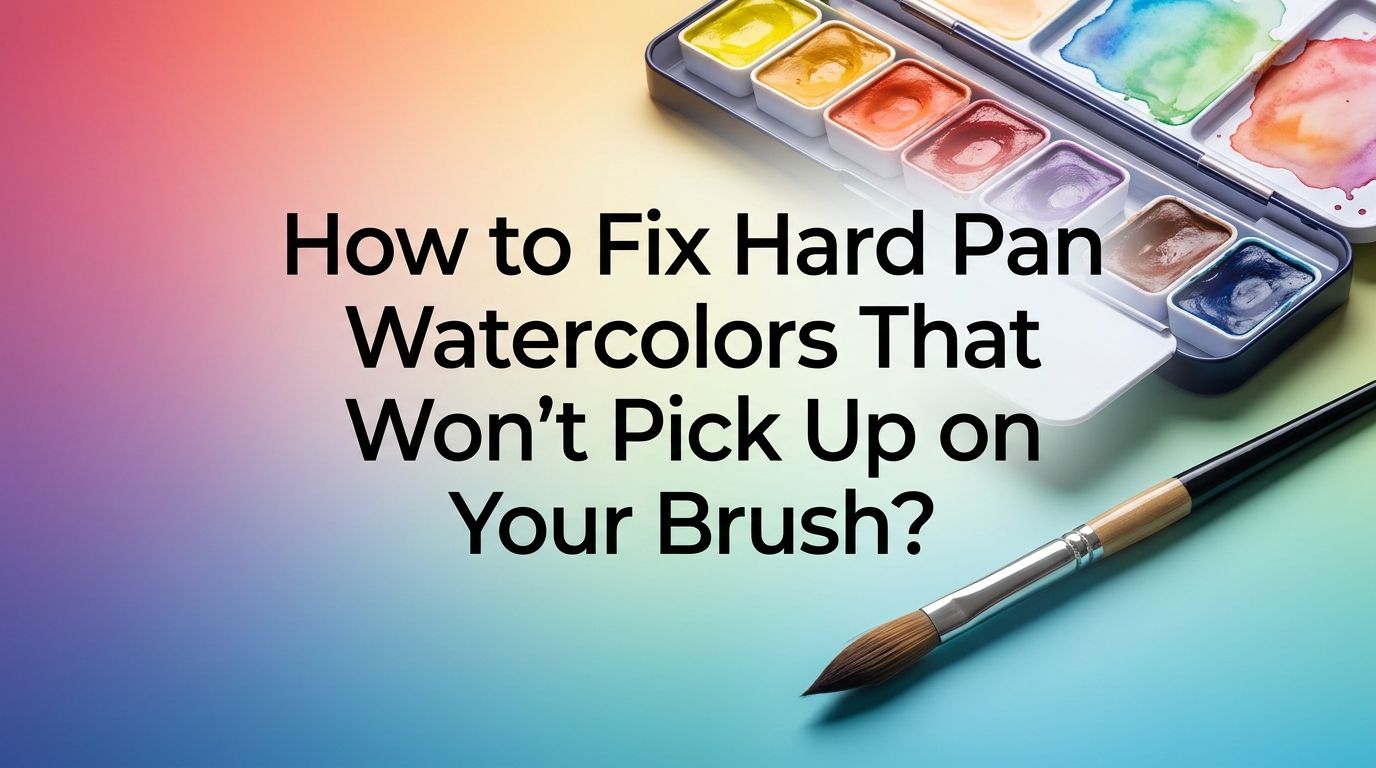
How to Fix Hard Pan Watercolors That Won’t Pick Up on Your Brush?
You sit down to paint, dip your wet brush into a watercolor pan, and nothing happens. The brush glides across the surface like it’s skating on plastic.
No pigment. No color. Just frustration. This is one of the most common problems watercolor artists face, whether you are a beginner or a seasoned painter with a collection of older palettes.
In this post, you will learn exactly why your watercolor pans stop working and what you can do to fix them. Every method here is practical, tested by real artists, and easy to follow at home.
In a Nutshell
- Hard pan watercolors are almost always fixable. The pigment inside the pan does not expire. The issue is usually a surface layer that has become too dry or too smooth for your brush to grab. A few drops of water and some patience can solve most cases.
- Pre wetting your pans is the single most effective habit. Before you start painting, spritz or drop water onto each pan you plan to use. Let the water sit for one to two minutes. This softens the surface and lets your brush pick up rich, usable pigment right away.
- Scratching the surface of a stubborn pan breaks the seal. Some pans develop a hard, glassy layer on top. Gently scoring that surface with a palette knife, toothpick, or even a stiff brush exposes fresh pigment underneath and makes rewetting much easier.
- Adding glycerin or honey can restore flexibility to very old pans. These are humectants, meaning they attract and hold moisture. A tiny drop on a dried out pan can help the paint stay softer and more responsive over time. Use them sparingly to avoid making the paint too sticky.
- Cheap or student grade paints are more likely to harden permanently. Lower quality watercolors often use less glycerin and fewer humectants in their formula. This means they dry harder and faster. Artist grade paints tend to rewet more easily because of better binder ratios.
- Your brush type matters more than you think. A very soft brush may not have enough friction to pick up pigment from a hard pan. Switching to a slightly stiffer synthetic brush or using a color shaper with a silicone tip can help you load color without damaging your paper.
How to Tell If Your Watercolor Pans Are Too Hard to Use?
The first step is to identify the actual problem. Not all “hard” pans behave the same way. Some pans are simply dry on the surface but perfectly fine underneath. Others have developed a slick, glassy film that repels water entirely.
Try this quick test. Wet your brush and press it firmly into the pan while making small circular motions. If you see color loading onto the brush after a few seconds, the pan just needs more water activation. If the brush slides across the surface and picks up almost nothing, you are dealing with a more serious rewetting issue.
Also look at the pan visually. A shiny, smooth surface often means the binder (gum arabic) has risen to the top and created a seal. A cracked or crumbly surface means the paint has lost moisture and may need a humectant added back in.
How to Pre Wet Your Pans Before Every Painting Session?
This is the easiest and most effective fix for hard watercolor pans. Pre wetting means adding water to your pans a few minutes before you start painting. It gives the water time to soak into the dried paint and soften it from the surface down.
Use a spray bottle to mist all the pans you plan to use. You can also use a clean brush or a small pipette to place a drop of water directly on each pan. Let the water sit for one to three minutes before you begin.
Pros: This method is free, fast, and works on nearly all pans. It requires no extra tools or products and protects your brushes from excessive scrubbing.
Cons: It does not fix pans that have a thick glassy seal on top. Very old or very cheap pans may need additional treatment beyond simple pre wetting.
How to Scratch the Surface of a Glazed Over Pan?
Some watercolor pans develop a hard, smooth layer on top that acts like a barrier. This layer is usually concentrated gum arabic binder that has dried into a film. Water beads up on it instead of soaking in, and your brush cannot grab any pigment.
The fix is simple. Take a palette knife, toothpick, or the edge of a coin and gently scratch the surface of the pan. You do not need to dig deep. Just score a few lines or crosshatch marks across the top to break through the glassy layer.
Once the seal is broken, add a few drops of water and let it soak in for a minute. You should immediately notice that the water absorbs instead of sitting on top. Your brush will now pick up pigment with normal effort.
Pros: Quick, effective, and requires no special supplies. Works especially well on artist grade pans that have simply developed a binder film.
Cons: You lose a tiny amount of paint from the surface. If done too aggressively, you can crack or dislodge the entire paint cake from the pan.
How to Use Glycerin to Soften Hard Watercolor Pans?
Glycerin is a humectant, which means it attracts moisture from the air and holds it. Most commercial watercolor paints already contain glycerin as part of their formula. When pans dry out and become rock hard, adding a small amount of glycerin can restore softness.
Place one to two drops of vegetable glycerin directly on the surface of the hard pan. Use a toothpick or brush to spread it gently. Let the pan sit overnight. By the next day, the surface should feel softer and more responsive to a wet brush.
Pros: Glycerin is inexpensive and widely available at pharmacies and craft stores. It restores the original flexibility of the paint without changing its color or behavior on paper.
Cons: Too much glycerin makes the paint sticky and gummy. It can also slow drying time on paper. Use it very sparingly. A single drop per half pan is usually enough.
How to Revive Watercolor Pans With Honey?
Honey has been used in watercolor paint making for centuries. Like glycerin, honey is a natural humectant that keeps paint soft and easy to rewet. Some high end watercolor brands still include honey in their formula.
To use this method, warm a tiny amount of honey (about a pea sized drop) and mix it with a few drops of warm water. Apply this mixture to the surface of the hard pan with a small brush. Let it dry for 24 hours before testing.
The honey helps the paint absorb water more easily and keeps the surface from forming that hard glassy seal again. It also improves the flow of pigment off the brush and onto the paper.
Pros: Natural, effective, and adds a smooth quality to the paint. Works particularly well on cheap pans that lack humectants in their original formula.
Cons: Honey can attract ants or other insects if you store your palette in a warm area. It may also make the paint slightly tacky if you use too much.
How to Soak Stubborn Watercolor Pans in Water?
For pans that resist all surface treatments, a full soak can break through the hardness. Remove the pan from your palette if possible and place it in a small dish of room temperature water. Let it soak for 15 to 30 minutes.
After soaking, pour off the excess water and let the pan sit until the surface is damp but not flooded. Test it with a wet brush. The paint should now release pigment freely. If it still resists, repeat the soak and try gently stirring the surface with a stiff brush or silicone color shaper.
This method works because water slowly penetrates the entire paint cake, not just the top layer. It rehydrates the binder throughout the pan and restores its ability to release pigment.
Pros: Very effective for extremely hard or old pans. Requires nothing except water and patience.
Cons: Not practical for pans fixed into a palette or for oddly shaped fan palette cakes. Over soaking can cause some paint to dissolve and wash away, especially with softer pigments.
How to Choose the Right Brush for Hard Pans?
Your brush can be part of the problem. Very soft natural hair brushes like kolinsky sable are designed for smooth application, not for scrubbing pigment out of a hard pan. If your pans are on the harder side, a soft brush will just glide across without picking up color.
Switch to a synthetic brush with slightly stiffer bristles for loading paint from hard pans. You can also try a silicone color shaper, which has a firm rubber tip that can work pigment loose without damaging the pan or your brush.
Once you have loaded the pigment onto your palette mixing area, you can switch back to your preferred soft brush for actual painting. This two brush approach protects your good brushes while making sure you get enough color from stubborn pans.
Pros: Saves your expensive brushes from wear. Gives you more control over how much pigment you pick up.
Cons: Adds an extra step to your painting routine. Stiff brushes can damage very soft or crumbly paint cakes if used too aggressively.
How to Add Gum Arabic to Restore the Binder?
Sometimes the issue is not just dryness. The gum arabic binder in the paint may have degraded or separated over time, especially in very old pans. Without enough binder, the pigment particles cannot form a smooth, liftable layer.
You can buy liquid gum arabic from most art supply stores. Apply a few drops directly to the pan and mix gently with a toothpick. Let it dry completely. The gum arabic will bind the loose pigment particles back together and create a surface that responds properly to water.
This method is especially useful for pans that have become powdery or crumbly rather than glassy. It essentially re manufactures the paint surface.
Pros: Restores the chemical structure of the paint. Helps loose, crumbly pans hold together and release pigment evenly.
Cons: Adding too much gum arabic can make the paint crack when it dries. It can also make the paint lift too easily during glazing layers.
How to Store Watercolor Pans to Prevent Hardening?
Prevention is always better than repair. How you store your watercolor pans directly affects how easy they are to rewet later. Heat, direct sunlight, and dry air are the three biggest enemies of pan watercolors.
Store your palette in a cool, dry place away from windows and heat sources. Close the lid of your palette after every session to slow moisture loss. If you live in a very dry climate, consider placing a small damp sponge inside your closed palette box between painting sessions.
Avoid leaving your palette open for hours while you paint. The longer the pans sit exposed to air, the faster the surface dries and hardens. Close the lid during breaks, even short ones.
Pros: Extends the life of your pans significantly. Reduces the need for revival methods.
Cons: A damp sponge left too long can cause mold growth in the palette. You need to check and replace it regularly.
How to Handle Cheap or Student Grade Pans That Won’t Rewet?
Budget watercolor sets are often the biggest offenders for hard, unresponsive pans. These paints typically contain less glycerin, lower quality gum arabic, and more filler than artist grade paints. The result is a pan that dries extremely hard and resists rewetting.
If you own a cheap set and several pans refuse to work, try the glycerin drop method combined with surface scratching. This two step approach addresses both the hard surface and the lack of humectant in the formula.
However, some very low quality pans simply cannot be fixed. If a pan still refuses to release pigment after multiple treatments, it may contain too much filler and not enough actual pigment to be useful. In that case, the pan is better replaced with a single tube of artist grade paint in the same color.
Pros: The combined approach can rescue many budget pans and save you money.
Cons: Some cheap pans are truly beyond saving. Time spent trying to fix them might be better invested in higher quality materials.
How to Use a Spray Bottle Effectively for Hard Pans?
A fine mist spray bottle is one of the most useful tools a watercolor artist can own. It lets you rewet multiple pans at once without flooding any single one. The mist is gentle enough to soften the surface without dissolving too much paint.
Choose a spray bottle that produces a fine, even mist rather than a stream. Hold it about six to eight inches from your palette and give two to three quick sprays across all the pans. Wait two minutes before painting.
For extra stubborn pans, spray, wait one minute, then spray again. The second application soaks into the already dampened surface more effectively. This layered approach often works where a single heavy spray does not.
Pros: Fast, even coverage across many pans at once. Prevents over wetting individual pans. Very gentle on the paint surface.
Cons: Mist can drift onto pans you did not want to wet. If pans are close together, spray can cause colors to bleed into neighboring wells.
How to Fix Cracked and Crumbling Watercolor Pans?
Cracked pans are a different problem from hard, glassy ones. Cracking usually means the paint lost too much moisture too quickly, or the formula lacked enough humectant from the start. The paint may still have plenty of pigment but breaks apart when you try to use it.
To fix cracked pans, add a few drops of warm water mixed with a tiny bit of glycerin or honey. Let the mixture soak into the cracks. As it absorbs, it will soften the fragments. Use a palette knife or the back of a brush to gently press the softened pieces back together.
Let the pan dry overnight. The repaired surface should be smoother and more cohesive. You may need to repeat this process two or three times for severely cracked pans.
Pros: Saves paint that would otherwise be lost as crumbs. Restores a usable surface.
Cons: The repaired pan may not be as smooth as the original. Some crumbs may be too small to recombine effectively.
How to Know When a Watercolor Pan Is Beyond Saving?
Not every pan can be rescued, and knowing when to let go saves you time and frustration. A pan is likely beyond saving if it produces zero pigment after soaking for 30 minutes, shows no color change when water is applied, or has turned chalky white.
Some pigments are also naturally harder to rewet than others. Cobalt based colors, viridian, and certain earth tones are known for drying very hard. These may require more effort but are usually still usable with patience.
If you have tried scratching, soaking, adding glycerin, and using a stiff brush, and the pan still gives you nothing, it is time to move on. Replace that single pan with a tube of the same color and squeeze fresh paint into the empty well.
Pros: Knowing when to stop saves time and frustration.
Cons: Replacing individual pans can be difficult if the brand does not sell open stock colors.
Frequently Asked Questions
How to Reactivate Watercolor Pans That Feel Like Plastic?
Spray the pan with water and let it sit for two to three minutes. If the water beads up and does not absorb, the surface has a gum arabic film. Use a toothpick or palette knife to gently scratch the surface and break through the seal. Then spray again and wait. The exposed pigment underneath should rewet normally.
How to Tell If Watercolor Pan Paint Has Gone Bad?
Watercolor pigment does not go bad in the traditional sense. However, if the binder has completely degraded, the paint may become powdery and refuse to hold together even when wet. Mold growth, unusual odor, or a completely chalky texture are signs that the paint may be past the point of easy recovery.
How to Prevent Watercolor Pans From Drying Out Too Fast?
Always close your palette lid after painting. Store your set in a cool, shaded location away from heat vents and direct sunlight. In very dry climates, a tiny damp sponge placed inside the closed palette between sessions helps maintain moisture. Avoid leaving pans exposed to open air for extended periods.
How to Fix Watercolor Pans That Have Shrunk Away From the Edges?
This happens when paint loses volume as it dries. Add a few drops of water to the pan and let it soak in. Then squeeze a small amount of fresh tube paint on top to fill the gap. Press it gently to make contact with the old paint underneath. Let it dry flat so it bonds together.
How to Use Glycerin Without Ruining the Paint?
Less is more. Use only one to two drops per half pan. Spread it thinly across the surface and let it absorb overnight. Do not flood the pan with glycerin. Too much will make the paint excessively sticky, slow to dry on paper, and difficult to layer. Start small and add more only if needed.

Hi, I’m Zoe Ward, the creator and voice behind Fine Brush Vault. I’m passionate about art, painting, and exploring the world of colors. I spend my time testing and reviewing art supplies to help fellow creators find the best tools for their craft. Through honest reviews and detailed guides, my goal is to make your creative journey easier and more inspiring.