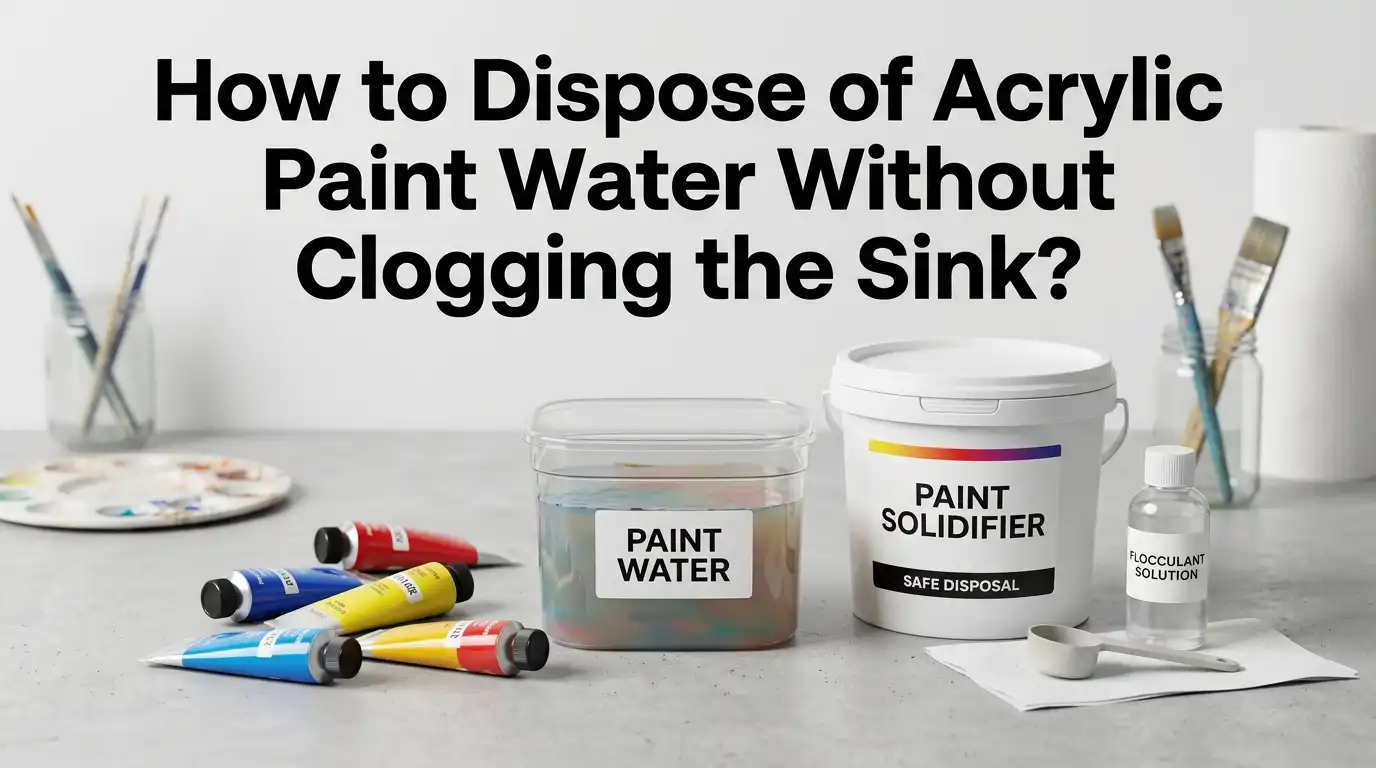
How to Dispose of Acrylic Paint Water Without Clogging the Sink?
If you paint with acrylics often, you have probably looked at that cloudy rinse water and wondered what to do next. It feels harmless because it is water based. Still, that dirty water carries paint solids, plastic binders, pigments, and residue that can stick inside pipes over time.
The good news is simple. You do not need a fancy studio or a hard cleanup routine to handle it the right way.
You only need a few smart habits that stop paint from building up in your sink and keep more waste out of drains. In this guide, you will learn easy methods, safer disposal steps, and clear choices for small and large amounts of acrylic paint water.
In a Nutshell
- Acrylic paint water should never be treated like plain water. Even when it looks thin, it still contains tiny paint solids. Those solids can collect inside pipes and may also move into the waste stream. The safest goal is to remove as much paint as possible before any water reaches the drain. That one habit solves most of the problem.
- The best cleanup starts before you rinse anything. Wipe brushes, palette knives, cups, and trays with paper, cardboard, or a rag first. This cuts down the amount of paint that enters your rinse jar. Less paint in the water means less work later. It also means fewer clogs, less sludge, and a cleaner sink.
- For most home painters, settling and filtering is the easiest method. Let the dirty water sit still so the solids sink to the bottom. Then pour off the clearer water and keep the sludge out of the drain. This method is low cost, easy to repeat, and simple for beginners. It works well for regular brush washing.
- Absorbent and evaporation methods help with thicker waste water. If your rinse water is heavy with paint, you can pour it into cat litter, sawdust, paper pulp, or another safe absorbent material, then let it dry fully. You can also leave the water in a safe container and let the water evaporate. The goal is the same in both cases: turn liquid waste into solid waste.
- Your plumbing setup matters. If your home uses a septic system, be extra careful. Septic systems do not handle paint waste well, even in small amounts over time. In that case, it is smarter to collect more waste and dispose of it as solid waste or through local waste programs. This extra step can save your system from long term trouble.
Why acrylic paint water can clog the sink
Acrylic paint dries into a plastic film. That is great on canvas, but bad inside pipes. When rinse water carries paint into the sink, some of that paint can stick to the pipe walls. Over time, more residue catches on top of the old residue.
This buildup often starts small. You may not notice it after one painting session. But repeated rinsing creates a slow coating inside the drain. Hair, dust, and soap scum can then cling to that sticky surface and make the clog worse.
The problem is bigger when the water holds thick paint, gel medium, or heavy body acrylic. Those materials leave more solids behind. The more paint you send down the sink, the more likely you are to get slow drainage, bad smells, and expensive pipe cleaning.
That is why safe disposal is not just about the environment. It is also about protecting your home.
What is actually in acrylic paint water
Many people think acrylic paint water is just colored water. It is not. It contains pigment, acrylic polymer, and other additives from the paint. Once mixed with rinse water, those bits float around until they settle, stick to surfaces, or dry.
The acrylic polymer matters most here. It behaves like a fine plastic binder. While the paint is wet, it moves easily. Once it begins to dry, it forms a film that can cling to jars, sinks, and pipes. That is why a cloudy rinse cup often leaves a skin or ring after sitting.
Pigments also matter. Some colors are mild, while others may carry metals or stronger additives depending on the paint line. This is one reason many painters avoid sending concentrated paint water straight into drains.
When you understand what is in the water, the solution becomes clear. Remove the solids first. Then deal with the remaining water in a controlled way.
Start by removing as much wet paint as possible
The easiest fix happens before water even enters the picture. Wipe tools first. Scrape extra paint from brushes onto scrap paper, cardboard, or an old rag. Clean palette knives on paper towels before rinsing them.
This step feels small, but it changes everything. A brush loaded with paint can cloud a whole jar in seconds. A brush wiped first releases far less residue. That means cleaner water, easier settling, and less waste to manage later.
You can also keep one rag for color removal and one rag for final wipe down. This simple habit cuts the amount of paint in your rinse water by a lot. It also helps your brushes last longer because you are not grinding thick paint deep into the bristles under running water.
Pros: low cost, fast, and easy to build into any routine. Cons: needs consistency, and rags or paper must still be disposed of properly once covered in paint.
Use a two jar or three jar rinse system
A smart rinse setup keeps one dirty jar from becoming a thick paint soup. Use two or three containers instead of one. The first jar handles the heavy rinse. The second jar handles a lighter rinse. The third jar, if you want one, is for the cleanest final rinse.
This method works because you stop spreading paint through your whole cleanup process. Most of the pigment stays in the first jar. The last jar stays cleaner longer, so fewer solids build up in the water overall.
The system is easy to manage. Let the first jar get dirty. Replace the second and third less often. You are separating the mess instead of mixing it all together. That makes settling, filtering, or drying much easier later.
Pros: saves water, reduces sink waste, and keeps brushes cleaner. Cons: uses more containers and needs a little counter space. For regular painters, though, it is one of the best habits you can build.
Let the paint solids settle before you do anything else
Settling is one of the most useful methods for acrylic paint water. After painting, place the dirty water container somewhere safe and leave it alone. Over time, the paint solids sink to the bottom and form sludge.
Once the water looks clearer on top, carefully pour that top layer into another container. Do it slowly so the sludge stays put. The goal is to separate clearer water from heavy paint waste. If the top water still looks very cloudy, let it sit longer.
This approach works well because gravity does the work for you. It is simple, quiet, and cheap. Many home artists use settling as their main disposal step before filtering or drying the residue.
Pros: very low cost, easy, and useful for most home studios. Cons: takes time, needs a safe place to sit, and does not fully remove the tiniest particles. Still, it is a strong first step for nearly every cleanup routine.
Filter the water before any drain disposal
After settling, you can filter the clearer water to catch more paint solids. Use a drain screen, mesh strainer, coffee filter, or layered paper filter placed over a container. Then pour the water through it slowly.
A drain screen helps catch larger bits before they enter the sink. A paper filter helps with finer residue. Filtering works best after settling, because thick sludge will clog the filter too fast if you skip the first step.
Take your time here. If the filter backs up, change it out and keep going. Let the captured solids dry fully before throwing them away. This small extra step can make a big difference for your pipes.
Pros: simple, cheap, and effective for small batches. Cons: filters clog easily with heavy paint, and the process can be slow. Even so, it is one of the most practical ways to reduce the amount of paint that ever gets near the drain.
Turn small batches into solid waste with absorbent material
If you have a cup or small bucket of dirty paint water, absorbent material can solve the problem fast. Pour the water into a container filled with cat litter, sawdust, shredded paper, or another safe absorbent base. Leave it until the liquid is gone and the mass is fully dry.
This method is helpful when the water is thick, very colorful, or loaded with paint from palette washing. Instead of trying to clean the water, you turn the whole batch into dry waste. That keeps concentrated residue out of plumbing.
Choose a container that you do not need back right away. Keep it in a ventilated area away from kids and pets while it dries. Once it is fully dry, disposal is much easier and cleaner.
Pros: good for thicker waste, simple, and drain free. Cons: uses extra material, creates more solid trash, and can be messy if overfilled. For many home painters, though, it is a very reliable option.
Let water evaporate when you have time and safe space
Evaporation is another easy option. Pour the dirty water into a wide container and leave it in a safe place until the water disappears. What remains is dried paint residue, which is far easier to handle than liquid waste.
This method works best for small amounts and calm routines. A shallow tray or bucket speeds up drying because more surface area is exposed. Once the water is gone, the dried residue can be scraped out and discarded with solid waste, based on local rules.
Safety matters here. Do not leave open containers where children or pets can reach them. Do not place them near food prep areas. A covered but ventilated setup can help keep dust out while the water dries.
Pros: low effort, very cheap, and keeps liquid out of pipes. Cons: slow, needs safe space, and may not suit humid homes. It is still a solid method for painters who are not in a hurry.
Use a paint solids separation system for larger volumes
If you paint often, teach classes, or run a busy studio, you may collect too much rinse water for jars and filters alone. In that case, a paint solids separation system can help. These systems use a process that makes paint particles clump together so they can be filtered out more easily.
The main benefit is scale. You can process larger amounts of waste water with more control. This is helpful if you clean many brushes, trays, or pouring cups every week. It can also reduce the guesswork that comes with home methods.
You still need to follow directions carefully and handle the materials with care. This is a more serious cleanup method, but it can be worth it for higher volume use.
Pros: better for large amounts, more thorough, and more consistent. Cons: higher cost, more setup, and not needed for casual painters. For small home use, simple settling and drying may be enough.
Be extra careful if your home has a septic system
A septic system needs special care. Paint waste can upset the balance inside the tank, especially if it enters often or in larger amounts. Even water based paint wash water should be kept to a minimum in septic homes.
If you use septic, your best plan is to avoid drain disposal as much as possible. Wipe tools first. Use rinse jars. Let solids settle. Then dry or absorb the waste instead of sending it into the sink. This keeps paint residue away from the bacteria and flow system your septic setup depends on.
Many people assume a little paint water does no harm. That assumption becomes risky when it turns into a weekly habit. Septic repairs cost far more than a few extra cleanup steps.
Pros: careful disposal protects your system and reduces long term risk. Cons: takes more effort and may require more storage space for drying waste.
Know when a small amount may go to the sanitary sewer
This part depends on where you live. Some local guidance allows small amounts of well diluted rinse water from water based paint to enter a sanitary sewer, especially after solids are removed. But that does not mean thick paint water should ever go down the drain.
The key idea is this: small is not the same as concentrated. If you have wiped tools first, let the solids settle, filtered the water, and checked local rules, a small amount of clearer water may be acceptable in some areas. It should never go into a storm drain, gutter, or outside drain.
If you are unsure, call your local waste or water office. Local rules matter more than general advice on the internet. And if you have a septic system, it is still smarter to avoid drain disposal as much as possible.
Pros: convenient for very small amounts in places that allow it. Cons: easy to misuse, rules vary, and not ideal for septic homes.
Common mistakes that make sink clogs worse
The biggest mistake is rinsing thick paint straight under running water. That sends the heaviest residue into the plumbing before you even try to remove it. Another common mistake is cleaning palettes, cups, and pouring tools in the sink without wiping them first.
Some people also think hot water solves the issue. It does not. Hot water may move wet residue for a moment, but it does not make acrylic paint safe for pipes. Once the paint settles or dries, the problem remains.
A third mistake is pouring dirty water outside. That does not protect plumbing, and it can move paint into soil, gutters, and storm drains. Out of sight is not the same as safely disposed of.
Avoiding these mistakes is often more important than finding the perfect disposal method. Good habits beat emergency fixes every time.
A simple cleanup routine you can follow after every painting session
Keep this routine easy so you will actually use it. First, wipe brushes, tools, and palettes with paper or a rag. Second, rinse in a dirty jar, then a cleaner jar. Third, leave the dirty jar to settle.
Once the solids sink, pour the clearer water through a filter. If the waste is still thick, use absorbent material or let it evaporate. The final goal is always the same: keep paint solids out of the sink.
Store one small cleanup bin with filters, paper towels, jars, and a waste container. That makes the whole process faster. When your system is ready before you paint, cleanup feels simple instead of annoying.
This routine is easy to repeat, low cost, and effective for most home artists. The best disposal method is the one you can follow every single time.
FAQs
Can I pour acrylic paint water down the sink if I run lots of clean water?
Running more water helps dilute the waste, but it does not remove the paint solids. If the rinse water is thick or cloudy, it is better to let solids settle first and keep the sludge out of the drain.
Is acrylic paint water safe for the toilet instead of the sink?
That is usually not the best fix. It is still paint waste moving into plumbing. Some local rules may allow very small amounts of diluted water based rinse water in the sanitary sewer, but concentrated paint water should still be treated first.
Can I pour acrylic paint water outside in the yard?
No. That can move paint residue into soil, storm drains, and local waterways. Outdoor disposal is not a safe shortcut.
What should I do with dried paint sludge?
Once the residue is fully dry, many areas allow it to go out as solid waste. Local rules can vary, so check your city or county guidance if you want to be certain.
Which method is best for beginners?
The easiest method for most beginners is this: wipe tools first, use two rinse jars, let the dirty jar settle, then filter or dry the remaining sludge. It is simple, cheap, and easy to repeat.
How often should I empty my rinse jars?
Empty them when the first jar becomes too thick to rinse well. Many painters let the jar settle between sessions and only deal with the sludge when enough has built up to be worth the effort.

Hi, I’m Zoe Ward, the creator and voice behind Fine Brush Vault. I’m passionate about art, painting, and exploring the world of colors. I spend my time testing and reviewing art supplies to help fellow creators find the best tools for their craft. Through honest reviews and detailed guides, my goal is to make your creative journey easier and more inspiring.