How to Thin Out Thick Gouache Without Losing Its Opaque Coverage?
Thick gouache straight from the tube can feel like a small disaster. You squeeze it out, dip your brush, and the paint drags across the paper like cold butter. You add a little water, and suddenly the rich, velvety color turns into a streaky, transparent mess. Sound familiar?
You are not alone. Thinning gouache while keeping its signature matte, opaque finish is one of the trickiest skills for both beginners and pros. The good news is that this problem has clear, repeatable solutions.
With the right ratios, the right tools, and a few smart mediums, you can soften your gouache without watering down its punch.
In a Nutshell:
- The ideal consistency is creamy, similar to soft yogurt or melted ice cream. If your paint runs off the brush in drips, you have added too much water.
- Use distilled water in tiny amounts, adding only a few drops at a time on the palette, never directly into the tube or pan.
- Gum arabic is your best friend for keeping opacity intact. It thins the paint while restoring the binder that water alone removes.
- Acrylic gouache behaves differently from traditional gouache. It needs flow improvers or acrylic mediums instead of pure water for the best results.
- Mix on the palette, not on the paper. Building the right ratio before your brush touches the page prevents streaks and patchy coverage.
- Reactivating dried gouache is easy with a spray bottle or a damp paper towel placed over the palette for a few minutes.
Why Gouache Gets Thick in the First Place
Gouache contains pigment, water, and a binder called gum arabic. Over time, the water in the tube evaporates, especially if the cap is loose or the tube sits in a warm spot. The remaining paste becomes stiff, clumpy, and hard to spread.
Heat, air exposure, and old age are the three main culprits. Even sealed tubes slowly lose moisture through tiny gaps. Pan gouache and dried palette gouache thicken faster because they are exposed to air every time you paint.
Understanding this matters. You are not adding water to ruin the paint. You are replacing what was lost. The trick is to replace it in the right amount and, sometimes, with the right partner ingredient to keep the binder strong.
Understanding the Correct Gouache Consistency
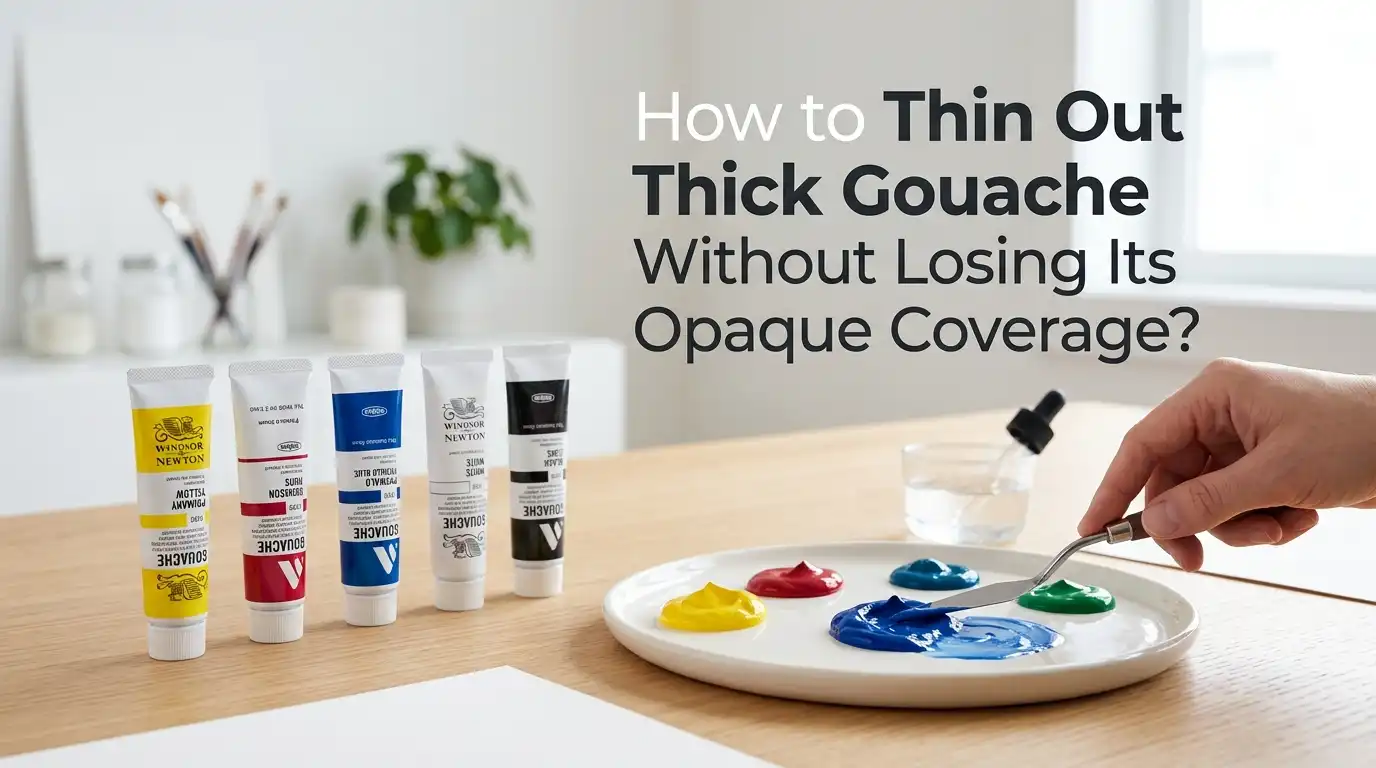
Before you thin anything, you need a mental picture of the target consistency. Most artists describe perfect gouache as creamy, like soft yogurt, melted ice cream, or warm honey that has cooled slightly.
When you lift your brush from the paint puddle, the paint should hold a soft peak for a second, then slowly sink back. If it stands up stiff like toothpaste, it is too thick. If it drips like tea, it is too thin.
Test it on scrap paper. A single stroke should glide on smoothly and dry to a flat, matte finish with no streaks and no transparent patches. If you see the paper through the paint, the mix has too much water. If the brush drags or skips, the mix needs more moisture.
Method 1: Adding Water the Right Way
Water is the most common thinning tool, and for good reason. It is free, accessible, and gouache is water based by nature. The catch is in the amount and the method you use.
Start small. Dip your brush in clean water, tap off the excess on the rim, then bring the damp brush back to the paint blob on your palette. Mix slowly with circular strokes. Add one drop at a time if needed.
Pros of using water: It is cheap, easy, and always available. It keeps the matte gouache look intact when used in tiny amounts.
Cons of using water: Too much water breaks down the gum arabic binder, which kills opacity and causes streaks. It can also lift previous layers if you paint over dry areas too aggressively.
Method 2: Using Gum Arabic to Preserve Opacity
Gum arabic is the natural binder already inside your gouache. Adding a few drops of liquid gum arabic to your water mix is one of the best kept secrets for keeping color rich while loosening the paint.
How to do it: Mix a small puddle of clean water with one or two drops of liquid gum arabic. Use this mixture to thin your gouache instead of plain water. The paint flows easier without losing its bite.
Pros of gum arabic: It restores binder, boosts opacity, and gives your strokes a smoother glide. It also helps the paint stick better to paper.
Cons of gum arabic: Too much makes the paint shiny rather than matte, which defeats the gouache look. It can also make dried paint slightly sticky in humid weather. Use it sparingly, just a drop or two per puddle.
Method 3: Reactivating Dried Gouache on Your Palette
Sometimes the paint on your palette dries before you finish painting. You do not need to throw it out. Dried gouache is fully revivable because the binder stays water soluble even after drying.
Spray the dried paint with a fine mist from a small spray bottle. Wait thirty seconds. Mist again if needed. Then use your brush to gently work the surface until the paint softens back into a creamy paste.
Pros of reactivating: It saves paint, saves money, and keeps your color mixes consistent across a session. It also works for rock hard pan gouache that has sat unused for months.
Cons of reactivating: Repeated drying and rewetting can slightly dull some pigments over time. Heavily dried gouache may take several minutes of soaking to fully soften, so plan ahead.
Method 4: Using Flow Improvers and Flow Aids
Flow improvers are liquid additives that reduce the surface tension of water, helping it spread evenly through your paint. They are especially useful for acrylic gouache, but traditional gouache benefits too.
Mix a small ratio of flow improver into your water cup, often around twenty to one as directed on the bottle, though many artists go fifty to fifty for stronger effect. Then use this water to thin your paint.
Pros of flow improvers: They make the paint glide beautifully across the paper. They reduce streaks, eliminate brush drag, and improve large flat washes dramatically. They do not weaken opacity the way plain water does.
Cons of flow improvers: They add another product to buy. Some brands can cause slight foaming if mixed too vigorously. They can also extend drying times, which slows your workflow.
Method 5: Thinning Acrylic Gouache Differently
Acrylic gouache is not the same as traditional gouache. It contains an acrylic polymer binder, which means it dries permanent and waterproof. Treating it like regular gouache leads to disappointing results.
For acrylic gouache, you can use water sparingly, but acrylic flow medium or acrylic glazing medium works far better. These keep the binder ratio balanced, so your paint stays opaque and matte.
Pros of using acrylic mediums: They preserve the waterproof finish, keep colors saturated, and let you layer without lifting. They also stop the paint from cracking when applied thicker.
Cons of using acrylic mediums: They cost more than water. They cannot be used with traditional gouache because they leave a slight sheen. Once acrylic gouache dries on your palette, it cannot be revived, so mix only what you need.
Method 6: The Damp Brush Technique
This is a no additive method that works beautifully for small touch ups. You control thinness through your brush, not your paint mix.
Load your brush with thick gouache straight from the palette. Then dip just the very tip into clean water, tap it lightly on a paper towel, and apply. The small bit of water on the bristles softens the paint as you stroke.
Pros of the damp brush technique: It gives you precise control. It works wonderfully for fine details, blending edges, and small washes. No extra products needed.
Cons of the damp brush technique: It does not work for large flat areas, where you need a consistent paint mix. It also takes practice to judge how much water to keep on the brush. Too much and you get streaks, too little and the paint still drags.
Method 7: Preparing a Working Puddle in Advance
Many gouache artists set up small working puddles before starting. This is one of the most reliable ways to get smooth, opaque coverage without surprises.
Squeeze a coin sized blob of paint onto your palette. Beside it, mix a separate puddle by pulling a small portion of the blob into a wet area. Adjust the consistency in this puddle, leaving the original blob untouched as a backup.
Pros of working puddles: You always have thick paint and thin paint available side by side. You can refresh your mix without restarting. This method also helps you keep color consistent across a painting.
Cons of working puddles: It uses more palette space. Puddles dry out faster than tube blobs, so cover them with a damp paper towel during breaks to prevent waste.
Common Mistakes That Kill Opacity
Even with the right tools, small habits can ruin your coverage. The biggest mistake is adding water directly into the tube or pan. This dilutes all your paint at once and can spoil the whole supply.
Another common error is brushing too much. Gouache reactivates with water, so going over the same spot repeatedly lifts the paint underneath. This creates patchy, transparent streaks even when your mix was correct.
Avoid these traps: Do not use cloudy or dirty water, as it dulls colors. Do not mix on top of your paper. Do not paint over wet layers. Do not use a dry brush on wet paint. Each of these breaks down opacity and forces you to add more paint, which thickens things again.
How to Test Your Mix Before Painting
A quick test saves hours of frustration. Always test your thinned gouache on a scrap of the same paper you are using for your final piece. Different papers absorb water differently, so the same mix can look different on cold press versus hot press.
Make a small swatch about the size of a postage stamp. Let it dry fully, which takes about one or two minutes. Then check the swatch under good light. Look for streaks, transparent patches, or shiny spots.
If the swatch looks flat, matte, and opaque, you are good to go. If you see streaks, add a tiny drop of gum arabic. If you see transparent patches, add a touch more paint. If it looks shiny, you used too much medium.
Storing Gouache to Prevent Thickening
Prevention beats fixing every time. Proper storage keeps your gouache creamy for years. Always wipe the tube neck clean before capping, since dried paint on the threads stops the lid from sealing tight.
Store tubes upright in a cool, dark drawer. Avoid direct sunlight, heat sources, and humid bathrooms. Some artists put their tubes in a sealed plastic container with a damp sponge, which keeps the air moist and slows evaporation.
Pros of careful storage: Your paint stays usable longer. Colors mix smoother. You waste less money on replacements.
Cons of careful storage: It takes a moment of effort after each painting session. Damp sponge containers can grow mold if not cleaned every few weeks, so check them often.
Frequently Asked Questions
Can I use tap water to thin gouache?
Yes, but distilled water is better. Tap water contains minerals and chlorine that can dull colors and shorten shelf life. If you only have tap water, let it sit uncovered overnight so the chlorine evaporates, then use it.
How much water should I add to gouache?
Start with one or two drops per pea sized blob of paint. Always add water gradually, never in big splashes. The target is a creamy yogurt consistency, not a runny one. Test on scrap paper before committing.
Why does my gouache look chalky when it dries?
A chalky finish usually means too much water and not enough binder. Add a drop of gum arabic to your mix to restore richness. Some cheaper student grade gouaches also dry chalkier because they contain more filler.
Can dried gouache on the tube cap be saved?
Yes. Soak the cap in warm water for a few minutes, then gently scrape off the softened paint with an old toothbrush. Never force a stuck cap, as you can crack the tube and ruin the paint inside.
Is it okay to mix water and gum arabic in advance?
Yes, and many artists keep a small jar of pre mixed thinning liquid on their desk. Use one part gum arabic to about ten parts distilled water. Shake before each use. The mixture lasts a few weeks if stored sealed.
Does thinning gouache change drying time?
Slightly. Thinner paint dries faster because there is less material to lose moisture from. However, flow improvers and acrylic mediums extend drying times. Plan your layers around this, especially in dry climates where gouache already dries quickly.
Can I thin gouache with milk or other household liquids?
No. Stick to water, gum arabic, or proper art mediums. Milk, juice, or other liquids contain proteins and sugars that spoil, attract pests, and damage your paper over time. They also break down the binder unpredictably.

Hi, I’m Zoe Ward, the creator and voice behind Fine Brush Vault. I’m passionate about art, painting, and exploring the world of colors. I spend my time testing and reviewing art supplies to help fellow creators find the best tools for their craft. Through honest reviews and detailed guides, my goal is to make your creative journey easier and more inspiring.