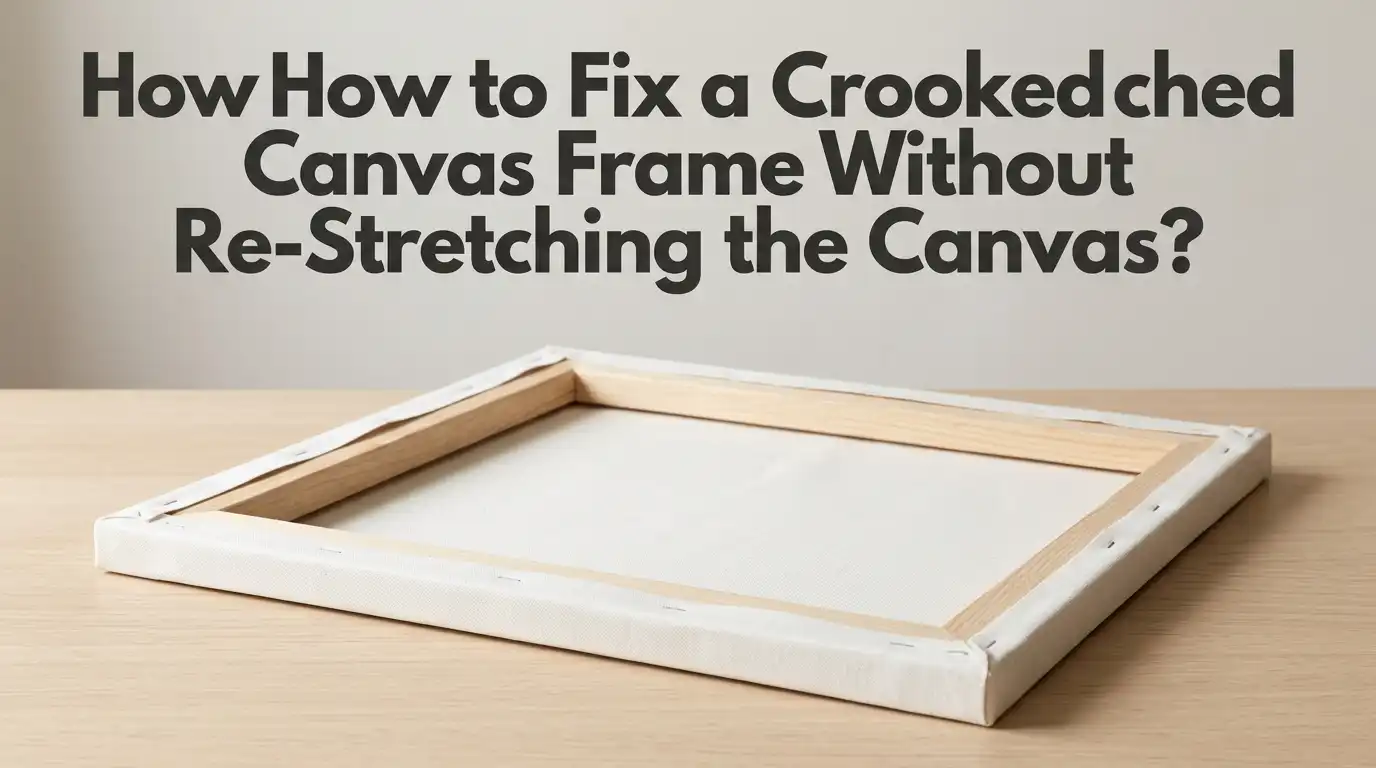
How to Fix a Crooked Stretched Canvas Frame Without Re-Stretching the Canvas?
A crooked canvas frame can ruin the look of even the most beautiful painting. You hang your art on the wall, step back, and notice one corner sticking out or the whole piece sitting at a strange angle.
The good news is that you do not always need to pull out staples and start over. Many fixes take only a few minutes and use tools you already own.
This guide walks you through every method, from gentle moisture tricks to corner bracing, so you can rescue your canvas without touching the staples or the painted surface.
Key Takeaways
- Check the problem first: Look at your canvas and decide if the frame is twisted, bowed, or just out of square. Each issue needs a different fix, so a quick diagnosis matters.
- Use canvas keys for loose tension: Small wooden wedges in the inside corners can tighten a sagging surface. They are the easiest first step for most crooked frames.
- Try water on the back: A light mist on the unpainted side of the canvas can shrink the fabric and pull mild warps back into shape. Never soak the painted side.
- Add bracing for stubborn warps: L brackets, cross braces, or backing boards correct twisted bars and stop future bowing. They work well on large canvases.
- Apply gentle pressure and time: Weighted flattening, clamping, or controlled humidity can reverse bows over a few days. Patience beats force every time.
- Re stretching is the last resort: Save it for severe damage. The methods below fix most crooked frames without removing a single staple.
Spotting the Real Problem Before You Fix It
Start by laying your canvas face down on a flat table. Look across the back from a low angle. You will see if one bar bows inward, if a corner lifts off the table, or if the whole frame twists like a propeller. This step matters more than people think.
Next, measure both diagonals from corner to corner. If the two numbers match within a quarter inch, the frame is square. If they differ, the frame has shifted into a parallelogram. A twisted frame and an out of square frame need different repairs, so write down what you see before moving on.
Method 1: Tighten Loose Canvas With Stretcher Bar Keys
Most stretched canvases come with small wooden wedges called canvas keys or stretcher keys. They sit in a small bag taped to the back. These keys push the inside corners of the frame apart, which stretches the fabric tighter.
Place two keys in the slots at each inside corner, with the angled edges facing each other. Tap them gently with a small hammer. Work around all four corners evenly so the frame stays balanced. Tap a little at each corner, then check the tension before tapping more.
Pros: Quick, free, and uses parts that came with your canvas. No risk to the painting.
Cons: Only works if your frame has key slots. Over tapping can split the wood or push the frame out of square.
Method 2: Mist the Back of the Canvas With Water
Canvas is a woven fabric, so it shrinks when it gets damp and dries. A light spray of clean water on the back can pull a sagging or slightly warped canvas tight again. This trick has saved many crooked frames.
Use a fine mist spray bottle. Hold it about twelve inches from the back and apply a thin, even layer. Do not soak the fabric. Lay the canvas flat, painted side up, and let it dry at room temperature for several hours.
Pros: Cheap, fast, and very effective on minor warps and loose canvas.
Cons: Risky on older paintings or thin paint layers. Water can seep through cracks and damage the front. Always test a small spot first.
Method 3: Use Corner L Brackets to Square the Frame
If your frame has shifted into a diamond shape, small L brackets can pull it back to ninety degrees. You attach them to the inside back corners with short screws.
First, gently push the frame back into square. Place a carpenter square in one corner and press the bars until they meet at a true right angle. Hold that position and screw the L bracket into both bars. Use screws short enough not to poke through to the front. Repeat at the opposite corner for balance.
Pros: Permanent fix that locks the frame square. Hidden behind the canvas.
Cons: Adds weight. Screws can crack thin stretcher bars if you do not pre drill. Removes the option of using stretcher keys later.
Method 4: Add a Cross Brace for Larger Canvases
Big canvases, anything over thirty inches, often bow in the middle. A cross brace is a thin wooden bar that runs across the back from one stretcher to the opposite one. It holds the frame flat.
Cut a piece of wood to fit snugly between the two bars. Slide it into place and secure it with small metal mending plates or wood screws into the stretcher edges. The brace should press lightly against the back of the canvas without pushing it forward.
Pros: Stops future warping. Excellent for tall or wide canvases.
Cons: Takes more time and tools. A brace that is too tight can leave a line visible on the painted side.
Method 5: Flatten a Bowed Frame With Weight and Time
A frame that bows like a banana often straightens under steady pressure. Lay the canvas painted side down on a flat, clean surface. Place a thick book or padded board over the high spot. Stack weights on top.
Leave it for two to seven days. Wood has memory, so it relaxes slowly. Check it every day and adjust the weights if needed. Use soft padding between the weight and the canvas to avoid pressure marks.
Pros: No tools, no risk to the paint, and works on stubborn bows.
Cons: Slow. Severe warps may not fully reverse. Not practical for very large pieces.
Method 6: Use Controlled Humidity to Reshape the Wood
Wood warps because it absorbs moisture unevenly. You can reverse this by re humidifying the dry side. Place the canvas in a slightly humid room, such as a bathroom after a warm shower, for an hour.
Then flatten the frame under weight while it dries. Avoid direct water contact with the wood. Aim for indirect humidity only. This method pairs well with the flattening trick above and often gives the best results for old, dried out frames.
Pros: Gentle on the painting. Restores wood flexibility naturally.
Cons: Hard to control. Too much humidity can cause mold or loosen glued joints.
Method 7: Tap a Warped Corner Back Into Place
Sometimes only one corner sits crooked. The stretcher joint has shifted slightly out of alignment. A few light hammer taps can fix it.
Lay the canvas face down on a padded surface. Place a small block of wood against the misaligned corner. Tap the block, not the frame, with a hammer. Move in small steps and check after each tap. Stop when the corner lines up with the rest of the frame.
Pros: Fast and free. Targets the exact spot that is off.
Cons: Easy to overdo. Hard taps can split wood or crack paint near the edges. Always pad the surface to spread the impact.
Method 8: Reinforce With a Backing Board
A thin board, like foam core or hardboard, attached to the back of the frame can hold a crooked canvas in a flat, square position. This works like a splint for the frame.
Cut the board to match the outer frame size. Place the canvas face down. Push the frame back to square, then attach the board with small screws or framing points around the edges. Make sure the board does not touch the back of the canvas fabric in the middle.
Pros: Strong support. Also protects the back from dust and damage.
Cons: Adds weight. Reduces airflow, which some conservators warn against for valuable art.
Method 9: Adjust Tension Unevenly to Pull the Frame Square
If only one diagonal is too long, you can pull the frame back into shape by adjusting tension on that side. Tap the canvas keys harder on the long diagonal corners.
This pushes those two corners outward, which shortens that diagonal and lengthens the other. Re measure both diagonals after each small adjustment. Stop as soon as the numbers match within a quarter inch. This trick takes a careful hand but works without any extra parts.
Pros: Uses only the keys already in the frame. No new hardware needed.
Cons: Easy to overshoot. Uneven tension can cause ripples in the canvas surface.
Method 10: Apply Gesso to the Back for Extra Tightness
For canvases that stay slightly loose after other methods, a thin coat of gesso on the back can help. Gesso shrinks slightly as it dries, which tightens the fabric.
Use a soft brush to apply one thin layer to the back of the canvas, not the wood frame. Let it dry fully, which takes about a day. Do not apply thick coats, as they can crack or pull too hard on the staples.
Pros: Adds long lasting tension. Also strengthens the canvas fabric.
Cons: Slow drying. Hard to undo. Not suitable for very old or fragile canvases.
Method 11: Clamp the Frame Square During Repair
When you want to glue, screw, or brace a frame, clamps hold it in the right position while you work. Place the canvas face down and use a carpenter square to true up the corners.
Apply bar clamps or strap clamps across the diagonals. Tighten until the frame sits perfectly square. Pad the clamp jaws with cloth to protect the wood. Now you can attach brackets or braces with confidence. Clamps are the secret weapon of professional framers.
Pros: Gives you a steady, square frame to work on. Improves the quality of every other fix.
Cons: Requires clamps you may not own. Over tightening can dent the stretcher bars.
Method 12: Hang the Canvas With a Cleat to Hide Minor Warps
Sometimes a frame stays slightly crooked even after fixes. A French cleat or two point hanging system can mask small wobbles by holding the canvas tight against the wall.
Mount a strip of wood on the wall at a forty five degree angle and a matching strip on the back of the canvas. The two strips lock together and pull the frame flat. This does not fix the warp, but it makes the artwork look straight when viewed.
Pros: Excellent visual fix. Strong, secure hanging method.
Cons: Does not solve the underlying problem. Requires wall mounting hardware and careful measuring.
When to Stop Fixing and Call a Conservator
Some crooked frames signal deeper damage, like cracked joints, rotted wood, or paint flaking near the edges. Pushing harder on a damaged frame can ruin the art. If your canvas is valuable, old, or showing paint loss, stop and get expert help.
A professional conservator has tools, training, and materials you do not. They can fix the frame, clean the painting, and stabilize the canvas all at once. The cost is often less than replacing a beloved piece of art. Knowing when to step back protects both the artwork and your peace of mind.
How to Prevent Your Canvas From Warping Again
Once your frame sits straight, keep it that way. Store and hang your canvas away from direct sunlight, heaters, and damp basements. Wood reacts to changes in temperature and humidity, so a steady environment matters most.
Hang heavy canvases on two points instead of one. Add a backing board for dust protection. Check stretcher key tension once a year and tap them gently if the canvas feels loose. A few small habits will keep your art looking sharp for decades.
Frequently Asked Questions
Can I fix a crooked canvas frame without removing the painting?
Yes. Most of the methods in this guide, like canvas keys, water misting, L brackets, and cross braces, work from the back of the frame. You never need to touch the painted surface.
Will spraying water damage my painting?
Light misting on the back is usually safe for acrylic and oil paintings in good condition. Avoid this method on old, cracked, or watercolor canvases. Test a small area first and never soak the fabric.
How do I know if my frame is twisted or just out of square?
Lay the canvas face down on a flat table. If a corner lifts off, the frame is twisted. If all corners touch but the diagonals measure differently, the frame is out of square.
Are canvas keys safe for older paintings?
They can be, but use them with care. Old canvases may be brittle, and sudden tension changes can cause cracks in the paint. Tap each key only one or two times and check the surface after each adjustment.
How long does it take to fix a warped canvas frame?
Quick fixes like canvas keys or water misting take fifteen minutes to a few hours. Methods that use weight, humidity, or gesso may take two to seven days. Brackets and braces install in under an hour.
Can I use any wood for a cross brace?
Use straight, dry softwood like pine or poplar. Avoid warped or wet wood, which will only add to your problems. Match the thickness of the original stretcher bars for the best fit.
What if none of these methods work?
If the frame stays crooked after several tries, the damage may be too deep for a surface fix. At that point, re stretching the canvas on a new frame or visiting a conservator is your best path forward.

Hi, I’m Zoe Ward, the creator and voice behind Fine Brush Vault. I’m passionate about art, painting, and exploring the world of colors. I spend my time testing and reviewing art supplies to help fellow creators find the best tools for their craft. Through honest reviews and detailed guides, my goal is to make your creative journey easier and more inspiring.