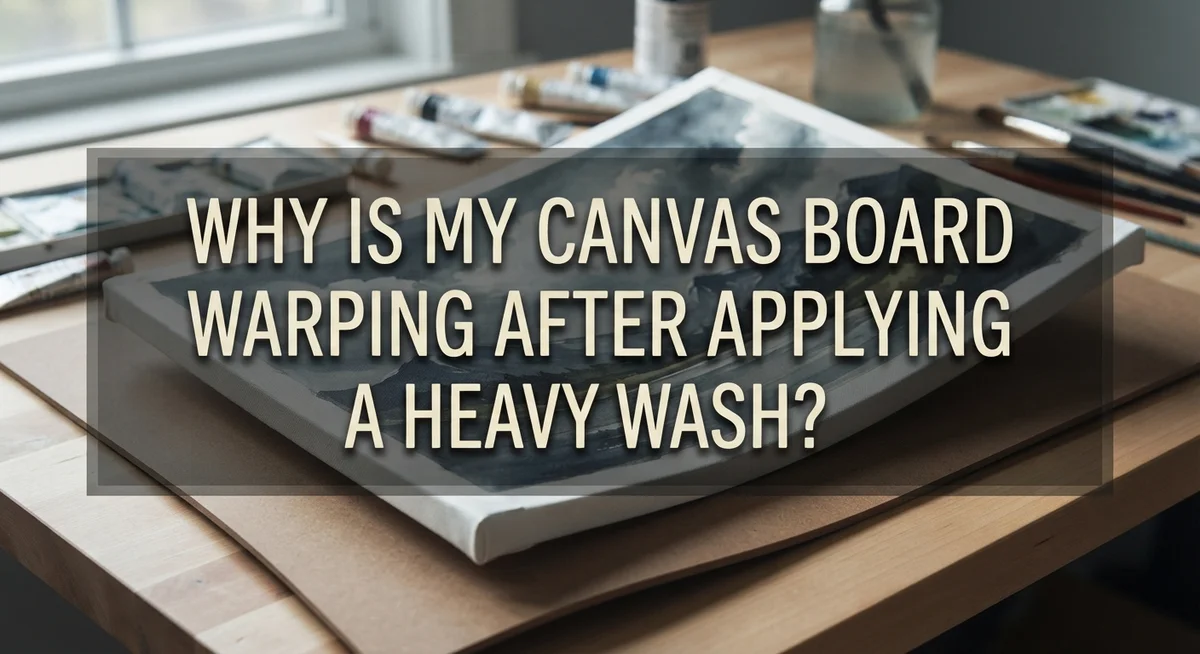
Why Is My Canvas Board Warping After Applying A Heavy Wash?
Did your canvas board turn into a wavy mess after a heavy wash? You are not alone.
Many artists face this frustrating problem. You spend hours on a beautiful piece, only to watch it curl and bend as it dries.
The good news is this happens for a clear reason. Canvas boards have a hidden weakness that stretched canvas does not share.
That weakness is the cardboard core hiding underneath the fabric. When heavy water based washes soak through, that cardboard absorbs the moisture like a sponge.
In a Nutshell
- The cardboard core is the real culprit. It soaks up water from heavy washes and swells, causing the board to bend as it dries.
- Stretched canvas handles moisture better because it has no cardboard backing. Canvas boards do not share this advantage.
- Cheap boards warp faster. Thin cardboard cannot support heavy paint or excess water without bending out of shape.
- Large pieces face bigger risks. More surface area means more liquid weight, which puts extra stress on the cardboard base.
- You can prevent most warping. Choose sturdy boards, cut back on water content, and avoid heavy pours on weak substrates.
- Minor warping is often fixable. Canvas keys, L brackets, or careful moisture and heat treatments can help flatten a bent board.
- Prevention beats repair. Picking the right materials from the start saves your artwork from damage later.
What Causes Canvas Board Warping
The cardboard core inside your canvas board is the main reason for warping. This core sits between the fabric surface and the back of the board. When you apply a heavy wash, water soaks directly into the cardboard fibers.
Cardboard absorbs moisture quickly. As it drinks up water from your paint, the fibers swell and expand. The fabric glued to the surface cannot stretch as much as the cardboard underneath wants to grow. This mismatch creates tension and causes the board to bend and warp.
The problem gets worse when you use cheap canvas boards. Low quality boards have thin cardboard that lacks strength. Thin cardboard cannot handle the weight of excess liquid. It buckles easily under pressure. Quality boards use thicker, denser cardboard that resists moisture better, though even premium boards have limits.
Heavy washes add too much water to the surface. Water is heavy, and it pools on the board. The weight pushes down while moisture seeps into the core. Your cardboard cannot support both forces at once. The board flexes downward or sideways as it dries unevenly.
Large canvas boards face bigger risks than small ones. A large piece holds more water across a wider area. The cardboard core must support all that weight without bending. Small boards distribute liquid over less surface area, so they warp less often.
Stretched canvas avoids this problem because it has no cardboard backing. The fabric stretches across wooden bars. Moisture cannot soak into wood the same way it does cardboard. The open structure allows air to flow underneath and dry evenly.
Understanding this process helps you make better choices. You now know that cardboard is the weak link. Heavy washes overload the core with moisture. The result is a warped, unusable surface. This knowledge guides you toward smarter painting techniques and better material choices moving forward.
Canvas Boards vs Stretched Canvas: Why Substrate Matters
Canvas boards and stretched canvas serve different purposes. Understanding these differences helps you choose the right substrate for your project.
Canvas boards have a cardboard core underneath the fabric. This core is glued to canvas material. The cardboard absorbs water quickly when you apply heavy washes. Stretched canvas works differently. It consists of fabric pulled tight over wooden bars. There is no cardboard backing to absorb moisture.
The cardboard core creates a structural weakness. When water penetrates the fabric, it soaks into the cardboard underneath. The cardboard swells as it absorbs moisture. This swelling causes the entire board to bend and warp. Stretched canvas does not have this problem because wood resists moisture damage better than cardboard.
Size matters significantly. Small canvas boards warp less often than large ones. A small 8×10 board may handle a heavy wash without problems. A large 16×20 board will likely warp because more surface area means more liquid weight pressing down on the cardboard core.
Quality affects durability too. Budget canvas boards use thin cardboard that cannot support heavy applications. Premium boards use thicker, sturdier cardboard. However, even quality boards have limitations when you apply excessive water.
Stretched canvas handles heavy washes better because the wooden frame provides structural support. The fabric is not glued to a water absorbing material. The wood bars keep tension on the canvas, preventing sagging and warping.
Your substrate choice determines what techniques you can use. Canvas boards work well for dry painting methods and light washes. Stretched canvas accommodates heavier applications and water based techniques. If you plan to use heavy washes regularly, stretched canvas is the better choice. Canvas boards suit artists who prefer controlled, minimal water applications. Knowing your substrate’s limitations helps you avoid frustration and protect your finished work.
How Heavy Washes and Pours Affect Cardboard Cores
Water and cardboard don’t mix well together. When you apply a heavy wash to a canvas board, the liquid soaks directly into the cardboard core beneath the canvas fabric. This absorption causes the cardboard to swell unevenly as it absorbs moisture.
The swelling creates pressure inside the board. As the water dries, the cardboard shrinks back down, but it often doesn’t return to its original shape. This uneven drying process is what causes the warping and buckling you see.
Heavy washes apply too much liquid at once. A single thick wash can deposit more water than the cardboard can handle safely. The weight of wet paint combined with excess water overwhelms the substrate’s ability to stay flat.
Pours are even more problematic. When you pour paint across a canvas board, gravity pulls the liquid downward, concentrating moisture in specific areas. This creates localized swelling that leads to dramatic warping and bending.
The size of your board matters significantly here. Larger canvas boards have more surface area to absorb water. A big piece can hold so much liquid that the cardboard core becomes completely saturated, making warping almost inevitable.
Cheap boards warp faster because their cardboard cores are thinner and weaker. Budget canvas boards use lower quality materials that cannot withstand heavy moisture exposure. The cardboard breaks down more quickly under stress.
Quality boards use thicker, denser cardboard that resists moisture better. They still aren’t ideal for heavy washes, but they perform better than cheap alternatives.
The key takeaway is simple: cardboard cores have limits. They work fine for normal painting techniques with moderate water content. But heavy washes and pours exceed what the substrate can safely handle. Understanding these limits helps you choose appropriate techniques for your specific canvas board.
Step-by-Step: Assessing and Fixing Minor Warping
When you notice minor warping on your canvas board, you can fix it yourself with basic tools. Start by examining the back of the board to see how severe the bend is. Run your hand across the surface to identify flat areas versus warped sections.
The first step is to assess whether the warping is temporary or permanent. Temporary warping often happens while the paint is still drying. Place the board flat on a clean surface and leave it undisturbed for several days. Sometimes the warping reduces as moisture evaporates completely from the cardboard core.
If the warping persists after drying, you can try reinforcing the back. Flip the board over and examine the cardboard backing. Look for any existing damage or soft spots where water penetrated deeply. This tells you how much structural support you need to add.
For minor bends, you can add support to the back using simple reinforcement methods. Bracing the back prevents further movement and can help flatten the surface gradually. Work slowly and avoid forcing the board flat suddenly, as this may crack the canvas or damage your artwork.
Another approach involves controlled moisture application. Lightly mist the back of the board with water while placing it flat under a weighted object. This sounds counterintuitive, but gentle, even moisture can help redistribute the swelling and reduce warping as it dries uniformly.
Monitor the board daily during this process. Check for any new warping or cracking. If the warping worsens or spreads, stop immediately and let it air dry naturally.
Prevention remains easier than fixing warping. For future projects, apply washes in thin layers rather than one heavy application. This reduces moisture absorption and keeps your canvas boards flat and usable for longer. Understanding your board’s limits helps you work within its capabilities.
Prevention Tips for Wash and Pour Techniques
The best approach to warping is stopping it before it happens. You can protect your canvas board by making smart choices before you even pick up your brush.
Start with water control. Heavy washes fail because they dump too much liquid onto the cardboard core at once. Instead, apply your paint in multiple thin layers. Each layer dries between applications, giving the cardboard time to release moisture gradually. This prevents the sudden swelling that causes warping.
Reduce water in your paint mixture. More pigment and less water means less stress on the substrate. Test your wash consistency on scrap paper first. You want color saturation without puddles sitting on the surface.
Choose your board size wisely. Larger canvas boards warp more easily than small ones. If you plan heavy washes, stick with smaller formats. A 5×7 inch board handles moisture better than an 11×14 inch board.
Quality matters significantly. Budget canvas boards use thin, weak cardboard that absorbs moisture like a sponge. Better boards have denser cores that resist water penetration. The price difference is worth it if you use heavy wash techniques.
Apply washes in sections. Work on one area, let it dry, then move to the next. This distributes moisture across time rather than flooding the entire board at once. Your cardboard core stays stable throughout the process.
Seal the back surface. The reverse side of your board is unprotected. Water vapor escapes from there, creating uneven drying. A light sealant on the back helps regulate moisture evaporation.
Plan your technique before starting. Know whether your project needs heavy washes. If it does, reconsider your substrate choice. Sometimes stretched canvas or wood panels work better for aggressive water applications.
These prevention steps take minimal effort but save your finished work from ruining.
Common Mistakes That Lead to Warping
Many artists make the same mistakes when working with canvas boards. Understanding these errors helps you avoid warping before it starts.
Using low quality boards for heavy techniques is the biggest culprit. Cheap canvas boards have thin, weak cardboard cores that cannot support moisture. When you apply heavy washes to these boards, the cardboard absorbs water like a sponge and swells unevenly. The result is visible bending and buckling.
Applying too much water at once creates immediate problems. A single heavy wash deposits more liquid than the cardboard substrate can handle. The core becomes saturated faster than it can dry, and internal pressure builds up. This pressure pushes the canvas and cardboard apart, causing warping.
Many artists don’t account for board size limitations. Larger canvas boards warp more easily than small ones. A 16×20 board is far more vulnerable to warping than an 8×10 board when both receive the same heavy wash. The bigger surface area means more water absorption and more stress on the cardboard.
Ignoring the substrate type is another common mistake. Canvas boards are fundamentally different from stretched canvas. The glued canvas sits on a cardboard base that has moisture limits. Stretched canvas breathes and flexes differently. Treating a canvas board like stretched canvas leads to problems.
Skipping test applications means you discover warping too late. Many artists jump straight to heavy techniques without testing on scrap boards first. A quick test reveals how your specific board reacts to water and weight.
Not monitoring drying time between layers causes cumulative damage. Applying multiple washes before each layer dries traps moisture inside the board. Each new layer adds more water before the previous one evaporates.
These mistakes compound quickly. One error might create minor warping. Multiple errors create severe damage that’s difficult to fix.
Troubleshooting Persistent or Severe Warping
When warping becomes severe or keeps returning even after you try basic fixes, you need a different approach. The cardboard core may have suffered permanent damage from moisture saturation that simple reinforcement cannot reverse.
Check if the warping is truly persistent. Sometimes boards appear warped while still wet. Let your piece dry completely in a flat position for several days before deciding the damage is permanent. Place heavy, flat objects on top to help guide the board back to flatness as moisture evaporates.
If warping continues after full drying, the cardboard substrate has likely lost its structural integrity. Water has broken down the fibers, and no amount of tightening or bracing will fully restore the original shape. At this point, acceptance may be your best option for learning purposes.
For severe cases, prevention for future work matters most. You cannot undo permanent damage, but you can avoid repeating it. Switch to canvas boards with thicker, higher quality cardboard construction. Thinner boards simply cannot handle heavy liquid applications, no matter what technique you use.
Consider your application method moving forward. Heavy washes require either smaller board sizes or professional grade substrates designed to handle moisture stress. Standard budget boards work fine for dry techniques like dry brushing or minimal water use, but they fail under heavy wash conditions.
Document what went wrong with your specific piece. Note the board size, the amount of water in your wash, and how long it took to warp. This information helps you make smarter choices next time.
Accept that some pieces teach valuable lessons. Severe warping shows you the exact limits of your materials. Use this knowledge to select appropriate substrates for each technique you plan to use. Your next projects will benefit from understanding where canvas boards break down.
Final Thoughts
Canvas board warping comes down to simple physics. Water saturates the cardboard core, and the board bends as it dries. Once you understand this, prevention becomes easy.
Your paint application habits matter more than luck. Heavy washes overwhelm cheap boards fast. Thin, controlled layers protect your work every time.
Remember that canvas boards and stretched canvas behave differently. A glued cardboard core cannot flex or breathe like a wooden frame. This is why heavy washes cause more damage on boards than on stretched canvas.
Quality boards give you more room for error. Thicker, sturdier cardboard resists moisture better than thin, budget options. Spending a little more upfront often saves you frustration later.
Small adjustments make a big difference too. Reducing water content, working in sections, and choosing the right board size all help. These simple habits protect your piece from the start.
If warping does happen, don’t panic. Minor warping often responds well to canvas keys or L-brackets. These fixes restore flatness without ruining your artwork.
Severe warping teaches a harder lesson. Once cardboard loses its structure, you cannot fully reverse the damage. But you can carry that lesson into your next project.
Every artist learns through trial and error. Warped boards are frustrating, but they also show you exactly where your materials reach their limits. Use that knowledge going forward.
The next time you plan a wash technique, think about your substrate first. Ask if your board can handle the moisture you plan to apply. This one habit prevents most warping problems before they start.
In the end, warping is not a mystery. It is a direct result of water, cardboard, and time. Respect those three factors, and your canvas boards will stay flat and ready for beautiful work.
Frequently Asked Questions
Why does my canvas board warp when I use heavy washes?
Heavy water based paint saturates the cardboard core underneath your canvas. The cardboard absorbs moisture and swells unevenly. As it dries, the board bends and warps because the cardboard cannot handle the weight and liquid.
Canvas boards are glued canvas on cardboard. They are not the same as stretched canvas. The cardboard substrate has real limits with water content.
Can I fix warping that already happened?
Minor warping sometimes improves after the board fully dries. You can try tightening the canvas with canvas keys if your board has them. Reinforcing the frame with L brackets on the back adds support.
Some artists spray the back with water and use gentle heat to flatten boards. This method is not fully reliable. Severe warping is usually permanent.
How much water is too much for a canvas board?
There is no exact measurement, but minimize water in your paint applications. Heavy washes mean lots of liquid hitting the board at once. Light to medium washes work better than soaking the surface.
Test on a small board first. Watch how it responds as it dries. This tells you your personal limit with that specific board quality.
What board quality actually matters?
Cheap boards have thin, weak cardboard cores. They warp easily with any heavy technique. Quality boards use thicker, sturdier cardboard that resists moisture better.
Better boards give you more room for error. They cost more upfront but prevent frustration later.
Should I avoid canvas boards for wet techniques?
Not entirely. Light to medium applications work fine on quality boards. Save heavy pours and saturated washes for stretched canvas instead. Match your technique to your substrate limitations.

Hi, I’m Zoe Ward, the creator and voice behind Fine Brush Vault. I’m passionate about art, painting, and exploring the world of colors. I spend my time testing and reviewing art supplies to help fellow creators find the best tools for their craft. Through honest reviews and detailed guides, my goal is to make your creative journey easier and more inspiring.