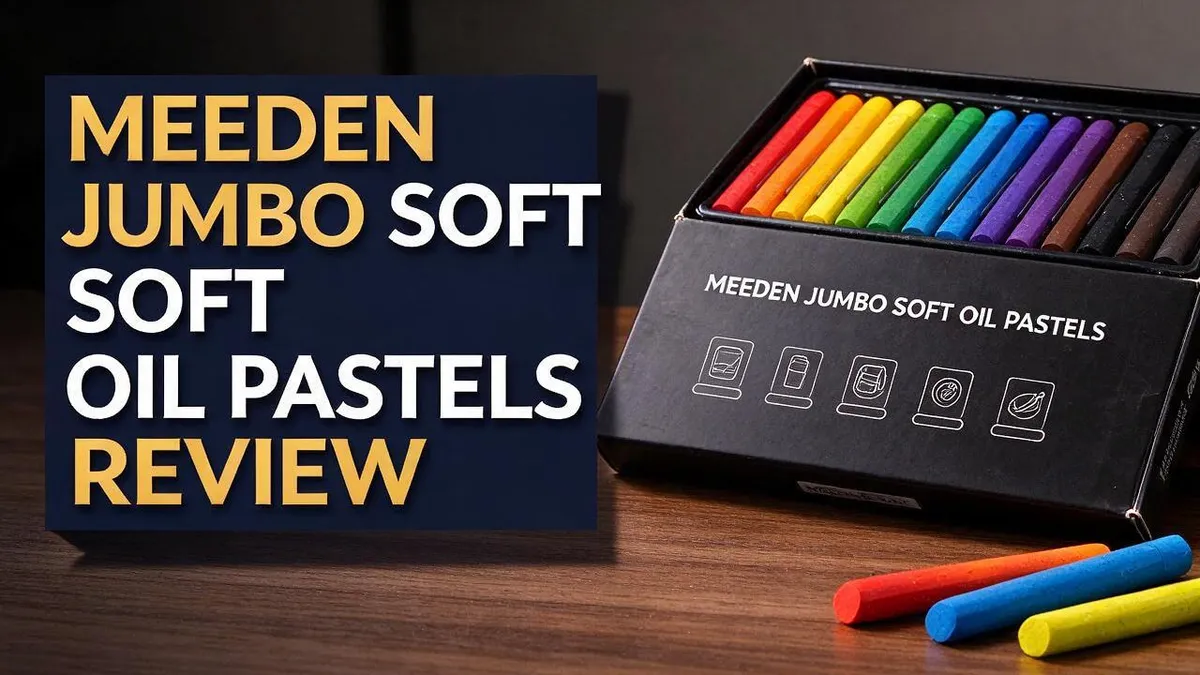
MEEDEN Jumbo Soft Oil Pastels Review: Colors, Texture, and Lightfastness
If you love bold color but hate messy hands, you should meet the MEEDEN Jumbo Soft Oil Pastels. These sticks feel soft and buttery as you draw. They glide across paper with very little effort.
Many artists enjoy these pastels for their vibrant, rich colors. You can pick from three set sizes: 144 pieces, 72 pieces, or 48 colors plus 4 extra white. Each stick has a 10mm line size, so you can cover large areas fast.
In this review, we will look at the texture, the color range, and the lightfastness. We will also share where these pastels shine and where they fall short. Keep reading to see if this set fits your creative style.
In a Nutshell
-
Pick the set that fits your style. You can choose a 48, 72, or 144 color set. Each size gives you a different range for your projects.
-
Large sticks cover space fast. The 10mm line size lets you block in backgrounds and broad shapes quickly. This saves time on big canvases.
-
Good for beginners. The soft feel makes blending easy to learn. You can focus on your ideas instead of fighting the tool.
-
Softness that stands out. Many users compare the feel to a well known premium brand. Pentel offers a firmer option if you want more control over fine lines.
-
Easy to take on the go. The set fits into a bag without much effort. Take it to the park, a café, or a class.
-
Protect finished work. The lightfastness rating is level 3. Keep your pieces away from direct sunlight so the colors stay bright for longer.
Set Options and Color Range

- 38ML Extra-Large Capacity: Each MEEDEN jumbo oil pastel features an oversized 20mm×120mm dimension and a massive 38ml capacity, offering exceptional durability and saving creation time. It is ideal for professional oil pastel artists, art students, and professional painters executing large-scale canvas landscapes and still-lifes in studios, allowing for large-area color laying without frequent changes for long-lasting companionship
- 42 Vivid Colors: Crafted with premium raw materials and a scientific pigment ratio, this large soft oil pastels delivers professional-grade color saturation and vibrancy. The colors are striking with natural blending and exceptional covering power. It meets the coverage and highlighting needs of professional illustrators, comic artists, and senior designers during detailed creation, with a palette covering sketching, illustration, and decorative painting

Some of the links on this website are affiliate links, which means that at no additional cost to you, I earn a commission if you click through and make a purchase. I only recommend products and services that I believe will add value to my readers. Thank you for your support!
Each set offers a different color mix. Your painting style decides which mix fits you best.
The 144-piece set offers a wide color temperature range. Warm reds, oranges, and yellows sit beside cool blues, greens, and violets. This spread helps you build depth with one tool.
The 72-piece set adds unique shades. These tones help with skin tones, sunsets, and moody landscapes. Less mixing means faster results.
Bright artists should know one thing. The 72-piece set lacks some vibrant tones. You may need a few bright sticks from another set.
The 48-color set includes four extra white sticks. White plays a big role in oil pastel work. You can lift highlights on dark paper without running out.
Test the palette before you commit. Draw a small grid of swatches with each color. Notice which shades you reach for most. Those favorites show you which set fits your habits.
Blending works well across the 144-piece set. Neighboring colors blend cleanly with each other. Try mixing a warm orange into a cool blue for a soft purple shadow.
Choose the color range that matches your subjects. Portraits need warm skin tones. Seascapes need cool blues and greens. Your subjects guide your choice.
Mix two sets for the best results. Pick one large set for general color needs. Add a smaller set for special shades and detail work. This combo covers most projects without wasted sticks.
Keep your swatch chart nearby while you paint. It saves time when you search for a shade. Label each swatch with its number for quick reference.
Texture and Blendability
The texture of these oil pastels feels soft from the first stroke. Pressure controls the result. A light touch lays down a thin, airy layer. A firm press builds a deep, dense coat of color.
Many users report a buttery glide across the paper. That glide makes the sticks easy to control. You can move from delicate edges to bold strokes without switching tools.
Layering comes before blending. Lay down a base color with light pressure. Add a second color on top. Softly rub the edges where the two colors meet.
A paper stump gives you more control than a finger. Tight corners and small details respond well to it. Keep a few cotton swabs nearby for fine lines.
Watch the paper surface. Smooth paper shows less grain, so the color looks flatter. Textured paper grabs more pigment. This grip adds depth to fur, grass, and rough stone.
Soft sticks can crumble at the tip. Peel back a little paper at a time. Keep the tip sharp for crisp lines, or leave it blunt for broad fills.
Work from light to dark. Pastels cover dark colors with light ones more easily than the reverse. Build shadows slowly, then add highlights at the end.
Dust can cover your workspace quickly. Place a sheet of paper under your hand. This habit protects finished areas and keeps your colors clean.
Soft texture also means less strain on the wrist. Long sessions feel more comfortable. You can work on a large sheet without tiring quickly.
Try a short test first. Make a few strokes, blend them, and see how the texture feels. Your hand will learn the right pressure within a single session.
Lightfastness and Longevity
Lightfastness tells you how well a color resists fading over time. Some colors change faster than others when light hits them. Artists who plan for this avoid surprises later.
Light is the main cause of fading. Strong sunlight does the most damage, but indoor lamps and window glow can also wear down pigment slowly.
Because of this, the placement of your finished work matters. A bright corner that gets direct sun each morning is a poor home for pastel art.
Framing makes a real difference. Choose glass or acrylic with UV protection. Keep finished pieces away from direct light sources.
Protect the surface too. A sheet of clean tissue paper between stacked artworks stops smudges and dust.
Keep unused sticks in their case. Storage matters too. Keep them away from heat and sunlight. Heat can soften the wax and change how the sticks behave.
Mind the paper too. Acidic paper can yellow over time, so choose archival quality sheets when you can.
Think about the purpose of each piece. A practice sketch needs less protection than a gift or a gallery piece.
Match your care to how much the work means to you.
Keep a record of your work. Take a photo of each finished piece on the day you finish it. Over the years, you can compare the photos and spot any changes.
Test colors yourself. Paint a small strip, cover half with paper, and place it in a sunny window for a few weeks.
This simple test shows how your chosen colors hold up in your own space.
Overall, this rating gives you a starting point. Good habits help your art last much longer. Good care keeps colors bright for years, so your work can be enjoyed by many people. Pick the right habits early and build them into every session.
Top 3 Alternatives
Sakura Cray-Pas

- BRIGHT, VERSATILE COLORS: Achieve many painterly effects like blending, layering, and scratching with the creamy texture and smooth application of Sakura’s oil pastels.
- THE ORIGINAL OIL PASTEL: Invented Sakura in 1925 by the company’s founders on a quest to create a better art medium than crayons.
Some of the links on this website are affiliate links, which means that at no additional cost to you, I earn a commission if you click through and make a purchase. I only recommend products and services that I believe will add value to my readers. Thank you for your support!
Sakura Cray-Pas suit artists who love bright, creamy colors. They glide smoothly across paper.
Many students and hobby painters use them for sketches and layered art. The sticks feel soft, so bold strokes come easily.
Blending works well with a finger or tissue. Beginners often find them simple to control.
Pentel Oil Pastels

- Brilliant colors apply smoothly and blend easily for shading and color mixing
- More vibrant than chalk pastels, oil pastels make your artwork come to life
Some of the links on this website are affiliate links, which means that at no additional cost to you, I earn a commission if you click through and make a purchase. I only recommend products and services that I believe will add value to my readers. Thank you for your support!
Pentel Oil Pastels offer a smooth, buttery texture. They lay down rich color with very little effort.
Kids and teachers often pick them for classroom projects. The sticks are sturdy and easy to handle.
The colors stay vivid after blending. They work well for both quick doodles and detailed drawings.
Faber-Castell Oil Pastels

- COMPLETE OIL PASTEL SET – Includes 36 Faber-Castell Creative Studio Oil Pastel Crayons that are available in white, light cadmium yellow, cream, cadmium yellow, dark cadmium yellow, cadmium orange, dark cadmium orange, pink carmine, light purple pink, middle purple pink, fuschia, pink madder lake, light violet, purple violet, helioblue reddish, cobalt blue, phthalo blue, light phthalo blue, light cobalt turquoise, phthalo green, emerald green, light green, permanent green olive, olive green yellowish, earth green, dark flesh, medium flesh, light flesh, burnt ochre, terracotta, dark naples ochre, raw umber, van Dyck brown, cold grey II, cold grey IV and black
- DIVERSE OIL PASTELS – Faber-Castell Creative Oil Pastel Crayons have excellent color opacity and provide smooth color laydown for rich pastel effects. The vivid colors are ideal for encaustic, pastel and scraping techniques
Some of the links on this website are affiliate links, which means that at no additional cost to you, I earn a commission if you click through and make a purchase. I only recommend products and services that I believe will add value to my readers. Thank you for your support!
Faber-Castell Oil Pastels are known for strong pigment and high quality. The sticks hold a firm shape.
This firmness helps with sharp lines and fine detail. Professional artists often reach for them when they want depth.
Their colors layer well and blend softly. The wide palette gives you plenty of options for shading and highlights.
Portability and Grip
Carrying your art supplies should feel easy. These oil pastels travel well, so you can sketch in a park, a café, or on a train.
Keep the set in its case. A case holds every stick in place. The colors stay separated and do not roll around or chip.
The sticks are thick, so your hand holds them with ease. A wider grip spreads the pressure across your fingers. This helps when you draw for long stretches.
A smooth grip helps your fingers glide. The surface feels even, so the stick does not slip as you press into the paper. You keep control of each line, even on a moving bus.
Hold the stick near the base for broad strokes. Move your hand up toward the tip for thin lines and fine details. Changing your grip this way keeps your drawing sharp without switching tools.
Keep a cloth nearby. Oil pastel can smear onto your skin and sleeves. A clean rag or wet wipe keeps your fingers clean and your next color true.
Pack a flat board or a rigid folder with your sketchbook. Paper bends in a crowded bag, and bent sheets create uneven marks. A firm backing protects both the paper and the sticks.
Watch for dropped sticks. Soft pastel can snap when it hits a hard floor. Open the case on a table, and pick up loose sticks right away.
Think about how you will use the set. If you draw at home most days, a large set can stay on your desk. If you sketch on the go, pack a smaller group of colors that fits a small bag.
Portability and grip work together. You carry your tools with you, and you hold them with confidence. Regular sketching builds comfort, so drawing time feels natural.
Value for Classrooms and Budgets
Classrooms need plenty of color. A teacher often shares one set among many students. MEEDEN offers three sizes, so you can pick the count that fits your class.
The set with 144 pieces gives young artists a wide palette. Students can explore warm tones, cool tones, and soft neutrals without waiting for a turn. Each child gets room to experiment.
The set with 72 pieces takes a different approach. It includes unique shades that stand out from standard sets. Teachers can use it for small groups or focused projects.
Keep in mind that this smaller set lacks a few of the most vibrant tones. Pair it with a larger set for bold, bright lessons.
The set with 48 colors suits beginners well. It keeps choices simple. Younger students can find colors quickly and focus on shape, mood, and texture.
The 48 color set also includes four extra white sticks. Students reach for white often when they add highlights or sky details, so these extras matter.
Compared with Pentel, MEEDEN feels softer in the hand. Sennelier is often the reference point for softness, and these pastels come close to that feel.
Vibrant shades keep younger students interested. Bright results encourage them to keep drawing and trying new ideas.
Group work needs a simple plan. Place a few colors on each table. This method keeps supplies organized and cuts down on sharing disputes.
Label the storage tray with the set size. Staff can spot missing sticks in seconds.
Teachers can also rotate sets between classes. This habit spreads wear across every stick and keeps lessons running smoothly.
Track which colors run low each term. A quick count helps you plan the next order before the class runs out.
Good planning turns a set of pastels into a lasting classroom resource. Students learn to respect shared tools, and teachers gain a reliable kit for many seasons.
Pros and Cons
Pros
- The soft, buttery texture feels pleasant for blending.
- Rich colors look bright and lively on paper.
- The 144-piece set offers a good range of color temperatures.
- The 72-piece set includes unique shades that stand out.
- Color spreads evenly for smooth application.
Cons
- The lightfastness rating is only level 3.
- Bright artwork may fade over time in strong light.
- Artists who need high light resistance may want another line.
- Detailed comparisons with other beginner brands are limited.
Who Should Buy It
Hobby artists who want to try oil pastels will find this set a useful starting point. Many people feel nervous about a new medium. This set lets them experiment without fear of wasting good materials.
Home schooling parents can also find this set helpful. Children often want to create whenever inspiration strikes. A large palette lets kids pick colors freely and make bold choices at the kitchen table.
Art teachers who run demonstrations may appreciate the soft texture. Soft sticks show blending and layering clearly to a room of onlookers. Students can watch how colors mix on the page.
Community art groups often need supplies for weekly sessions. Members can share one set during group projects. The varied palette keeps every table busy with fresh ideas.
Sketchers who work in a loose style will enjoy the smooth glide. Quick gesture drawings need a material that responds fast. This set handles quick marks with ease.
Anyone unsure about oil pastels can test the medium first. A large set gives room to try many techniques. Trying the medium before building a larger collection makes good sense.
Teens who enjoy street art or mixed media projects may like the bold strokes. Oil pastel works well over pencil or paint layers. Experimenting with textures keeps creative minds busy.
Gift buyers searching for a creative present can also choose this set. The bright colors often spark excitement in young artists.
Artists who focus on fine detail may find the thick sticks less precise. Pairing this set with a few slim sticks helps with small areas.
Those planning to sell archival work should compare other brands first.
Overall, this set suits anyone ready to explore. It fits learners who want variety more than perfection. Choose it when color play matters most to you. The right buyer enjoys play and discovery.
Final Verdict
The MEEDEN Jumbo Soft Oil Pastels make a strong case for beginners. They feel smooth and soft from the very first stroke. Most users enjoy the playful, creative freedom they bring to the page.
Your goal should guide your choice. Do you want quick sketches and bold studies? Or do you want slow, layered paintings meant to last for decades? This set suits the first goal much better.
Lightfastness is the main trade off. Artwork kept in direct sunlight may change over time. Framing under glass or storing pieces away from strong light can help protect them.
The thick sticks sit comfortably in the palm. This helps during longer sketch sessions at the table. Kids and adults alike can keep drawing for longer stretches.
Parents and teachers will appreciate the simple setup. Each stick is ready to use right away. Little prep time means more time for creating.
Consider this set as a training ground. Beginners can learn how the medium blends, layers, and responds to pressure. Confidence grows with each session.
Serious artists should plan ahead. Pair this set with a higher lightfastness line for pieces meant to hang in bright rooms. Use this set for practice, studies, and playful projects.
Mixed media fans can also explore this set. Add pencil lines or bold outlines to build depth. Experiment freely, since the bright colors invite bold choices.
Long term growth matters too. Keep a sketch journal with dated pages. Compare your work over months to see real progress.
This set earns a place in your art kit. It offers softness, color variety, and easy handling. Keep it close while you learn.
Start small, then grow. Keep a few favorite colors ready for each new project. Over time, your palette will grow with your skills.
Frequently Asked Questions
Which set should I choose first?
The 144-piece set gives you the widest range of color temperatures. The 72-piece set adds unique shades that stand out on the page. Pick the set that matches the colors you want to explore most.
How can I protect finished pieces?
Keep your artwork away from direct sunlight because the lightfastness rating is only level 3. Frame finished pieces behind UV protective glass. Store unfinished work flat in a dry place.
What paper works best with these pastels?
Use paper with some texture, such as heavy drawing paper or pastel paper. The surface holds the soft pastel layers well. Smooth paper can make the colors feel slick and harder to build up.
Can I layer these with other oil pastel brands?
Yes, many artists mix different brands in one piece. Always test a small patch first. This shows how the colors blend and whether the layers sit well together.
How do I clean my hands after a session?
Wipe your hands with a dry cloth first to lift the bulk of the oil. Then wash with soap and warm water. Keep a cloth nearby so you can clean up quickly while you work.

Hi, I’m Zoe Ward, the creator and voice behind Fine Brush Vault. I’m passionate about art, painting, and exploring the world of colors. I spend my time testing and reviewing art supplies to help fellow creators find the best tools for their craft. Through honest reviews and detailed guides, my goal is to make your creative journey easier and more inspiring.