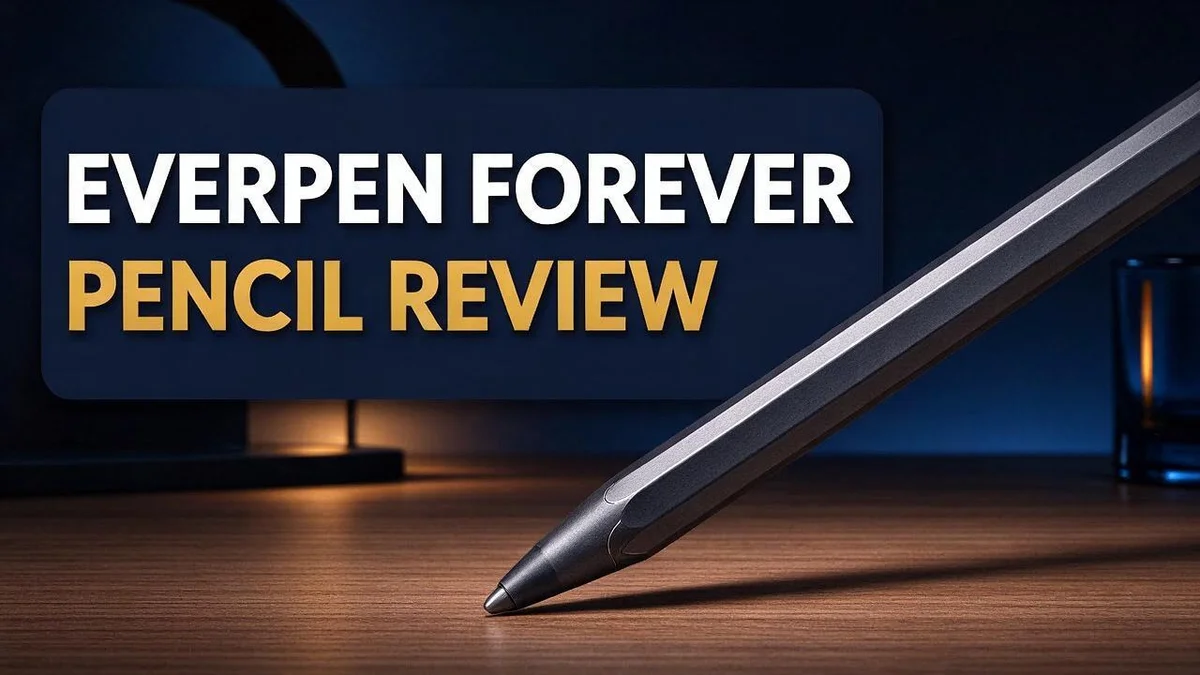
Everpen Forever Pencil Review: Does This Really Last?
Tired of stopping to sharpen your pencil? The Everpen Forever Pencil promises a different experience. It has a patented metal alloy tip that does not shorten with use, so you can write for a long time without sharpening.
Many people wonder if this pencil really lasts forever. The answer is more interesting than a simple yes or no.
Some users love the smooth writing and the comfortable grip. Others notice the tip wears down over time.
Here is what you will learn in this review. We cover the key features, the comfortable grip, and the real world wear that users report. By the end, you will know if this pencil fits your writing habit.
In a Nutshell
-
No wood to handle. You never need to sharpen it, so you skip the shavings and the mess on your desk.
-
Sharpeners stay in the drawer. The tip does not shorten with use, so it will not jam or break your sharpener.
-
Tip wear is the main concern. One reviewer saw visible wear after only one week, and heavy writers may wear the tip down faster than expected.
-
Replacement tips may matter. Some readers ask why new tips are needed if the pencil lasts forever. Plan for some upkeep if you write every day.
-
Reviews are mixed. Most Trustpilot feedback, from 94 reviews, sits in the somewhat happy range. Read both sides before you decide.
-
Best for light to medium use. Students, note takers, and casual writers may benefit the most. Heavy daily writers should check tip durability first.
Tip Material and Construction

- The Forever Pencil: Crafted from a solid metal alloy body, this writing instrument is built for lasting use. Its robust construction ensures it withstands daily carry and use
- Continuous Use, No Sharpening: Enjoy uninterrupted writing and sketching. This instrument never needs sharpening, eliminating mess and saving you time
Some of the links on this website are affiliate links, which means that at no additional cost to you, I earn a commission if you click through and make a purchase. I only recommend products and services that I believe will add value to my readers. Thank you for your support!
The tip is the star of the Everpen Forever Pencil. Its patented metal alloy sets it apart from a standard pencil.
Sources do not agree on the exact mix. Some describe a graphene carbon alloy, which hints at advanced engineering.
The line looks similar to graphite. It writes like a hard pencil, so marks stay light and thin.
Writing feel starts where the tip meets the paper. A firm surface glides well, and many people find the line clean and even.
The body adds to the overall balance. It weighs about 0.6 oz, which feels light in the hand.
Balance matters during long sessions. A steady weight helps your grip stay relaxed when you take lengthy notes.
Construction also shapes how the pencil feels over time. The solid build suggests it can handle daily carry in a bag.
Pressure plays a big role in tip life. A heavy hand may change the feel faster than a gentle one.
Watch for small signs in your writing. A line that turns faint or scratchy may signal that the tip needs attention.
Testing the pencil on your usual paper helps. Try it with your normal grip before you decide if it fits your routine.
Materials matter for comfort too. A smooth tip reduces drag, which some writers may find easier on the wrist.
Compare the feel with your favorite pencil. Notice how the line weight and smoothness differ on the same page.
Think about who benefits most from this design. Students and note takers often value a tip that stays consistent across many pages.
Simple habits can keep the tip working well. Store the pencil in a dry place and write with steady, even pressure.
Writing Performance and Line Quality
A clean line matters most when you write. The Everpen Forever Pencil aims to give you one from the first word to the last.
Line darkness is where many people notice a difference. A hard lead usually leaves a lighter mark than a soft one. That keeps dense notes looking tidy and easy to read.
Erasing is another angle to consider. A lighter mark often lifts cleanly from the page. You may need less rubbing, which keeps your paper clean.
Shading shows the pencil’s limits. Hard leads build tone slowly. Sketchers who want deep, dark areas may feel frustrated.
Paper choice changes the result too. Smooth paper lets the tip glide with little resistance. Rough paper can catch the tip and make the line look uneven.
Sound is a small detail that many writers notice. A hard tip can sound scratchy on some paper. Quiet writing feels nicer in a library or lecture hall.
Consistency across a page is what counts. A steady tip gives a uniform line from top to bottom. Uneven pressure matters less when the tip holds its shape.
Quick notes need a line that stays clear at speed. Many students find the mark easy to follow during fast lectures.
Pressure also changes how the line looks. Light pressure gives a faint trace. Heavier pressure gives a crisper, darker mark. Adjusting your grip helps you find the right balance.
Practice on your own paper first. A short test page shows how the line feels. Write a few sentences and check the darkness. This quick step prevents surprises later.
Overall, the line suits neat writing and light drawing. Artists who love bold shading may want a softer option.
Overall, the writing experience feels calm and steady for everyday notes. Most people who want neat lines will feel at home with it.
Tip Wear and Real-World Longevity
Longevity depends on daily habits more than anything else. A few pages of notes wear the tip far less than a full week of exam prep. Your routine shapes the result.
Paper texture does most of the grinding. Rough recycled sheets and gritty notebooks can wear the tip faster than smooth paper. Even a light touch on rough pages can add up. Smooth pages keep the tip in shape for longer.
Check the line width every few pages. When strokes look thick or fuzzy, the tip has changed shape. Catching this early keeps your notes neat.
Storage plays a quiet role too. Keep the pencil in a case instead of loose in a bag. A hard knock can chip the tip, and the damage may not show right away.
Your hand position also shapes the wear pattern. Some writers hold the pencil very close to the tip. Others grip higher up the barrel. Each habit can wear the tip unevenly.
Keep a simple log to track real lifespan. Write down the date you start a notebook. Add a quick note of how many pages you fill. Over time, this shows how your own hands affect the tip.
Cleaning helps as well. Wipe graphite dust from the tip with a soft cloth. Dust can build up and make the line look gray.
A regular wood pencil shrinks each time you sharpen it. This pencil skips that step, so the body keeps its length. You may find that you think about maintenance less often.
Plan ahead for the long run. Decide early how you will handle a worn tip. A clear plan keeps the pencil useful for longer.
Small habits add up over a semester. Careful handling and smooth paper protect the tip. Most writers will see the difference by the end of the term. Your notes will look sharp from first page to last.
Top 3 Alternatives
Blackwing Pearl

- BALANCED AND SMOOTH - The Pearl's balanced Japanese graphite sits between the soft Matte and firm 602: dark enough for expressive lines, firm enough to hold a point through long journaling or illustration sessions.
- A LEGEND SINCE THE 1930s - Loved by award-winning creators throughout history. Try out the pencils that were coveted by John Steinbeck, Chuck Jones, and more.
Some of the links on this website are affiliate links, which means that at no additional cost to you, I earn a commission if you click through and make a purchase. I only recommend products and services that I believe will add value to my readers. Thank you for your support!
Blackwing Pearl is a favorite among writers who love a smooth feel. It glides across paper with very little effort, so your hand stays relaxed. The eraser is sturdy, and the lead stays sharp longer than many people expect.
Many fans enjoy its soft, rich marks that look bold on the page. Sketchers and note takers often pick it for daily use. It works well for quick notes, long drafts, and creative doodles alike.
Tombow Mono 100

- Specifications: High-quality pencil/hexagonal shaft
- [Uses] For drawing and drawing
Some of the links on this website are affiliate links, which means that at no additional cost to you, I earn a commission if you click through and make a purchase. I only recommend products and services that I believe will add value to my readers. Thank you for your support!
The Tombow Mono 100 offers precise control for detailed work. Its lead is dark and consistent, so lines look clean every time. The eraser fits neatly on the end and removes mistakes with ease.
Artists and students often choose it for sharp, crisp lines. It also holds up well during long writing sessions. Many people like how it keeps a steady grip without slipping.
Ticonderoga Pencils

- EXCLUSIVE #2 GRAPHITE FORMULA: Proprietary graphite formula mined from carefully controlled sources provides extra smooth performance; thick graphite core delivers broad consistent lines
- PREMIUM WOOD: Harvested from responsibly managed forests, these pencils provide smooth, even sharpening with minimal breakage; Number 2 pencils are golden yellow lacquered for a coated matte finish and are pre-sharpened to save you time

Some of the links on this website are affiliate links, which means that at no additional cost to you, I earn a commission if you click through and make a purchase. I only recommend products and services that I believe will add value to my readers. Thank you for your support!
Ticonderoga Pencils have been a classic choice for decades. They are easy to find at most stores and simple to use. Each pencil gives a steady, medium line that suits school work and office tasks.
Many families keep a box at home for homework time. Their bright yellow finish makes them easy to spot on a crowded desk. They offer reliable performance for everyday writing, which keeps them popular year after year.
Body Design, Weight and Grip
The body of the Everpen Forever Pencil feels solid from end to end. Many people notice this build quality right away.
At about 0.6 oz, the pencil stays light in the hand. You can jot notes without feeling extra weight pull on your fingers.
Light pencils suit people who sketch or jot quick ideas. A lighter body lets the hand move freely across the page.
Grip comes down to fit as much as design. Your fingers rest on the body in a natural way. Many reviewers describe the body as comfortable to hold.
Hand size changes everything. A pencil that feels right for one person may feel thin or thick for another. Try holding it before you rely on it.
The body also handles daily life well. It rides in a bag or pocket without much fuss. Its solid build helps it keep its shape.
Replacement tips draw much of the attention. Yet the body carries the feel of every page you write. Keep that in mind when you judge the whole pencil.
Your grip style matters too. Some people hold a pencil close to the tip. Others hold it farther back. A solid body suits both styles.
Try a short test at your desk. Write for ten minutes and notice whether your hand stays relaxed. Small comfort signs tell you a lot.
Design choices also affect how you store it. With no wood, there are no shavings to brush away from your desk.
Think about your typical day. Do you write in short bursts or long sessions? A light, solid body fits quick notes well. Heavier daily use may call for a closer look at comfort.
Finally, decide whether the body suits your hand over time. A pencil that feels right on day one should still feel right later. Pay attention to how your fingers feel after several study sessions.
Replacement Tips and Upkeep
Replacement tips need a little planning. Read the product notes before you order anything. Make sure the tip fits your exact model.
Keep the original box and receipt in a safe place. They help if a tip fails early. Many buyers forget this step until a problem appears.
Buy one spare tip at a time. This stops extra parts from piling up in a drawer. You can test each new tip first.
Choose a clean, flat desk for the swap. Small parts can roll away fast. Place a soft cloth under the pencil to catch them.
Pull the old tip out slowly. Do not twist or force it. A gentle grip keeps the body safe and protects the mechanism.
Push the new tip in until it sits flush. Then write a short line on scrap paper. A loose fit often shows as a wobbly stroke.
Pay attention to small signs of trouble. A tip that rattles or sits crooked needs attention right away. Fix it early to protect your notes.
Label each spare tip with a date or note. Some people keep a small pouch just for spares. This habit saves time when the next swap arrives.
Pick a quiet spot for swaps too. Good lighting helps you see the tip seat properly. Keep the workspace free from clutter.
Think about when to retire the whole pencil. If the body cracks or the grip feels loose, a new tip alone may not fix it. Check the body as carefully as the tip.
Ask yourself one simple question each month. Does the line still feel sharp and steady? If the answer is no, plan a swap soon.
Finally, keep your swap routine simple. A short checklist makes each change quick and calm. Share your tips with friends who use the pencil, because good habits spread fast. Your pencil can serve you well for years.
Pros and Cons
Pros
- No wood chips or shavings to clean up.
- The pencil never goes in a sharpener, so it stays intact.
- Writing feels smooth and close to a hard pencil.
- A comfortable grip makes long note sessions easier.
- Fewer trips to the drawer for sharpeners or spare pencils.
Cons
- The tip can wear down quickly under heavy use.
- Some people ask why replacement tips are needed if the pencil lasts forever.
- The thin, graphite-like line may feel too light for bold writing.
- Reviews are mixed, so results can vary from person to person.
Who Should Buy It
Not every writer needs this pencil. Some people get more from it than others. Knowing your habits makes the choice easier.
Students often find it helpful. Class notes pile up fast, and a pencil that stays ready keeps the pace. Less time fixing tools means more time learning.
Office workers may enjoy it too. Many people sign forms, jot memos, and make checklists every day. Steady writing with fewer interruptions suits busy desks.
Parents helping with homework could appreciate it as well. Young learners often lose or break pencils. A simple, solid body can handle evening practice sessions with ease.
Commuters and travelers may also like it. A pencil with no shavings fits neatly in a bag. Fewer loose parts mean less clutter in a crowded pocket.
Left handed writers should test it first. Graphite can smear across the page as the hand drags over fresh lines. A quick trial on a notepad shows whether the pencil feels comfortable for your style.
Writers who want bold strokes should look elsewhere. The line is thin and light. Heavy shading or dark lettering may feel frustrating.
Artists who build layers of shading may want another tool. Light pressure gives little depth. Sketchers who rely on dark tones will likely feel limited.
People who expect zero upkeep should also pause. The tip still needs care over time. Setting clear expectations early prevents disappointment later.
A simple test can settle the question. Write a page of your usual notes or tasks. Notice how the line feels and how often you reach for a backup. Your answer will tell you a lot about whether this pencil fits your daily routine.
Final Verdict
The Everpen Forever Pencil earns a spot on many desks. It gives a clean and simple writing experience.
Our final verdict leans positive, with clear trade offs. Writing feels pleasant, and the build feels solid. Still, the tip can wear faster than the name suggests.
Think of this pencil as a daily tool for notes, lists, and quick sketches. It works best when you want dependable writing without extra gear on hand. It also suits people who dislike messy desk clutter. It may feel less suited to heavy pressure or long writing sessions.
Your habits shape the experience more than anything. Gentle writers may enjoy steady performance for a long stretch. Heavy writers should expect more frequent tip changes and plan ahead.
Here is our bottom line. The pencil offers a fresh take on an old habit. It removes the sharpener from the picture, yet it asks for a little care in return. If that trade feels fair to you, this pencil can fit right into your routine.
Some buyers praise the simple feel, while others notice faster wear. That split tells you the pencil suits some routines better than others. Trust your own writing style when you decide.
Keep your expectations realistic from day one. A pencil this different will not replace every tool you own. It can, however, become your go to choice for everyday writing.
The best choice comes from honest self reflection. Think about how you write, how often you write, and how much upkeep you accept. A clear answer to those questions makes the decision easy.
In short, the Everpen Forever Pencil is a smart pick for many people. It rewards gentle use and simple habits. Go in with clear expectations, and you will likely feel satisfied.
Frequently Asked Questions
What is the Everpen Forever Pencil tip made from?
Sources describe a patented metal alloy tip. One source calls it a graphene-carbon alloy, so the exact mix is not fully clear. The tip does not shorten with use, so you never need to sharpen it.
What do reviewers say overall?
On Trustpilot, the pencil has about 94 reviews. Most reviewers feel somewhat happy with it. This mix shows that the pencil suits some people far better than others.
How can I tell when the tip needs replacing?
Watch your lines closely. A flatter tip or lines that look faint can signal wear. One user noticed wear after just one week, so check your writing early and often.
What does the pencil weigh?
The body weighs about 0.6 ounces. That light weight helps the pencil feel easy to hold during quick notes or short sketches. Your own grip and writing style will still shape how it feels.

Hi, I’m Zoe Ward, the creator and voice behind Fine Brush Vault. I’m passionate about art, painting, and exploring the world of colors. I spend my time testing and reviewing art supplies to help fellow creators find the best tools for their craft. Through honest reviews and detailed guides, my goal is to make your creative journey easier and more inspiring.